Why Choose Sustainable Fashion for Modern Living
- Leroy Hughes

- Jan 19
- 7 min read

Rushing from work meetings in Paris to a weekend escape in Berlin, you need clothing that keeps pace without sacrificing style or values. The search for sustainable fashion can be confusing, especially with claims that do not always match reality. As a tech-savvy European professional, understanding the real difference between responsible brands and misleading marketing is essential for building a wardrobe that is both durable and easy to care for.
Table of Contents
Key Takeaways
Point | Details |
Sustainable Fashion Concept | Sustainable fashion is a holistic approach focusing on environmental responsibility, ethical labor, and long-term ecological preservation. It contrasts with the rapid production model of traditional fashion. |
Consumer Misconceptions | Many people believe sustainable fashion is expensive or unattractive, but it demands an understanding of genuine ethical and environmental practices beyond marketing claims. |
Technological Innovations | Technologies such as AI and blockchain are enhancing sustainability in fashion, increasing efficiency and transparency throughout the production process. |
Impact on Environment and Society | Sustainable fashion practices significantly reduce carbon emissions, water usage, and waste, promoting responsible sourcing and improved labor conditions in the industry. |
Sustainable Fashion Defined and Common Myths
Sustainable fashion represents a holistic approach to clothing production and consumption that prioritizes environmental responsibility, ethical labor practices, and long-term ecological preservation. Unlike traditional fashion models that emphasize rapid production and disposable trends, sustainable fashion seeks to minimize negative impacts across the entire textile supply chain.
Contrary to popular belief, sustainable fashion is not a monolithic concept, but a complex social-ecological system with nuanced interpretations. Researchers highlight that sustainable fashion cannot be rigidly categorized, as it encompasses multiple dimensions:
Environmental conservation strategies
Ethical manufacturing processes
Fair labor compensation
Reduced carbon footprint
Material recycling and circularity
Many consumers harbor misconceptions about sustainable fashion. Harvard Business Review critiques the industry’s sustainability claims, revealing that high-profile marketing often masks minimal substantive change. Common myths include:
Sustainable fashion is prohibitively expensive
Sustainable clothing lacks aesthetic appeal
Individual consumer choices cannot impact global fashion systems
All eco-friendly clothing is automatically sustainable
Reality demands a more nuanced understanding. Sustainable fashion requires comprehensive evaluation of production methods, material sourcing, worker conditions, and long-term environmental consequences. It challenges consumers to look beyond surface-level marketing and demand genuine systemic transformation.
Pro tip: Start building a sustainable wardrobe by investing in versatile, high-quality pieces that transcend seasonal trends and can be styled multiple ways.
Popular Types and Key Materials Explained
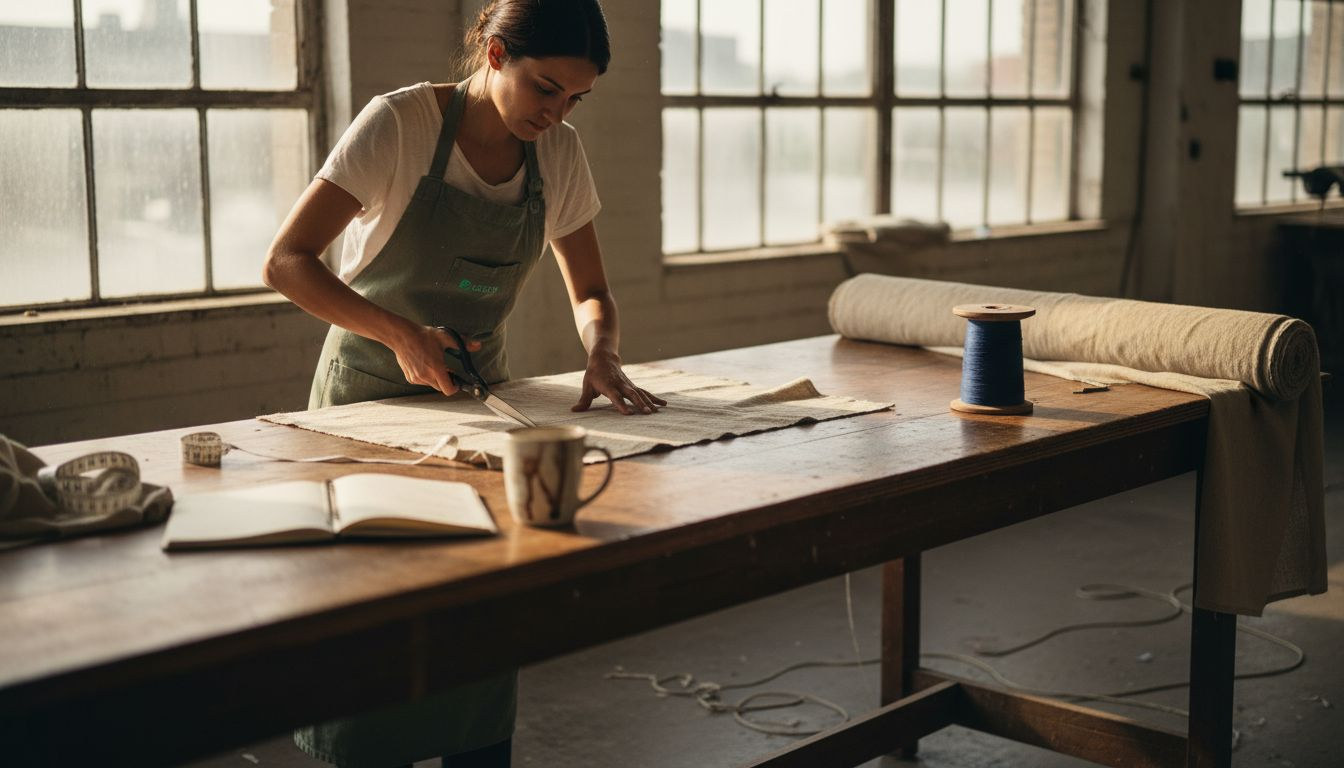
Sustainable fashion materials represent a critical evolution in textile production, moving beyond traditional synthetic fabrics towards environmentally conscious alternatives. Innovative materials are transforming the fashion landscape, offering consumers unprecedented choices that balance style, performance, and ecological responsibility.
Natural and regenerative materials form the cornerstone of sustainable textile development. These include:
Organic Cotton: Grown without harmful pesticides
Hemp: Requires minimal water and no chemical treatments
Bamboo: Rapidly renewable with low environmental impact
Recycled Polyester: Derived from plastic waste
Tencel/Lyocell: Produced from wood pulp through eco-friendly processes
Circular economy principles are driving material innovation, with designers exploring cutting-edge solutions like:
Bio-based textiles made from agricultural waste
Biodegradable synthetic alternatives
Textiles derived from food industry byproducts
Regenerated protein and cellulose fibers
Beyond raw materials, sustainable fashion considers the entire lifecycle of clothing - from production techniques to end-of-life disposal. This holistic approach challenges traditional manufacturing paradigms, prioritizing reduced environmental footprint and ethical production standards.
Pro tip: Research fabric compositions and look for certifications like Global Organic Textile Standard (GOTS) when purchasing sustainable clothing to ensure genuine ecological credentials.
How Innovative Technologies Drive Sustainability
Innovative technologies are revolutionizing sustainable fashion, transforming every stage of the textile production process from conceptualization to final product delivery. These cutting-edge solutions address critical environmental challenges while simultaneously enhancing manufacturing efficiency and product performance.
Key technological innovations driving sustainable fashion include:
Artificial Intelligence (AI): Optimizing supply chain logistics
Blockchain: Ensuring transparent material sourcing
3D Digital Modeling: Reducing prototype waste
Waterless Dyeing Technologies: Minimizing industrial water consumption
Automated Textile Sorting: Improving recycling capabilities
Sustainable fashion design frameworks are emerging that integrate advanced digital technologies with ecological principles. These approaches enable designers to:
Simulate garment performance before physical production
Calculate precise environmental impact metrics
Develop circular design strategies
Create more adaptable and long-lasting clothing
Technology is not just improving production processes but fundamentally reimagining how fashion interfaces with sustainability. By leveraging data analytics, machine learning, and advanced materials science, the industry can dramatically reduce its environmental footprint while creating more innovative, responsive clothing solutions.
Pro tip: Follow emerging fashion tech startups and research institutions to stay informed about the latest sustainable design and manufacturing innovations.
Real-World Environmental and Social Impact
Fashion companies are transforming their business models to address critical environmental and social challenges across global supply chains. This systemic approach goes beyond traditional corporate social responsibility, embedding sustainability into core operational strategies that fundamentally reimagine production, labor, and ecological interactions.
The environmental impact of sustainable fashion practices is profound and measurable:
Carbon Emissions: Reducing greenhouse gas production
Water Conservation: Minimizing industrial water consumption
Waste Reduction: Implementing circular economy principles
Chemical Management: Eliminating toxic processing techniques
Biodiversity Protection: Supporting responsible material sourcing
Critical challenges persist in global fashion supply chains, particularly concerning labor conditions and environmental degradation in developing countries. These challenges include:
Worker exploitation and inadequate compensation
Unsafe working environments
Unregulated chemical usage
Disproportionate environmental burden on marginalized communities
Addressing these complex issues requires comprehensive, collaborative approaches that integrate technological innovation, legislative frameworks, and consumer awareness. By prioritizing transparency, ethical practices, and ecological responsibility, the fashion industry can drive meaningful, sustainable transformation.
Pro tip: Research brand sustainability reports and look for third-party certifications that validate genuine environmental and social commitments.
Comparing Sustainable and Fast Fashion Practices
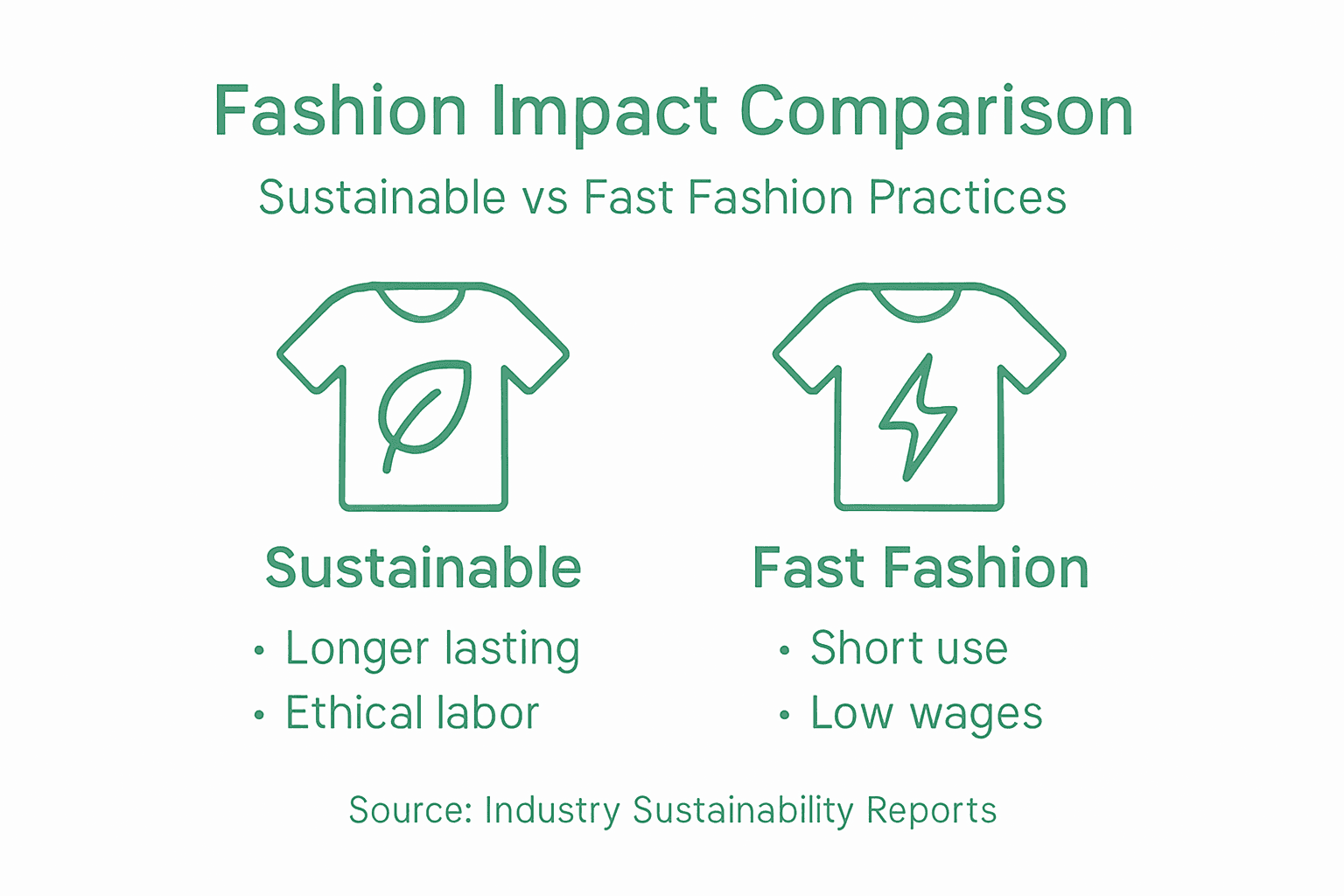
Systematic research reveals fundamental differences between sustainable fashion and fast fashion practices that extend far beyond simple production methods. These contrasts encompass environmental impact, social responsibility, economic models, and long-term global consequences.
Key differences between fast fashion and sustainable fashion include:
Production Speed: Fast fashion prioritizes rapid turnover, sustainable fashion emphasizes quality and longevity
Environmental Impact: Fast fashion generates significant waste, sustainable fashion minimizes ecological footprint
Labor Practices: Fast fashion often exploits workers, sustainable fashion promotes ethical employment
Material Selection: Fast fashion uses cheap synthetic materials, sustainable fashion prioritizes responsible sourcing
Consumer Relationship: Fast fashion encourages frequent replacement, sustainable fashion promotes mindful consumption
Extensive research documents the profound social consequences of these divergent approaches. Fast fashion’s model generates substantial negative externalities:
Massive textile waste generation
Significant carbon emissions
Widespread water pollution
Systemic labor rights violations
Rapid resource depletion
Sustainable fashion emerges as a comprehensive alternative, addressing these critical challenges through holistic design, ethical production, and circular economic principles. By reimagining fashion as a responsible, regenerative system, this approach offers a transformative pathway toward more equitable and environmentally conscious clothing consumption.
Here’s a look at how sustainable and fast fashion differ across core dimensions:
Aspect | Sustainable Fashion | Fast Fashion |
Production Approach | Small-scale, quality-focused | Mass-produced, trend-driven |
Typical Lifespan | Designed for years of use | Intended for a few wears |
Supply Chain | Transparent and traceable | Often opaque and fragmented |
Consumer Engagement | Encourages mindful buying | Promotes frequent purchases |
Global Impact | Reduces waste and emissions | Increases landfill and pollution |
Pro tip: Evaluate clothing purchases based on material quality, production transparency, and potential longevity rather than just immediate price.
Practical Tips for Building a Responsible Wardrobe
Building a sustainable wardrobe requires strategic approach that balances personal style, environmental consciousness, and long-term value. The process involves thoughtful selection, mindful purchasing, and commitment to quality over quantity.
Key strategies for developing a responsible wardrobe include:
Wardrobe Assessment: Inventory existing clothing and identify versatile pieces
Quality Over Quantity: Invest in durable, timeless items
Material Awareness: Prioritize sustainable fabrics like organic cotton and hemp
Ethical Brand Support: Research companies with transparent production practices
Lifecycle Consideration: Choose garments with potential for long-term wear
Shopping secondhand and vintage
Learning basic clothing repair skills
Understanding fabric care to extend garment life
Supporting local and ethical fashion brands
Practicing conscious consumption
Successful sustainable fashion requires ongoing education and intentional choices. By viewing clothing as an investment rather than a disposable commodity, consumers can significantly reduce environmental impact while maintaining personal style and functionality.
To help you identify responsible wardrobe choices, here’s a summary of key sustainable clothing considerations:
Consideration | Why It Matters | Example Action |
Material Origin | Impacts environmental footprint | Choose certified organic fibers |
Garment Longevity | Reduces waste generation | Select timeless, durable pieces |
Supply Chain Ethics | Supports fair labor practices | Check for third-party labels |
Afterlife Potential | Lowers end-of-life pollution | Prefer recyclable or compostable |
Transparent Branding | Informs consumer choices | Research brand impact reports |
Pro tip: Create a capsule wardrobe with 15-20 versatile, high-quality pieces that can be mixed and matched across multiple outfits.
Experience Sustainable Fashion That Works for Your Modern Lifestyle
Choosing sustainable fashion means prioritizing longevity, quality, and ethical production—values that align perfectly with the needs of today’s busy and style-conscious consumer. The article highlights key challenges such as the environmental impact of fast fashion and the importance of durable, easy-care clothing designed to reduce waste and promote mindful consumption. At LABFRESH, we understand these pain points and deliver innovative solutions by combining cutting-edge fabric technologies like FreshCore™ and Seawool with timeless design.
Explore our range of LABFRESH | Performance pants and LABFRESH | Shirts crafted to resist odors and stains while offering unmatched comfort for an active lifestyle.
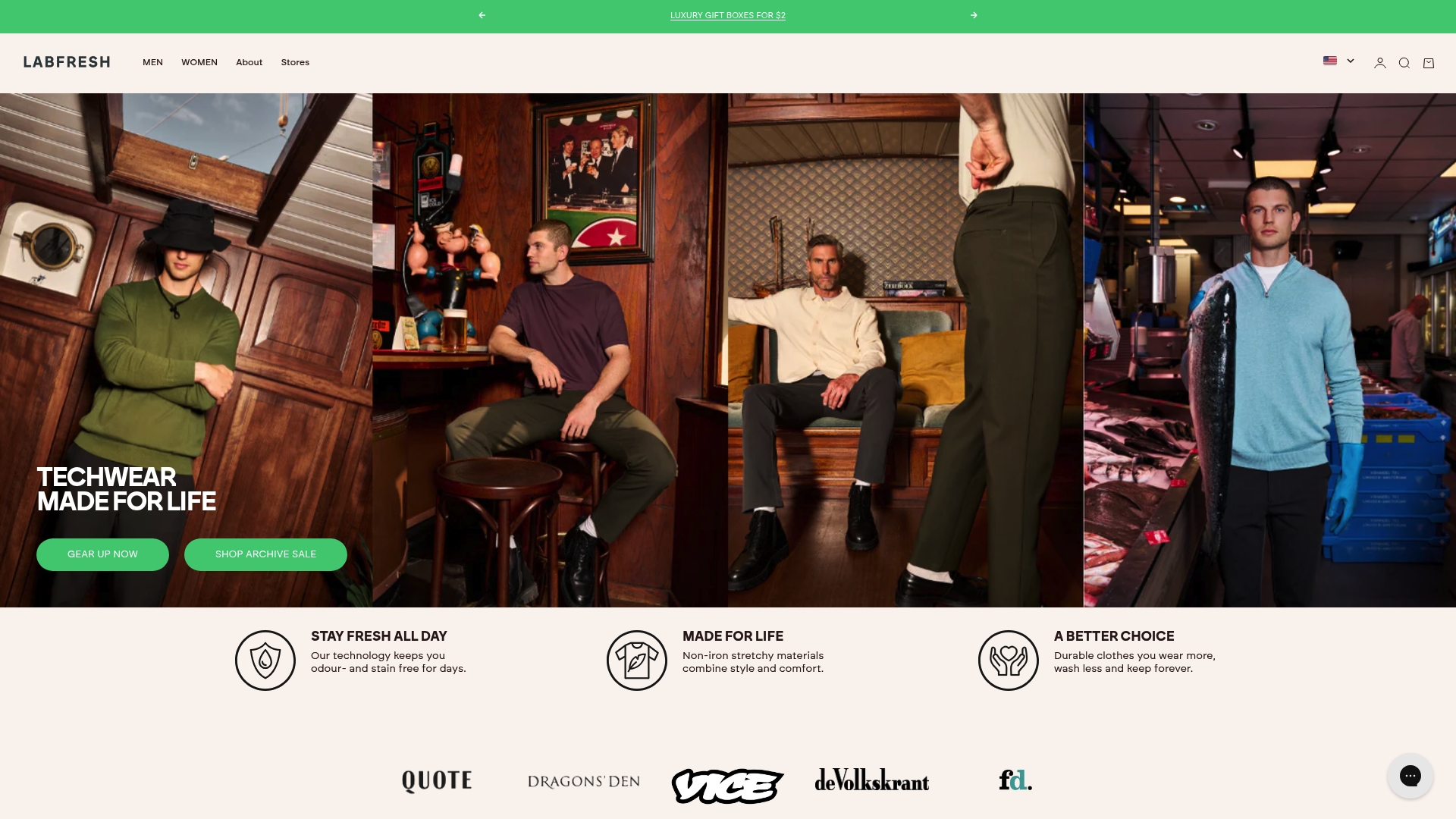
Take the next step toward a sustainable wardrobe with LABFRESH. Visit https://labfresh.eu today to discover how technology and thoughtful design come together to support your commitment to the planet. For a personalized start, check out our Custom Bundle and build a versatile, sustainable wardrobe that lasts.
Frequently Asked Questions
What is sustainable fashion?
Sustainable fashion refers to clothing production and consumption that prioritizes environmental responsibility, ethical labor practices, and long-term ecological preservation. It contrasts with traditional models focused on rapid production and disposable trends.
Why should I consider sustainable fashion over fast fashion?
Choosing sustainable fashion supports quality over quantity, reduces environmental impact, promotes ethical labor practices, and encourages mindful consumption, unlike fast fashion, which often relies on mass production and low-priced, low-quality items.
How can I build a sustainable wardrobe?
To build a sustainable wardrobe, assess your current clothing, prioritize quality and durable pieces, choose items made from sustainable materials, and support brands with transparent and ethical production practices.
What are some common misconceptions about sustainable fashion?
Common misconceptions include that sustainable fashion is prohibitively expensive, lacks aesthetic appeal, and that individual consumer choices cannot impact global fashion systems. In reality, sustainable fashion encompasses various dimensions and invites consumers to engage in systemic change.
Recommended
Comments