Eco-Friendly Menswear: Innovation for Sustainable Style
- Leroy Hughes

- Jan 27
- 9 min read

Finding menswear that keeps up with city life without sacrificing style or values is never easy. The reality is, eco-friendly options now go far beyond buzzwords, focusing on genuine innovation with materials like organic cotton and recycled fibers that actually reduce environmental impact. Modern menswear combines durability, functionality, and low-maintenance design—giving you clothing that works hard and looks good, while supporting a more mindful approach to consumption and everyday living.
Table of Contents
Key Takeaways
Point | Details |
Sustainable Materials Matter | Eco-friendly menswear focuses on innovative materials like organic cotton and recycled fibers, minimizing environmental impact while ensuring performance. |
Ethical Production Practices Are Essential | Brands must prioritize ethical labor conditions, transparency, and reduced emissions throughout their manufacturing processes. |
Invest in Timeless Versatility | Sustainable menswear emphasizes classic designs that endure beyond seasonal trends, promoting mindful consumption and reducing waste. |
Certifications Ensure Authenticity | Look for multiple sustainability certifications to verify claims about organic materials, fair labor, and chemical safety across the production chain. |
What Defines Eco-Friendly Menswear Today
Eco-friendly menswear isn’t just about slapping a green label on a shirt anymore. Today’s sustainable menswear combines thoughtful material choices with honest production practices. It’s about garments built to last, not thrown away after a season or two.
At its core, eco-conscious menswear focuses on sustainable materials like organic cotton and recycled fibers that reduce environmental strain. These aren’t compromise materials either. They perform just as well as conventional fabrics while cutting down on water waste, chemical runoff, and resource depletion. The shift reflects a real change in how the industry thinks about consumption.
But materials alone don’t define modern sustainable menswear. Production practices matter equally. Brands now emphasize ethical labor conditions, transparent supply chains, and minimized emissions throughout manufacturing. You’re looking at companies that actually know where their fabric comes from and who stitches their garments together.
Design philosophy has shifted too. Versatility and timeless aesthetics are no longer afterthoughts. Sustainable menswear prioritizes pieces that work across seasons and styles, reducing the urge to constantly buy new items. A well-made shirt in a classic cut will outlast three trendy pieces from last year.
The technology angle matters here too. Brands are developing advanced fabric technologies that reduce maintenance requirements while maintaining durability. Think garments that resist odors and stains naturally, requiring fewer washes and extending their lifespan significantly. This approach cuts water consumption and fabric degradation from repeated laundering.
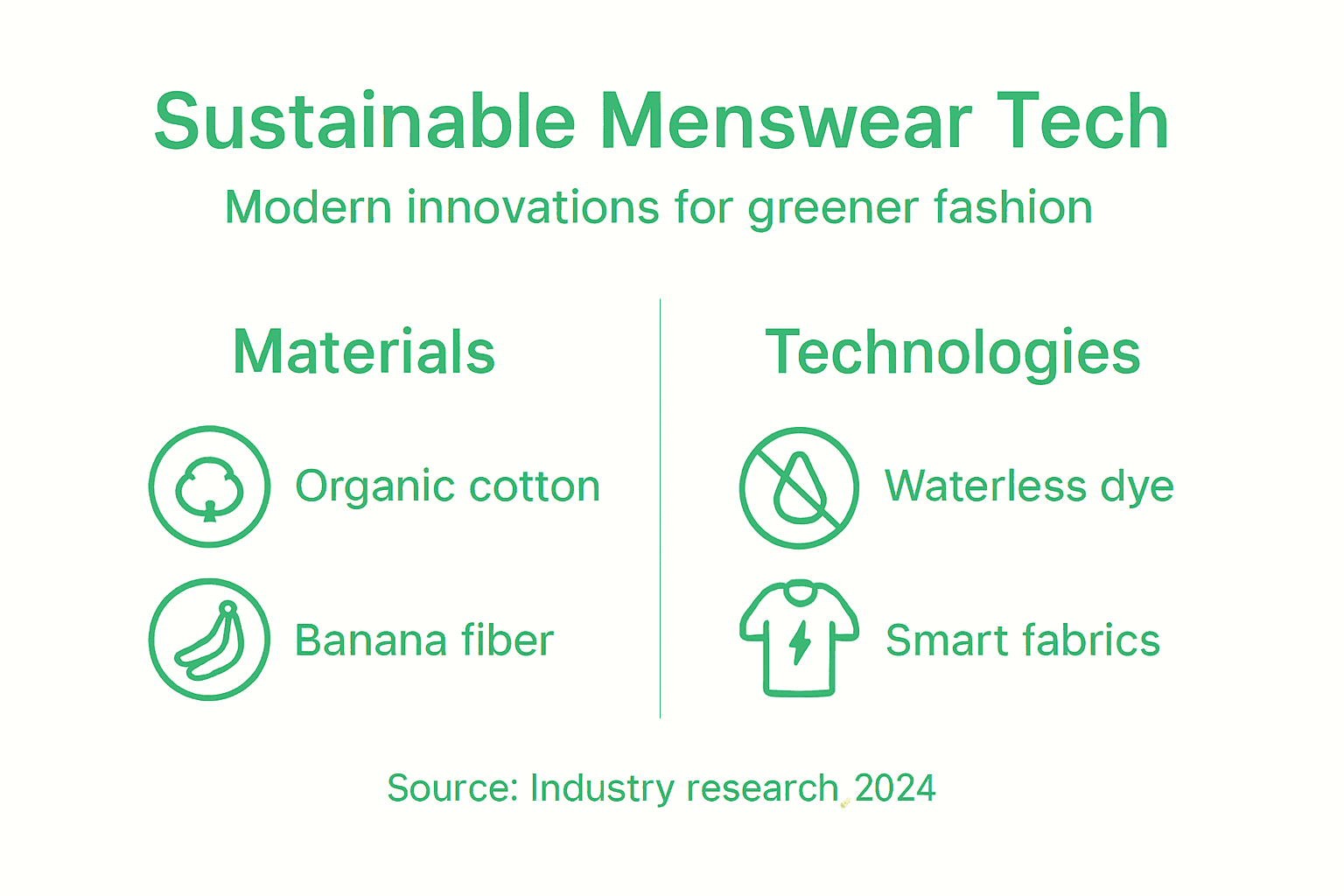
What makes today’s eco-friendly menswear genuinely different is the commitment to mindful consumption. It’s not about looking green. It’s about making purchases that actually reduce waste, support fair labor, and require less environmental intervention over their lifetime.
Pro tip: When evaluating sustainable menswear, focus on material composition and care requirements together. A shirt made from organic cotton that needs washing after every wear might consume more resources over time than a technical fabric requiring fewer washes.
Sustainable Materials and Fabric Innovations
The materials revolution in eco-friendly menswear is happening right now. Brands are moving beyond basic organic cotton into genuinely innovative territory. New fabric technologies are changing what sustainable menswear can actually do.
Innovative plant-based textiles like algae and banana fiber are stepping up as legitimate alternatives to conventional synthetics. These aren’t experimental anymore. Lab-grown fabrics are mimicking natural fibers without the resource drain of traditional production. Enhanced recycling technologies are making polyester and cotton waste into usable material again, creating genuine circularity.

Water efficiency has become a competitive advantage. New dyeing and waterless processes significantly reduce water usage compared to conventional textile manufacturing. A single pair of conventional jeans can require thousands of gallons. Modern sustainable fabrics cut that dramatically while maintaining color quality and fastness.
Function matters as much as sustainability now. Brands are developing natural fabrics with antimicrobial and UV-protection properties sourced from biological origins. These aren’t chemical coatings. They’re built into the fabric itself, improving durability and performance while staying environmentally compatible. A shirt that resists odors naturally requires fewer washes, extending its lifespan considerably.
Biodegradability and recycling have become design priorities. Instead of creating waste at the end of a garment’s life, modern sustainable fabrics are engineered to break down safely or return to production cycles. This circular approach transforms how you think about clothing investment.
The real challenge right now is scaling these innovations affordably. Costs remain higher than conventional production, and maintaining consistent quality across manufacturing batches requires ongoing refinement. But biomimicry and bio-integrated design research are rapidly advancing commercial viability. These aren’t five-year-away technologies. They’re available now.
Here’s a quick comparison of key sustainable materials and their environmental impacts:
Material Type | Environmental Benefit | Typical Use Cases |
Organic Cotton | Reduced pesticide/water use | Shirts, denim, basics |
Recycled Polyester | Diverts waste, lowers emissions | Jackets, athleisure, tees |
Algae Fiber | Rapidly renewable, low resource | Knitwear, casual wear |
Banana Fiber | Biodegradable, uses agri-waste | Lightweight shirts, blends |
Lab-Grown Textiles | Minimal land/water required | Modern outerwear, T-shirts |
Pro tip: Check fabric content labels for specific materials like organic cotton, recycled polyester, or plant-based alternatives, and pair that with care instructions. Fabrics requiring minimal washing and low-temperature drying deliver the biggest environmental benefit over a garment’s lifetime.
Performance Technology’s Role in Green Fashion
Technology and sustainability aren’t opposites in modern menswear. They’re partners. The most environmentally responsible pieces today use cutting-edge innovations to deliver better performance while reducing waste and resource consumption.
Smart textiles and wearable electronics are transforming what sustainable menswear can do. These aren’t bulky gadgets. Modern performance fabrics integrate nanotechnology to create multifunctional garments that adapt to your needs. A single shirt can manage moisture, regulate temperature, and resist odors without requiring constant washing. That efficiency directly reduces environmental impact.
Customization through technology changes the game entirely. Digital design tools and advanced manufacturing let brands create pieces tailored to individual needs, reducing overproduction and waste. You’re not buying generic sizes that don’t fit perfectly. Precision manufacturing means less returns, less waste, and garments that actually last because they fit right.
Production efficiency matters as much as the finished product. Technology drives innovations in design and manufacturing that cut carbon emissions and energy consumption significantly. AI integration helps brands predict demand accurately, avoiding the excess inventory that typically ends up in landfills. Smarter supply chains mean less waste from start to finish.
Circular fashion principles gain real teeth through technology. Product lifecycle management systems track garments from creation through use to end-of-life, enabling proper recycling or upcycling. Some brands now use blockchain to verify material sourcing and production conditions, giving you genuine transparency about what you’re buying.
The real benefit is transparency and accountability. Technology enables brands to measure their actual environmental impact rather than making vague sustainability claims. You can see exactly where emissions come from and how specific innovations reduce them. That’s not greenwashing. That’s verifiable progress.
Pro tip: Look for menswear brands that clearly explain their technology integration and publish measurable environmental metrics. Genuine performance-driven sustainable brands quantify water saved, carbon reduced, and production efficiency gains, not just marketing language.
Certifications and Industry Sustainability Standards
Certifications matter. They cut through marketing noise and give you actual proof that a menswear brand is doing what it claims. Without third-party verification, sustainability claims are just words.
Key certifications like GOTS, GRS, and Fair Trade provide independent verification across the entire production chain. GOTS certifies organic textiles from farming through manufacturing. GRS tracks recycled materials to ensure they actually came from post-consumer waste. Fair Trade confirms workers earned fair wages and worked in safe conditions. These aren’t marketing badges. They’re audited standards.
Chemical safety matters more than most people realize. OEKO-TEX certification tests for harmful substances that could irritate skin or pollute waterways. A shirt might be made from organic cotton, but if dangerous dyes were used in production, the environmental benefit disappears. This certification closes that gap.
Sustainability standards like Bluesign, Cradle to Cradle, and ISO 14001 address specific environmental challenges throughout a garment’s lifecycle. Bluesign focuses on chemical hazard prevention. Cradle to Cradle examines the entire product from design through end-of-life recyclability. ISO 14001 establishes environmental management systems across operations. Together, they create accountability.
ZDHC, another crucial standard, tackles hazardous chemicals in manufacturing. It removes dangerous substances before they enter production, protecting both workers and ecosystems. This matters more in countries with less stringent environmental regulations.
The reality is certifications add cost. Brands must pay for audits, testing, and compliance infrastructure. That’s why certified sustainable menswear costs more than greenwashed alternatives. But that premium directly funds accountability and real environmental impact.
Regional variations still exist. A certification meaningful in Europe might follow different standards in Asia. Reputable brands maintain consistency globally rather than cutting corners in less-regulated markets.
To understand sustainable certifications, see what each ensures:
Certification | What It Verifies | Key Focus |
GOTS | Organic status, eco-processing | Fiber origin, safe chemicals |
GRS | Recycled material authenticity | Circularity, traceability |
Fair Trade | Worker rights and fair wages | Labor, social responsibility |
OEKO-TEX | No harmful chemicals present | Textile safety, skin health |
Bluesign | Chemical and resource efficiency | Clean inputs, eco-processes |
Pro tip: When evaluating menswear brands, look for multiple certifications rather than relying on a single badge. A shirt with GOTS, OEKO-TEX, and Fair Trade certification underwent rigorous verification across material sourcing, chemical safety, and labor practices.
Practical Impacts: Cost, Durability, and Benefits
Yes, sustainable menswear costs more upfront. Let’s address that immediately. A quality eco-friendly shirt typically runs 30 to 50 percent higher than fast fashion alternatives. But that’s where the conversation needs to shift from sticker price to actual cost per wear.
Enhanced durability and longer garment lifespans mean sustainable pieces outlast cheap alternatives by years. You’re not replacing that shirt annually. A well-made sustainable shirt worn twice weekly can easily last five to seven years. Calculate that out. That premium disappears fast when you divide the cost across actual wear.
Sustainable materials genuinely perform better. Organic cotton and recycled polyester blends balance comfort with durability in ways that feel tangible when you wear them. They don’t degrade the way cheap synthetics do. Colors stay vibrant. Fabric structure holds. Seams don’t start separating after a few months.
Style durability matters as much as physical durability for pieces you’ll actually wear. Timeless design means your shirt doesn’t look dated next season. You’re buying classic cuts and neutral colors that work across years and trends. That’s why sustainable brands focus on versatility. A versatile piece becomes a wardrobe staple, not a closet mistake.
The resource consumption difference is substantial. You buy fewer items over time. That means less water used, fewer chemicals released, less manufacturing waste generated, and fewer shipments. The environmental benefit multiplies when you shift from replacing fast fashion constantly to buying durable pieces intentionally.
Lower maintenance requirements save money and resources too. Performance fabrics resist odors and stains, requiring fewer washes. Fewer washes mean lower water and energy consumption. Your clothes last longer because you’re treating them gentler.
Think of it as an investment in a functional wardrobe rather than a fashion expense. Quality basics that work across your life cost less per wear than constantly chasing trends.
Pro tip: Calculate your cost per wear by dividing the purchase price by the number of times you’ll wear the piece. A 120 dollar sustainable shirt worn 250 times over five years costs 0.48 per wear, while a 40 dollar fast fashion shirt worn 30 times costs 1.33 per wear.
Elevate Your Wardrobe with Sustainable Innovation and Performance
Struggling to find menswear that matches your eco-conscious values without sacrificing performance or style The article highlights the need for durable, sustainable fabrics with advanced functionalities and transparent production practices At LABFRESH | Performance pants, we understand the challenge of balancing sustainability with everyday wearability through our groundbreaking fabric technologies like FreshCore™ Our apparel resists odors and stains naturally, reducing the frequency of washes and extending the lifespan of each garment This means less water use and fewer environmental impacts throughout your wardrobe’s life

Experience menswear designed for durability versatility and sustainability Visit LABFRESH now to explore our collections including Green that deliver exactly what modern eco-friendly menswear promises Don’t wait to invest in clothing that supports your active lifestyle while protecting the planet Click through to discover how technology and style combine for truly sustainable fashion and take the next step toward a smarter wardrobe today
Frequently Asked Questions
What materials are commonly used in eco-friendly menswear?
Eco-friendly menswear typically utilizes sustainable materials such as organic cotton, recycled polyester, algae fiber, and banana fiber. These materials reduce environmental strain while maintaining high performance.
How do performance technologies enhance eco-friendly menswear?
Performance technologies in eco-friendly menswear include smart textiles that regulate moisture and temperature, and fabrics with natural odor and stain resistance. These innovations reduce the need for frequent washing, extending the lifespan of garments and minimizing environmental impact.
What certifications should I look for to ensure menswear is truly sustainable?
Look for certifications like GOTS (Global Organic Textile Standard), GRS (Global Recycled Standard), OEKO-TEX, and Fair Trade. These certifications verify sustainable practices in production, chemical safety, and labor conditions to ensure the brand’s claims are credible.
Why is sustainable menswear often more expensive than fast fashion?
Sustainable menswear tends to have a higher upfront cost due to the use of quality materials, ethical labor practices, and rigorous certification processes. However, the longer lifespan and reduced need for frequent replacements often translate to lower cost per wear over time.
Recommended
Comments