Role of Recycled Fabrics – Shaping Fashion’s Future
- Leroy Hughes

- Jan 17
- 7 min read

Juggling work, errands, and events in busy cities means style and practicality cannot come at the planet’s expense. Fashion built from recycled fabrics offers a fresh answer for those pushing towards a more sustainable lifestyle. These materials, made from used textiles and plastic bottles, deliver real environmental benefits like reduced landfill waste and water conservation. Discover how choosing recycled clothing supports smarter choices for both personal style and the health of our world.
Table of Contents
Key Takeaways
Point | Details |
Recycled Fabrics Reduce Environmental Impact | Transforming waste materials into new textiles significantly decreases water usage, energy consumption, and greenhouse gas emissions in the fashion industry. |
Diverse Recycled Fabric Options | Key categories include Recycled Polyester, Recycled Cotton, and Recycled Nylon, each offering unique advantages for various applications and sustainability. |
Enhanced Functionality of Recycled Fabrics | Modern recycled fabrics provide exceptional durability, moisture management, and versatility, proving that sustainability can coexist with high performance. |
Challenges in Adoption Drive Innovation | The fashion industry faces technological challenges, but advancements in recycling techniques are paving the way for higher quality and greater adoption of recycled fabrics. |
What Are Recycled Fabrics and Why They Matter
Recycled fabrics represent a groundbreaking approach to sustainable textile production, transforming discarded materials into valuable new clothing and accessories. These innovative materials are created by reprocessing used textiles, plastic bottles, and other waste resources into high-quality fabric alternatives that dramatically reduce environmental impact. Recycled textile technologies are revolutionizing how we think about clothing manufacturing.
At their core, recycled fabrics involve collecting and reprocessing existing materials to create new textile products. The process typically involves breaking down waste materials like plastic bottles or discarded clothing into raw fiber components, which are then spun into new yarns and woven into fabrics. This approach offers significant environmental advantages compared to traditional fabric production, including substantial reductions in water consumption, energy use, and landfill waste. Most importantly, these fabrics provide a practical solution to the fashion industry’s sustainability challenges.
The environmental benefits of recycled fabrics extend far beyond waste reduction. Textile recycling technologies help decrease the consumption of non-renewable resources while creating a more circular economy for clothing production. By transforming waste materials into new textiles, manufacturers can significantly lower carbon emissions, reduce raw material extraction, and create products with a substantially lower ecological footprint. Key advantages include:
30-50% less energy consumption compared to virgin fabric production
Significant reduction in water usage during manufacturing
Decreased dependency on petroleum-based raw materials
Reduced greenhouse gas emissions
Practical solution for managing textile and plastic waste
Pro tip: When shopping for sustainable clothing, look for certifications like Global Recycled Standard (GRS) to ensure high environmental standards and authentic recycled fabric production.
Types of Recycled Fabrics in Modern Apparel
The world of recycled fabrics is diverse and innovative, offering multiple material options that transform waste into wearable, high-performance textiles. Recycled fabric technologies have evolved to create sophisticated materials that meet both environmental and performance standards. Understanding these fabric types helps consumers and designers make more sustainable fashion choices.
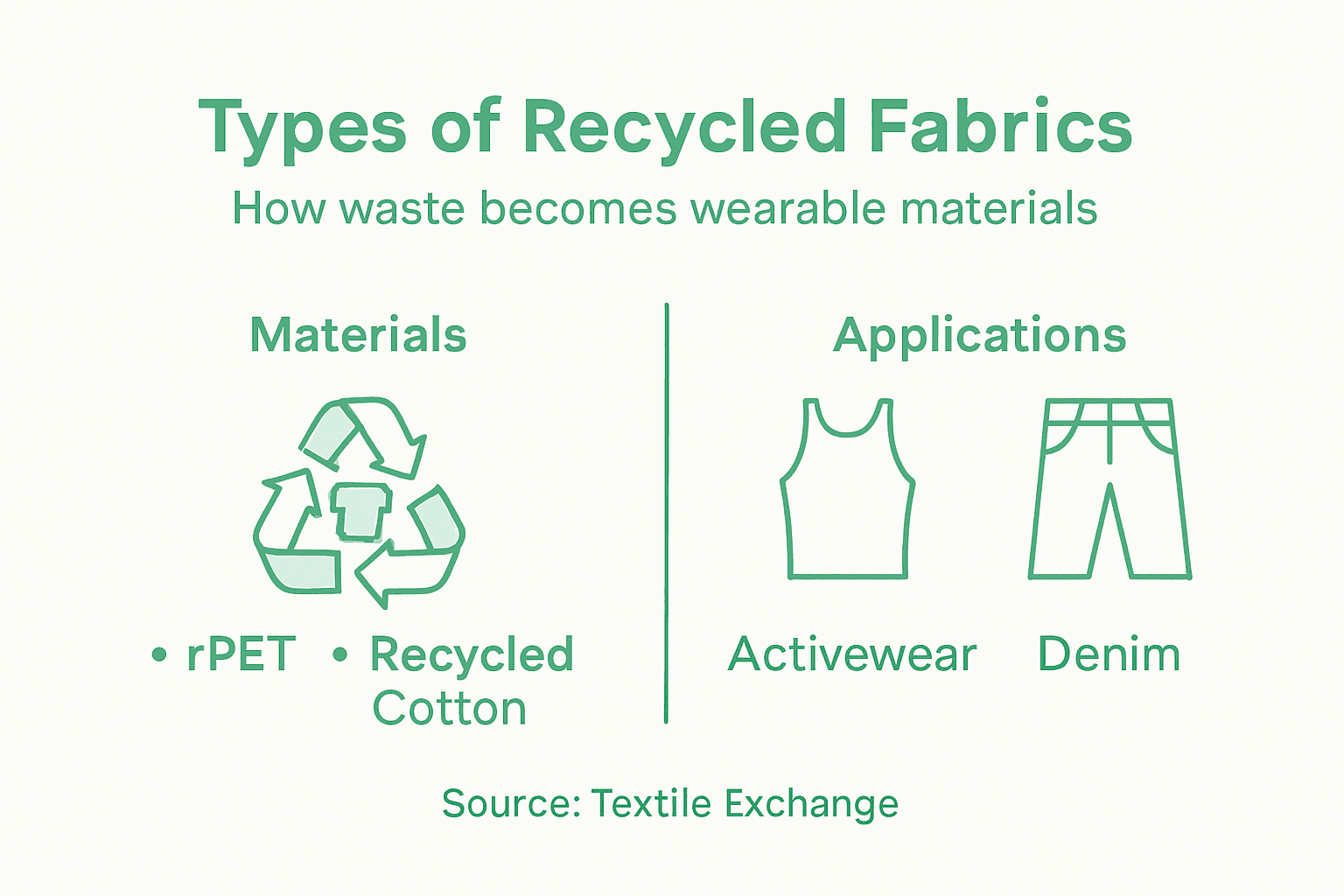
Primary recycled fabric categories include recycled polyester, recycled cotton, and recycled synthetic fibers. Recycled polyester, often created from plastic bottles, represents a significant breakthrough in textile sustainability. This material is particularly popular in activewear due to its moisture-wicking properties and durability. Textile waste recycling methods transform these materials through processes like shredding, melting, and chemical regeneration, ensuring high-quality fabric production.
Each recycled fabric type offers unique advantages for different applications:
Recycled Polyester (rPET)
Derived from plastic bottles
Excellent for activewear and performance clothing
Reduces petroleum-based material consumption
Recycled Cotton
Created from post-consumer textile waste
Significantly reduces water usage compared to virgin cotton
Ideal for everyday clothing and basics
Recycled Nylon
Often sourced from fishing nets and industrial plastics
High durability and strength
Perfect for outdoor and technical apparel
Pro tip: Check clothing labels for recycled fabric content and look for transparent information about the recycling process to make truly sustainable fashion choices.
Here’s how popular recycled fabrics compare across key factors:
Fabric Type | Main Source | Best Application | Notable Benefit |
Recycled Polyester | Plastic bottles | Sportswear | Excellent durability |
Recycled Cotton | Textile waste | Everyday clothing | Lower water usage |
Recycled Nylon | Fishing nets, plastics | Outdoor gear | Superior strength and resilience |
How Recycled Fabrics Enhance Functionality
Recycled fabrics have dramatically transformed the performance landscape of modern textiles, offering sophisticated functionality that rivals traditional materials. Advanced recycling technologies have enabled manufacturers to create high-performance fabrics that deliver exceptional durability, comfort, and technical capabilities. These innovative materials are proving that sustainability and performance can coexist seamlessly in contemporary apparel.

The functional advantages of recycled fabrics extend far beyond environmental benefits. Textile recycling processes have evolved to preserve critical performance characteristics like strength, flexibility, and moisture management. Mechanical and chemical recycling techniques now allow designers to create fabrics that maintain the structural integrity and comfort of virgin materials while significantly reducing environmental impact. This breakthrough means athletes, professionals, and everyday consumers can enjoy high-performance clothing without compromising their sustainability values.
Key functional enhancements of recycled fabrics include:
Moisture Management
Rapid wicking capabilities
Quick-drying performance
Breathable fabric structure
Durability
Enhanced fiber strength
Resistance to wear and tear
Consistent performance over multiple uses
Versatility
Suitable for multiple clothing categories
Adaptable to different environmental conditions
Comparable to virgin fabric performance
Pro tip: When selecting performance wear, prioritize recycled fabric items that clearly demonstrate their technical specifications and sustainability credentials.
Environmental and Economic Impacts on Fashion
Recycled fabrics are revolutionizing the fashion industry by creating a powerful intersection between environmental sustainability and economic innovation. Recycled fabric strategies demonstrate significant potential for reducing the ecological footprint of textile production while simultaneously generating new economic opportunities. This transformative approach challenges traditional manufacturing models by reimagining waste as a valuable resource.
The environmental benefits of recycled fabrics are profound and multifaceted. By diverting materials from landfills and reducing raw material consumption, these innovative textiles dramatically lower greenhouse gas emissions and water usage associated with traditional fabric production. Circular economy principles are fundamentally reshaping how brands approach resource management, creating a more sustainable and responsible fashion ecosystem.
Key environmental and economic impacts include:
Environmental Benefits
30-50% reduction in carbon emissions
Significant decrease in water consumption
Reduced dependency on virgin petroleum resources
Economic Advantages
Job creation in recycling industries
Lower raw material procurement costs
Enhanced brand reputation and market positioning
Innovation Drivers
Encourages technological advancements
Supports development of new recycling technologies
Creates competitive advantages for forward-thinking brands
Pro tip: Evaluate fashion brands not just by their products, but by their commitment to transparent and measurable sustainability practices.
Challenges and Innovations Shaping Adoption
The journey of recycled fabrics toward mainstream adoption is marked by complex technological and systemic challenges that demand innovative solutions. Textile recycling technologies are rapidly evolving to address fundamental obstacles in creating high-quality, sustainable fabric alternatives. These challenges range from technical limitations in material processing to complex communication barriers within the fashion and manufacturing industries.
Innovation is driving critical transformations in how recycled fabrics are developed and integrated. Advanced recycling methods are addressing key technical limitations, such as fiber degradation and color contamination, through sophisticated chemical and mechanical processes. These breakthroughs enable more efficient material recovery, higher-quality fabric production, and expanded potential for closed-loop recycling systems.
Key challenges and innovative responses include:
Technological Challenges
Complex blended textile sorting
Fiber quality degradation
Limited recycling infrastructure
Innovative Solutions
Chemical fiber restoration techniques
Advanced material classification systems
Improved sorting technologies
Industry Transformation
Development of standardized recycling protocols
Enhanced certification processes
Increased investment in recycling research
Pro tip: Research brands that transparently share their textile recycling methodologies and invest in continuous technological improvement.
The table below summarizes leading industry challenges and emerging solutions in recycled fabric adoption:
Challenge | Innovation Response | Impact on Industry |
Difficulty sorting blends | Automated classification | Higher recycling rates |
Fiber quality loss | Chemical restoration methods | Improves fabric performance |
Limited infrastructure | Investment in recycling tech | Expands material availability |
Embrace the Future of Sustainable Fashion with LABFRESH
The challenge of adopting recycled fabrics lies not only in ensuring durability and high performance but also in maintaining convenience for busy, active lifestyles. As the article highlights, recycled textiles need to deliver moisture management, odor resistance, and lasting quality without compromising sustainability. At LABFRESH, we have embraced these goals by integrating advanced fabric technologies like FreshCore™ and Seawool that combine eco-friendly innovation with functionality tailored to your daily needs.
Explore our LABFRESH | Performance pants and LABFRESH | Shirts collections featuring durable, stain-resistant fabrics designed for longevity and ease of care. These pieces help you reduce your environmental footprint while enjoying superior comfort and style.
Take the next step toward a wardrobe that supports both your sustainability values and your dynamic life. Discover how high-tech, recycled fabric apparel can reshape your daily wear by visiting LABFRESH today. Experience clothing built for the future and designed to perform.
Frequently Asked Questions
What are recycled fabrics?
Recycled fabrics are textiles made from post-consumer materials, such as discarded clothing and plastic bottles, reprocessed into new, high-quality fabrics that reduce environmental impact.
How do recycled fabrics benefit the environment?
Recycled fabrics help decrease landfill waste, reduce raw material consumption, lower greenhouse gas emissions, and significantly cut water and energy usage during production compared to traditional fabrics.
What types of recycled fabrics are commonly used in apparel?
Common types of recycled fabrics include recycled polyester (rPET), recycled cotton, and recycled nylon, each offering unique advantages for various applications like activewear and everyday clothing.
How do recycled fabrics perform compared to conventional fabrics?
Recycled fabrics often match or exceed the performance of conventional fabrics in terms of durability, moisture management, and overall comfort, making them a sustainable alternative without compromising quality.
Recommended
Comments