Why Water-Saving Fabrics Matter for Modern Fashion
- Leroy Hughes

- Feb 23
- 10 min read

Finding clothing that matches your active schedule while reflecting your eco-conscious values can feel overwhelming. Water-saving fabrics offer a genuine solution, bridging the gap between sustainability and durability without sacrificing performance. Unlike vague greenwashing, these textiles use technologies designed to minimize water use at crucial manufacturing stages, bringing real impact to both your wardrobe and the environment. Discover how understanding these innovations helps you make smarter, more sustainable style choices every day.
Table of Contents
Key Takeaways
Point | Details |
Understanding Water-Saving Fabrics | These fabrics reduce water usage during production without sacrificing quality or durability. Different technologies apply throughout the manufacturing process, leading to significant water savings. |
Countering Common Misconceptions | Many believe these fabrics compromise on performance or incur higher costs, but they can enhance durability and ultimately save money through reduced maintenance. |
Environmental Benefits | Water-saving fabrics contribute to freshwater conservation, reduce pollution, and have a smaller carbon footprint, which positively impacts local communities. |
Challenges of Adoption | Despite the benefits, high upfront costs and scalability issues hinder many manufacturers from widely adopting water-saving technologies. |
Defining water-saving fabrics and misconceptions
Water-saving fabrics sound straightforward, but the term means different things across the industry. These fabrics reduce water consumption during manufacturing, dyeing, or finishing processes compared to conventional textile production methods.
The key distinction lies in production stage. Some fabrics save water during dyeing, others during finishing treatments, and some across multiple processes. Understanding where water reduction happens helps you make informed choices about what you’re actually buying.
What water-saving fabrics actually are
Water-saving fabrics incorporate technologies designed to minimize water use without compromising performance or durability. This includes waterless dyeing methods that apply color through advanced techniques requiring minimal liquid, as well as finishes applied through dry or low-moisture processes.
Manufacturers achieve these reductions through several approaches:
Waterless or near-waterless dyeing systems that use minimal or no water
Dry finishing treatments that replace wet processing steps
Closed-loop systems that recycle water within production facilities
Bio-based treatments requiring less water than synthetic chemicals
Advanced fabric construction that eliminates unnecessary wet finishing
The result? A single garment can save hundreds of gallons of water during production compared to standard manufacturing.
Common misconceptions holding you back
Most people believe water-saving fabrics compromise on quality, durability, or performance. They don’t. Modern water-saving technologies maintain the same strength, comfort, and longevity as traditional fabrics while using a fraction of the water.
Another misconception: these fabrics cost significantly more. While initial pricing may be slightly higher, the durability and low-maintenance properties (like odor resistance) mean fewer washes and longer garment lifespan, ultimately saving you money.
People also assume water-saving claims are just marketing hype. The industry does have inflated claims, which is why understanding water efficiency practices in textile manufacturing helps you distinguish real innovation from greenwashing.
Many believe waterless dyeing can’t scale to mainstream production. False. Major manufacturers now use these technologies at commercial scale without quality loss or production delays.
Why this matters to your wardrobe
Water scarcity affects real places you might care about. Conventional textile production consumes enormous quantities of water, straining resources in regions where water is already scarce. Water-saving fabrics directly reduce this impact.
They also align with active, intentional living. If you’re buying clothes designed to last longer and perform better, water-efficient production fits naturally into that philosophy.
Water-saving fabrics deliver real environmental benefit without asking you to sacrifice durability, style, or comfort.
Pro tip: When shopping, look for specific water-saving details in product descriptions—whether dyeing, finishing, or construction methods are mentioned. Vague “eco-friendly” claims mean less than specific technology explanations.
Types of water-saving textiles and distinctions
Water-saving textiles aren’t one-size-fits-all. Different fabric types respond to different water-reduction technologies based on their fiber content, intended use, and manufacturing process. Understanding these distinctions helps you choose the right garment for your needs.
The category spans natural fibers, synthetics, and blends, each with unique advantages when treated with water-saving methods. Some textiles reduce water during dyeing, others during finishing, and some through structural innovation.
Low-liquor ratio dyeing textiles
Low-liquor ratio dyeing cuts water consumption by reducing the amount of liquid needed during the coloring process. Instead of submerging fabric in large water baths, this method uses concentrated dye baths with minimal liquid.
This approach works exceptionally well with:
Cotton and cotton blends (absorb dye efficiently in concentrated solutions)
Polyester and synthetic blends (respond well to low-liquor conditions)
Wool and wool blends (require less water than traditional methods)
Mixed fiber textiles (adapt easily to concentrated dye baths)
The result is vibrant color with 30-50% less water than conventional dyeing. Garments maintain color fastness and durability without compromise.
Water-repellent and water-resistant fabrics
These categories work differently than you might think. Water-repellent and water-resistant fabrics use specialized coatings or treatments to shed water, but this isn’t the same as water-saving production.
However, they matter for your lifestyle. A water-repellent jacket needs fewer washes, reducing overall water consumption during its lifetime. This creates compound water savings through extended garment life.
Common treatments include:
Polyurethane coatings (flexible, breathable)
Wax treatments (natural, warm feel)
Fluoropolymer finishes (extremely durable, long-lasting)
Laminated constructions (waterproof and breathable)
Closed-loop production textiles
Some water-saving fabrics come from facilities using water efficiency practices that recycle and reuse water throughout production. The water used during dyeing gets filtered and reused multiple times before treatment and disposal.
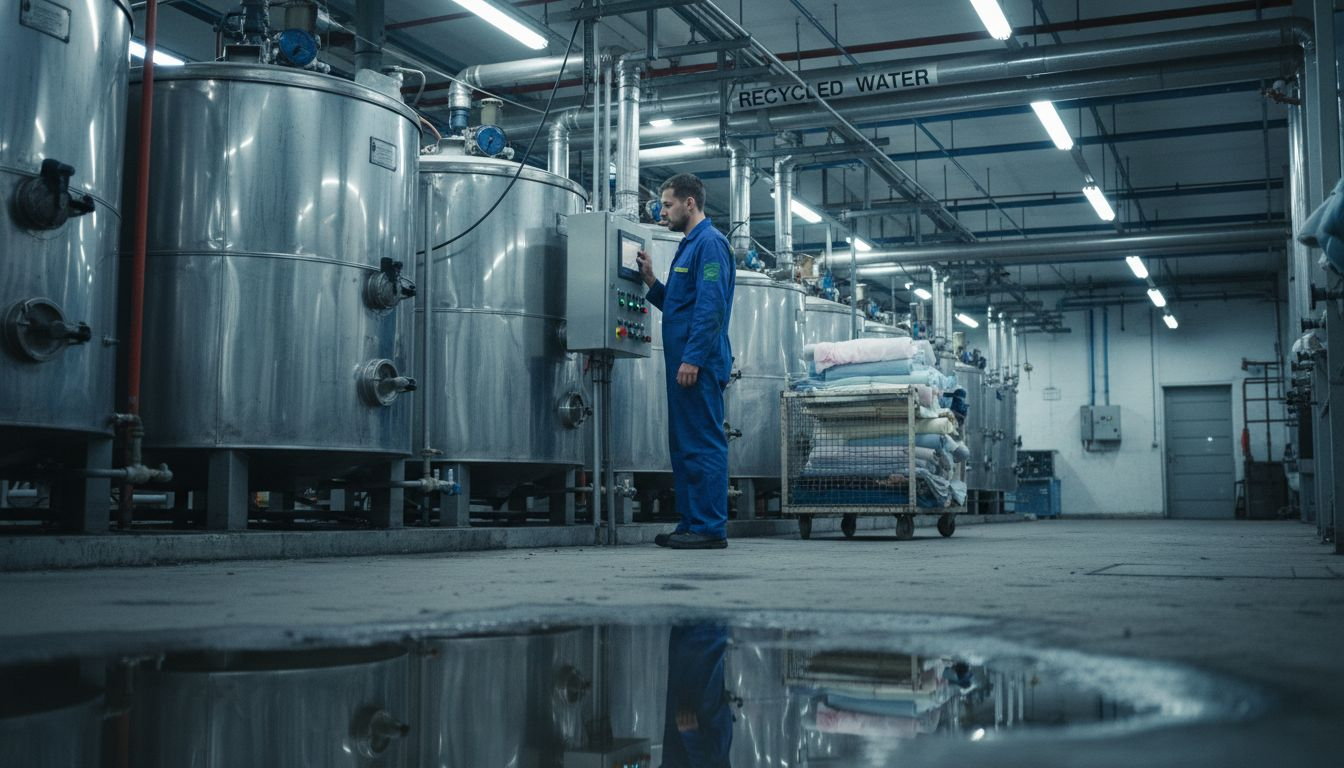
This system works with any fiber type but requires significant infrastructure investment. Brands implementing closed-loop systems typically apply them to high-volume production.
Performance and functional textiles
Advanced fabrics designed for active wear often incorporate water-saving methods alongside performance features. Moisture-wicking polyester blends, odor-resistant treatments, and quick-dry finishes frequently use water-efficient production.
These textiles align naturally with your lifestyle. You wash them less frequently due to odor resistance, reducing personal water consumption even as production water decreases.
Different textile types require different water-saving technologies, but all share the goal of reducing environmental impact without sacrificing performance.
Pro tip: Check product descriptions for specific fiber content and finishing methods mentioned—this tells you exactly how water was saved during production, not just whether it was.
Innovative technologies powering water efficiency
Water-saving fabrics exist because of real technological breakthroughs, not marketing spin. Modern machinery and chemical innovations have made it possible to produce vibrant, durable textiles using a fraction of the water that traditional methods require.
These technologies work at industrial scale, meaning they’re not niche or experimental. Major manufacturers deploy them daily, proving that sustainability and efficiency go hand in hand.
Here’s a quick comparison of leading water-saving textile methods and their unique impacts:
Technology | Water Reduction Potential | Typical Application | Major Benefit |
Low-liquor ratio dyeing | 30–50% less water | Cotton, polyester blends | Preserves color durability |
Closed-loop systems | Up to 70% less water | High-volume textile mills | Minimizes wastewater |
Enzymatic/waterless dyeing | Up to 100% less water | Synthetics, select naturals | Zero water required |
Automated batch control | 10–25% less water | All fiber types | Consistent quality output |
Low material liquor ratio dyeing systems
Low material liquor ratio (MLR) dyeing machines represent the most practical innovation in water reduction. Instead of using traditional ratios where fabric floats in large water tanks, MLR systems use concentrated dye solutions where fabric barely touches liquid.
The technology delivers:
30-50% reduction in water consumption per garment
Lower chemical usage through concentrated formulas
Faster processing times with automated controls
Consistent color quality across batches
Reduced wastewater requiring treatment
This works because water efficiency technologies like MLR depend on precision dosing. Advanced sensors and automation ensure exact dye-to-water ratios, eliminating guesswork and waste.
Advanced water recycling systems
Some facilities implement closed-loop systems where rinse water gets filtered and reused multiple times. After dyeing, water goes through reverse osmosis or mechanical filtration, then returns to the next cycle.
This approach can reduce total water consumption by up to 70% because the same water handles multiple production runs. The initial infrastructure costs are significant, but high-volume manufacturers justify the investment quickly.
Enzymatic and waterless dyeing
Emerging methods like enzymatic waterless dyeing apply color without submerging fabric in water. Instead, enzymes or advanced chemical processes fix dye directly onto fibers in dry or near-dry conditions.
These technologies are still scaling up but offer the most dramatic water reductions possible. Some methods use zero water entirely, though they currently suit specific fiber types.
Automated batch control systems
Modern dyeing facilities use computer-controlled batching systems that reduce human error and water waste. Automated systems monitor temperature, chemical concentration, and water levels in real time, adjusting as needed.
This precision prevents common problems like over-diluted dye baths requiring extra water or failed batches needing re-processing.
Technology doesn’t just make water-saving fabrics possible; it makes them economically viable for mainstream fashion production.
Pro tip: When evaluating water-saving brands, look for mentions of specific technologies like “low material liquor ratio dyeing” or “closed-loop water systems”—these indicate real infrastructure investment, not just greenwashing claims.
Environmental benefits and practical advantages
Water-saving fabrics deliver real environmental gains, not abstract sustainability metrics. When you buy clothing made with these technologies, you’re directly reducing freshwater consumption, pollution, and energy waste at the source.
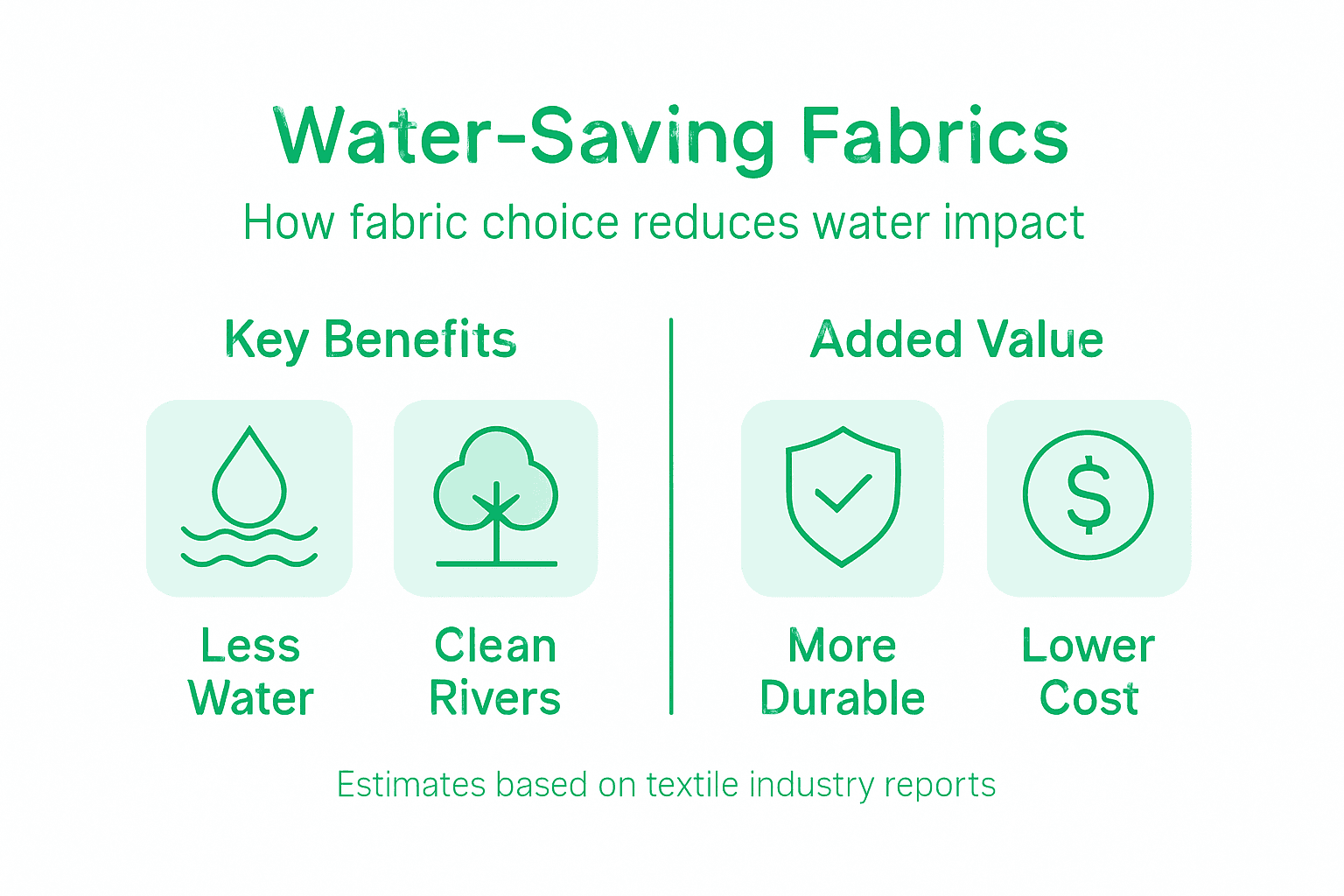
But there’s more. These benefits create a ripple effect through entire supply chains and local communities where textiles are produced.
Freshwater conservation and local impact
Textile production consumes enormous amounts of freshwater. A single conventional cotton shirt requires roughly 2,700 liters of water from cultivation through manufacturing. Water-saving fabrics cut this significantly through efficient dyeing and finishing.
This matters most in water-stressed regions. Countries like Bangladesh, India, and Vietnam produce most global textiles but face serious water scarcity. Reducing water consumption in these areas directly preserves drinking water for local populations.
You’re not just saving abstract gallons. You’re preserving resources for farmers, families, and communities that depend on limited freshwater supplies.
Pollution and wastewater reduction
Conventional dyeing releases toxic chemicals into waterways, contaminating ecosystems and drinking sources. Water-saving methods reduce wastewater volume and lower chemical loads entering treatment systems.
Environmental advantages include:
Fewer pollutants entering rivers and groundwater
Reduced burden on wastewater treatment infrastructure
Lower chemical toxicity in effluent discharge
Healthier aquatic ecosystems downstream
Safer water access for downstream communities
Energy and carbon footprint reduction
Heating water for traditional dyeing consumes massive energy. Water-saving technologies require less water heating, directly reducing energy usage and associated carbon emissions.
The connection is straightforward: less water to heat equals lower fuel consumption and smaller carbon footprint per garment.
Cost savings and economic viability
Water-saving innovations reduce operating costs through lower water procurement, treatment, and energy expenses. Manufacturers reinvest these savings into better wages, improved facilities, and larger-scale adoption of sustainable practices.
When you purchase water-saving fabrics, you’re supporting business models that reward efficiency, not cutting corners.
The table below highlights the environmental and economic benefits of water-saving fabrics versus traditional textiles:
Category | Water-Saving Fabrics | Conventional Textiles |
Freshwater Use | Significantly reduced | Very high per garment |
Wastewater Pollution | Lower toxicity/volume | High chemical output |
Energy Consumption | Reduced (less heating) | Substantial (water heating) |
Long-term Cost | Lower over time | Higher maintenance costs |
Consumer and regulatory advantages
Brands adopting water-saving technologies attract eco-conscious consumers and comply with increasingly strict environmental regulations. This creates market incentives for continued innovation rather than greenwashing.
Water-saving fabrics benefit environments, communities, manufacturers, and conscious consumers simultaneously—a rare alignment of interests.
Pro tip: Look for brand transparency about water reduction percentages and facility locations; specific numbers indicate genuine commitment, while vague claims usually mask minimal efforts.
Risks, challenges, and comparison with alternatives
Water-saving fabrics aren’t perfect, and pretending they are does nobody any favors. Real challenges exist around scaling, cost, and trade-offs between different sustainability goals. Understanding these limitations helps you make smarter purchasing decisions.
No single technology solves everything. The goal is choosing the best option for your specific needs and values.
High upfront investment and scalability barriers
Initial costs pose the biggest hurdle for manufacturers adopting water-saving technologies. Advanced dyeing equipment, filtration systems, and automation infrastructure require substantial capital investment that smaller facilities struggle to afford.
Challenges in waterless dyeing adoption include technical complexity, staff training requirements, and potential production disruptions during transition. Larger manufacturers can absorb these costs; smaller producers often can’t, creating market concentration issues.
This means water-saving fabrics remain more expensive than conventional alternatives, at least currently.
Chemical trade-offs and environmental concerns
While water-saving methods reduce water consumption, some alternatives introduce different chemical concerns. Water repellent treatments using fluorocarbons provide durability but raise health and environmental questions about chemical persistence.
Key trade-offs include:
Waterless dyeing requiring specialized chemicals with unclear long-term impacts
Some water-repellent coatings containing problematic persistent compounds
Closed-loop systems reducing water but concentrating chemical waste
Bio-based alternatives offering lower toxicity but less proven durability
Performance and durability questions
Certain water-saving methods work better with specific fiber types. Waterless dyeing suits synthetics well but suits natural fibers less consistently. This limits technology applicability across diverse garment types.
Some water-saving treatments also sacrifice breathability or flexibility compared to untreated alternatives, affecting comfort in athletic wear.
Comparison with true alternatives
Water-saving fabrics aren’t the only sustainability approach. Buying fewer, higher-quality garments reduces total water consumption more dramatically than buying water-efficient clothes frequently.
Other approaches include:
Purchasing secondhand clothing (zero new water use)
Choosing durable fabrics requiring less frequent replacement
Supporting circular fashion models with take-back programs
Extending garment lifespan through proper care
Water-saving fabrics work best combined with conscious consumption habits, not as replacements for them.
The perfect sustainable garment doesn’t exist—only better choices within realistic constraints.
Pro tip: Combine water-saving purchases with reduced consumption: one high-quality water-efficient garment worn for years beats buying multiple sustainable items you barely wear.
Embrace Water-Saving Fabrics with High-Performance Style
The article highlights the challenge of reducing water consumption in textile production without sacrificing quality or durability. If you care about conserving freshwater and demand apparel that lasts longer and requires less care, water-saving fabrics are your solution. LABFRESH incorporates advanced fabric technologies like FreshCore™ and Seawool that align with these goals by offering odor-resistance, stain-resistance, and easy maintenance—helping you minimize daily water use while enjoying premium performance.
Explore our collection of The Perfect Performance Shirts | LABFRESH crafted with smart, water-saving fabric innovations designed for active lifestyles.
Act now to reduce your environmental footprint with apparel that truly makes a difference. Visit LABFRESH and discover how The Smartest T-shirts | LABFRESH and The Performance Pants | LABFRESH deliver water-efficient performance every day. Upgrade your wardrobe with functional fashion that supports sustainability today.
Frequently Asked Questions
What are water-saving fabrics?
Water-saving fabrics are textiles designed to minimize water consumption during the manufacturing, dyeing, or finishing processes compared to conventional textile production methods. They incorporate technologies that reduce water use without sacrificing durability or performance.
How do water-saving fabrics impact the environment?
Water-saving fabrics significantly reduce freshwater consumption, pollution, and energy use during production. By using less water, they help preserve drinking resources in water-stressed areas and lower the carbon footprint associated with heating water for dyeing processes.
Are water-saving fabrics lower in quality than traditional textiles?
No, water-saving fabrics maintain the same strength, comfort, and longevity as traditional textiles. Modern water-saving technologies ensure that the quality and performance of the garments are not compromised even with reduced water usage.
What technologies are used in the production of water-saving fabrics?
Technologies for water-saving fabrics include low-liquor ratio dyeing systems, closed-loop production facilities, enzymatic or waterless dyeing, and advanced fabric construction methods. These innovations enable substantial reductions in water consumption while maintaining color quality and durability.
Recommended
Comments