Build a sustainable wardrobe: stylish & practical guide


Looking sharp at work while keeping your environmental footprint in check feels like a balancing act. But it doesn’t have to be. The textile industry creates 10% of global CO2 emissions, and clothing is worn 40% less than it was a decade ago. That’s a real problem, but also a real opportunity. Building a sustainable wardrobe means making intentional choices about what you own, what it’s made of, and how long it lasts. We’re going to walk you through every step, from auditing your closet to choosing innovative fabrics, so you can dress with confidence and purpose.
Table of Contents
Key Takeaways
Point | Details |
Start with an audit | Assess and declutter your current closet to clarify your needs and minimize waste. |
Prioritize versatility | Build a capsule of neutral, mix-and-match pieces to create many outfits with less. |
Choose smart materials | Opt for fabrics like organic cotton, TENCEL, and innovative bio-based textiles for sustainability and easy care. |
Care over quantity | Properly maintain clothes to extend their life and reduce your overall impact. |
Durability matters most | Frequent, long-term wear is more impactful than buying items just for eco-claims. |
Assessing and preparing your current wardrobe
Once you’re ready to change your approach, the first step is knowing what you already own and what really adds value. Most people are surprised to learn that the average person wears just 20% of their wardrobe on a regular basis. That means 80% of your closet is likely sitting idle, taking up space and representing wasted resources.
The core methodology for building an eco wardrobe starts with a thorough audit. Pull everything out. Yes, everything. Then sort each item into one of four categories:
Keep — Items you wear regularly, that fit well, and that align with your professional style.
Repair — Pieces with minor damage (loose buttons, small tears) that are worth fixing.
Donate — Good-condition items you no longer need but someone else can use.
Recycle — Worn-out pieces that can’t be donated but can be processed through textile recycling programs.
Once you’ve sorted, look at what remains in your “keep” pile. Identify your professional essentials: the items you reach for before important meetings, travel days, or client calls. These are your workhorses.
Now build a simple color palette. Sticking to two or three neutral base colors (think navy, gray, white, or camel) means every piece can mix and match with every other piece. This dramatically increases the number of outfits you can create from fewer items.
Benefits of a defined color palette:
Fewer impulse purchases
Faster morning decisions
More cohesive, polished appearance
Less waste over time
This is the foundation of a capsule wardrobe, a curated collection of versatile, timeless pieces that cover all your professional needs. For busy professionals, it also reduces decision fatigue. You spend less mental energy on “what to wear” and more on the work that matters. At Labfresh, we’ve seen firsthand how a focused wardrobe transforms not just style, but confidence.
Pro Tip: Take photos of your keep pile before putting it back. A visual inventory makes it easy to spot gaps and avoid buying duplicates.
Choosing versatile, stylish, and low-maintenance pieces
With a clear idea of your personal needs, the next step is building a versatile foundation with intentional choices. The capsule wardrobe concept isn’t new, but it’s more relevant than ever for professionals who want style without the clutter.

A capsule of 30 to 50 items in neutral shades can yield over 100 outfit combinations. That’s remarkable efficiency. For professionals, this means you can look polished every day without owning a massive wardrobe.
Core pieces worth investing in:
Tailored blazers in navy or charcoal
Well-fitted trousers in neutral tones
Classic turtlenecks and crew-neck knits
Versatile loafers or clean leather sneakers
Crisp shirts in white, light blue, and soft gray
Beyond silhouette and color, fabric performance matters enormously for professionals. Low-maintenance fabrics, specifically those that are wrinkle-resistant, machine-washable, and quick-drying, save time and reduce dry-cleaning costs. They also tend to last longer because they’re not subjected to harsh chemical cleaning processes.
Fabric property | Benefit for professionals |
Wrinkle-resistant | Looks sharp without ironing |
Machine-washable | Saves time and dry-cleaning costs |
Quick-dry | Ideal for travel and active days |
Odor-resistant | Extends wear between washes |
One practical strategy: the 30-day wait list. Before buying anything new, add it to a list and wait 30 days. If you still want it after a month, it’s likely a genuine need rather than an impulse. This simple habit curbs overconsumption and keeps your wardrobe intentional.
Pro Tip: When evaluating a new piece, ask yourself: “Can I wear this at least 30 times, in at least three different outfit combinations?” If the answer is no, skip it.
Selecting sustainable and innovative materials
Choosing the right pieces is only half the equation. What they’re made of also determines their impact and practicality. Raw materials can account for 43 to 50% of a garment’s environmental impact, so fabric choice is a serious decision.
The good news is that the range of recommended sustainable fabrics has expanded dramatically. Options now include organic cotton, wool, linen, hemp, TENCEL (a fiber made from sustainably sourced wood pulp), rPET (recycled polyester from plastic bottles), and innovative bio-based materials like Piñatex (from pineapple leaf fibers), Desserto (from cactus), Vegea (from grape waste), Chromtex, and even graphene-enhanced textiles.
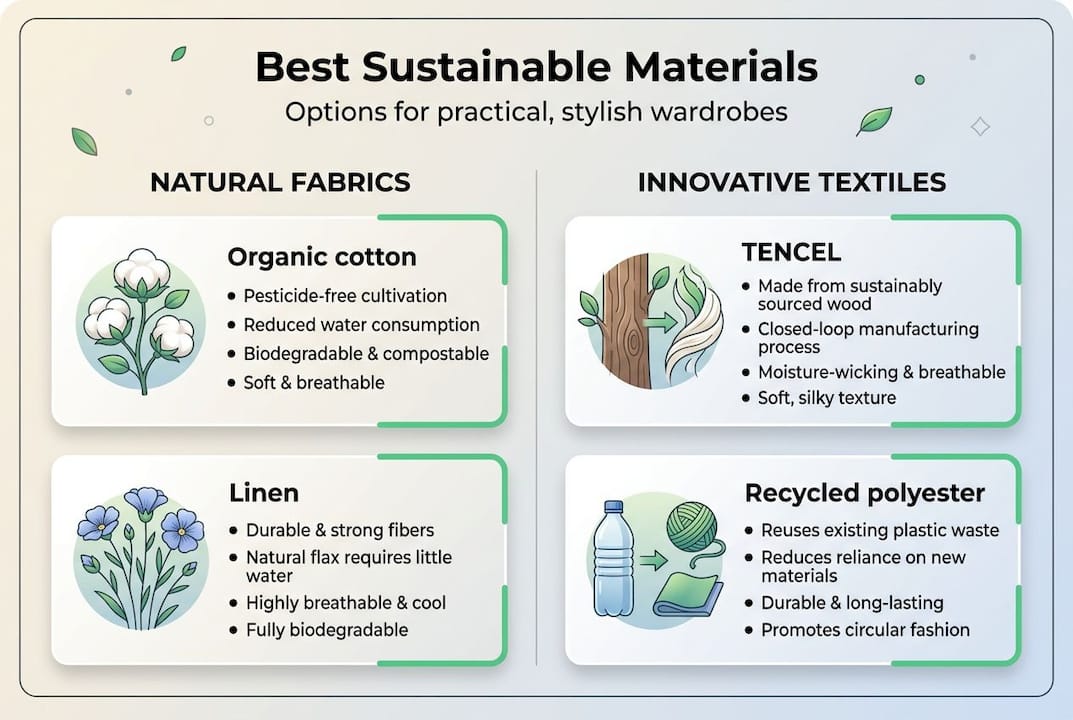
Material | Key benefit | Watch out for |
Organic cotton | Soft, breathable, no pesticides | Higher water use than hemp |
TENCEL | Silky, biodegradable, low water use | Can wrinkle easily |
rPET | Diverts plastic waste | Sheds microplastics when washed |
Linen/hemp | Durable, low-impact farming | Can feel stiff initially |
Piñatex/Desserto | Innovative, animal-free | Still scaling, limited availability |
For busy professionals, performance matters as much as eco-credentials. Our non-iron classic shirts use advanced fabric technology to stay crisp all day without ironing, while our innovative stretch shirts combine flexibility with a polished look that works from morning meetings to evening events.
Watch for these certifications:
GOTS (Global Organic Textile Standard): Verifies organic fiber content and responsible processing.
Fair Trade Certified: Ensures ethical labor practices throughout the supply chain.
OEKO-TEX Standard 100: Confirms no harmful substances in the finished product.
Beware of greenwashing. Terms like “eco-friendly” or “conscious collection” without third-party certification are marketing language, not guarantees. Always look for verifiable standards.
Pro Tip: Check the care label before buying. If a garment requires dry-cleaning only, its long-term environmental cost is likely higher than a machine-washable alternative made from a less “green” fiber.
Caring for and maintaining your sustainable wardrobe
After selecting the right clothing, effective care ensures your investment in style and sustainability pays long-term dividends. How you wash, dry, and store your clothes has a bigger impact than most people realize.
Washing clothes less, in cold water, air drying, and repairing items can double or triple the lifespan of a garment. Extending the life of a piece by just nine months cuts its environmental impact by 20 to 30%. That’s a meaningful number.
Step-by-step care routine for professionals:
Wash less often. Spot-clean between wears when possible. Many garments, especially wool and odor-resistant fabrics, don’t need washing after every use.
Use cold water. Cold cycles clean effectively while using less energy and causing less fiber breakdown.
Air dry when possible. Tumble drying is one of the biggest contributors to fabric wear and energy use.
Store properly. Fold knits, hang structured pieces, and use cedar blocks instead of chemical moth repellents.
Repair early. A loose button fixed today prevents a ruined shirt tomorrow.
End-of-life options:
Resell through platforms like Vinted or Depop
Donate to local shelters or clothing drives
Return to brand take-back programs
Drop off at textile recycling bins
“The most sustainable garment is the one you already own and keep wearing.” This principle should guide every care decision you make.
Pro Tip: Keep a small repair kit (needle, thread, spare buttons) in your wardrobe. Fixing minor issues immediately takes two minutes and can add years to a garment’s life.
What most guides miss about true sustainability
Most sustainability guides focus heavily on what you buy. Organic this, recycled that. And while material choice matters, it’s not the whole story. We’d argue it’s not even the most important part.
Durability and frequency of wear can easily outweigh fabric type for overall sustainability. A well-made shirt worn 200 times has a far lower per-wear impact than a “sustainable” alternative worn 20 times before falling apart or going out of style.
For professionals, the wardrobe equation includes image, upkeep, and utility. You need pieces that hold their shape, resist staining, and look sharp across seasons. That’s not vanity. That’s practicality. Chasing trendy “eco” fabrics that don’t perform in a professional context is a trap we see often. People buy something because it has a green label, wear it a handful of times, and replace it. That cycle is worse than buying one excellent, durable piece and wearing it for years.
Our brand values are built around exactly this principle: longevity, performance, and real innovation over surface-level sustainability claims. Look for measurable certifications, repairability, and genuine longevity. Those are the markers of a wardrobe that actually makes a difference.
Find the perfect sustainable essentials
Ready to put these principles into action? Building a smart capsule wardrobe starts with pieces that genuinely perform, and that’s exactly what we’ve built at LABFRESH.
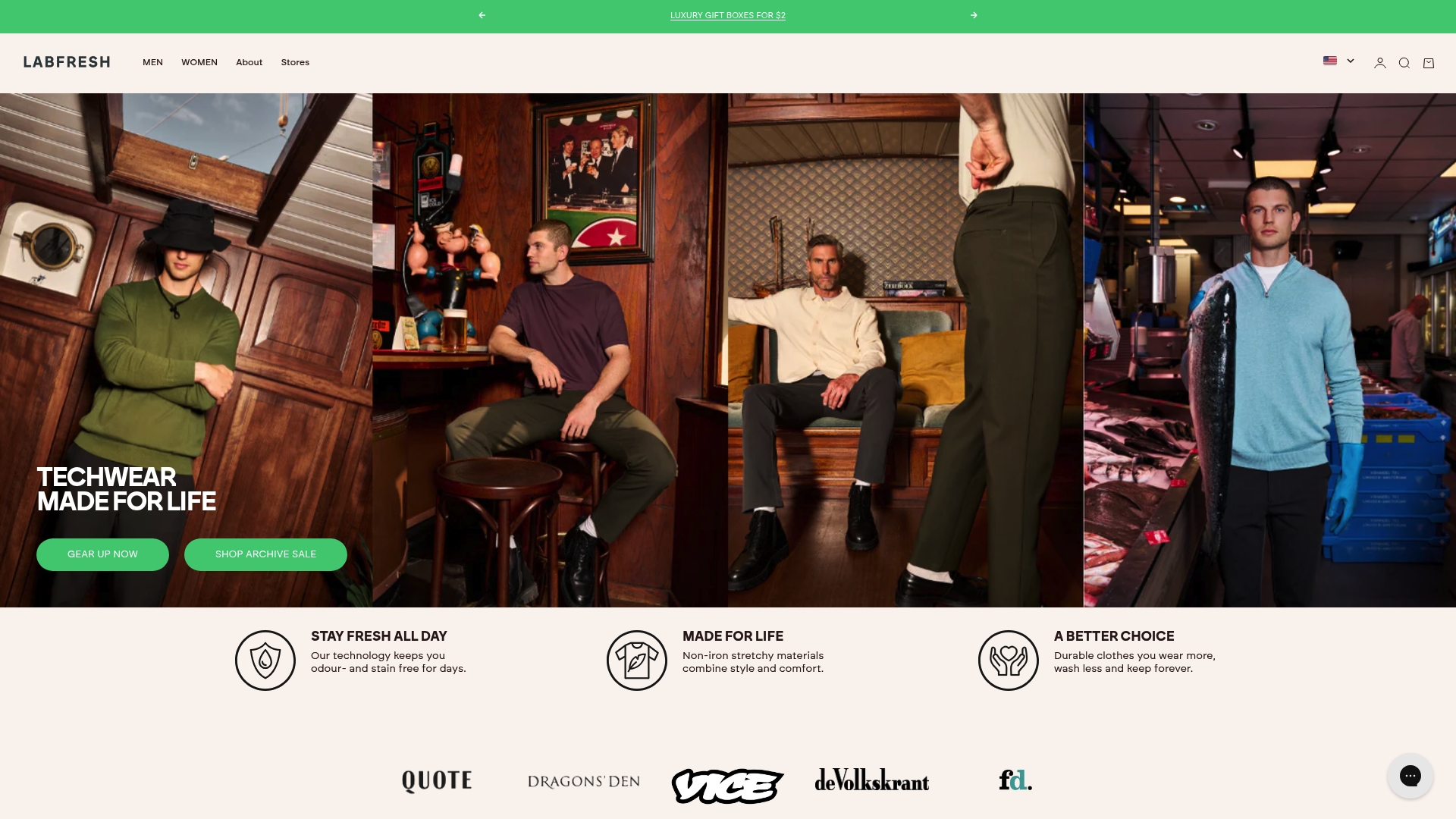
Our collections are designed for professionals who want style without compromise. Browse our performance shirts for wrinkle-free, odor-resistant options that stay sharp from morning to evening. Pair them with our sustainable performance pants for a complete, low-maintenance look. For cooler days, our performance jacket delivers both warmth and a clean, professional silhouette. Every piece is built to last, easy to care for, and designed to work harder so your wardrobe can stay smaller and smarter.
Frequently asked questions
What is the first step to building a sustainable wardrobe?
Start by auditing your closet, sorting everything into keep, repair, donate, and recycle categories to understand what you have and what you truly need.
How many clothing items should be in a sustainable capsule wardrobe?
A capsule wardrobe typically has 30 to 50 versatile pieces, which can create over 100 outfit combinations for professionals.
Which fabrics are most sustainable for professional attire?
Opt for organic cotton, linen, TENCEL, recycled polyester, and innovative bio-based or smart textiles for both sustainability and performance.
Does garment care really make a difference in sustainability?
Yes. Washing less, air drying, and repairing can double or triple a garment’s lifespan and significantly cut its environmental impact.
Recommended
Comments