Why Prioritize Fabric Innovation? 40% Less Care Time
- Leroy Hughes

- Feb 28
- 9 min read

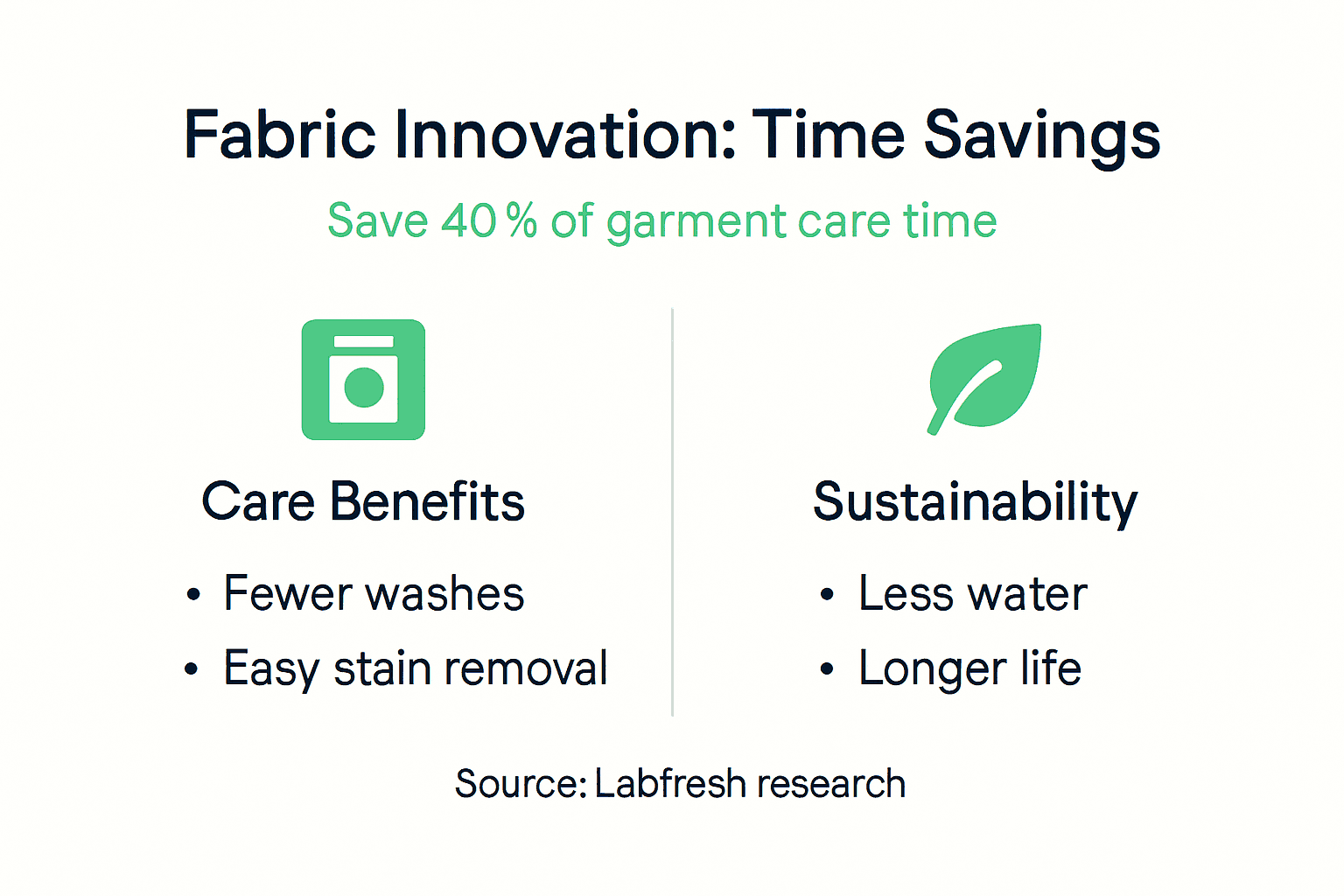
Modern clothing must work as hard as you do. Recent advances in textile science show that innovative fabrics can reduce your garment care time by up to 40% while extending lifespan and maintaining style. For busy professionals juggling demanding schedules, this isn’t just convenience—it’s a lifestyle transformation. This guide explains how fabric innovation delivers performance, sustainability, and effortless maintenance.
Table of Contents
Key Takeaways
Point | Details |
Time savings | Fabric innovation reduces garment care time by up to 40%, freeing valuable hours for busy consumers. |
Extended lifespan | Advanced antimicrobial and stain-resistant technologies extend garment lifespan by 30 to 40%. |
Environmental impact | Recycled and bio-based fibers lower environmental impact by up to 75% versus conventional fabrics. |
Lifestyle alignment | Innovative fabrics combine style, durability, and sustainability perfectly suited for active lifestyles. |
Smart shopping | Understanding fabric tech empowers you to make informed, sustainable wardrobe investments. |
The Importance of Fabric Innovation for Modern Apparel
You face a daily wardrobe challenge: finding clothes that look sharp, last long, and don’t demand constant attention. Traditional fabrics force you to choose between style and practicality, leaving you stuck with garments that fade quickly or require endless washing.
Fabric innovation eliminates this compromise entirely. Modern textile technologies deliver odor resistance that keeps shirts fresh through multiple wears, stain repellency that protects against spills, moisture wicking that maintains comfort during active days, and UV protection for outdoor activities. These aren’t marketing gimmicks—they’re engineered solutions to real problems.
Busy lifestyles demand clothes that stay fresh longer and require fewer washes. Every extra day between laundry loads saves water, energy, and your precious time. The math is simple: fewer washes mean lower utility bills, reduced environmental impact, and more time for what matters.
Labfresh exemplifies this approach with products like 4-way stretch shirts that combine flexibility with performance, non-iron stretch shirts that eliminate tedious pressing, and odor-resistant business shirts that maintain freshness throughout demanding workdays.
Key benefits for busy consumers:
Reduced washing frequency saves 3 to 5 hours monthly on laundry tasks
Stain resistance preserves professional appearance without constant spot cleaning
Moisture management keeps you comfortable during commutes and meetings
Odor control maintains confidence through extended wear periods
Wrinkle resistance eliminates ironing from your routine
Pro tip: Prioritize garments with multiple fabric innovations—combining odor resistance with stain repellency and stretch delivers maximum lifestyle impact.
How Fabric Innovations Work: Technical Mechanisms Explained
Understanding the science behind these fabrics helps you evaluate products confidently. Antimicrobial treatments embed silver ions into fibers, creating an environment hostile to odor-causing bacteria. Research shows that silver ion treatments reduce bacterial growth by over 99%, prolonging freshness during extended wear periods.
Stain-resistant technologies work through two mechanisms: fiber engineering and surface treatments. Engineered fibers create a tighter weave that prevents liquids from penetrating, while hydrophobic coatings cause spills to bead up and roll off before staining. This dual approach means coffee spills wipe away easily instead of setting permanently.
Moisture-wicking fabrics use capillary action to pull sweat away from skin and distribute it across a larger surface area for faster evaporation. Studies demonstrate that high-performance fabrics improve moisture management by up to 70% and UV protection by UPF 30+ standards, enhancing both comfort and safety.
Core fabric technologies:
Silver ion antimicrobial treatments inhibit bacterial growth at the molecular level
Hydrophobic coatings create protective barriers against liquids and dirt
Engineered fiber structures optimize moisture transport and air circulation
UV-absorbing compounds embedded in fibers block harmful radiation
Technology | Primary Benefit | Performance Metric | Application |
Antimicrobial | Odor control | 99%+ bacteria reduction | Shirts, underwear, activewear |
Stain resistant | Easy cleaning | 85% stain prevention | Shirts, pants, outerwear |
Moisture wicking | Comfort | 70% faster drying | Athletic wear, dress shirts |
UV protection | Sun safety | UPF 30+ rating | Outdoor apparel, summer wear |
Labfresh’s commitment to fabric technology and sustainability demonstrates how these innovations integrate seamlessly into everyday apparel without compromising aesthetics.
Pro tip: When evaluating fabric claims, look for specific performance metrics and third-party testing verification rather than vague marketing language.
Sustainability Benefits of Fabric Innovation: Reducing Impact
Innovative fabrics aren’t just about personal convenience—they’re environmental game changers. Recycled polyester production uses 59% less energy than virgin polyester, and research confirms that recycled polyester reduces greenhouse gas emissions by up to 75% compared to virgin polyester production.
Bio-based fibers derived from renewable sources like oyster shells, coffee grounds, or bamboo offer additional sustainability advantages. These materials often require less water during cultivation and processing while providing comparable or superior performance to petroleum-based synthetics.
Durability multiplies these environmental benefits exponentially. A garment lasting three years instead of one effectively reduces your clothing footprint by two-thirds. Extended lifespan means fewer resources consumed in manufacturing, less packaging waste, reduced shipping emissions, and decreased landfill burden.
Labfresh’s Seawool blend, featured across their sustainability initiatives, combines recycled oyster shells with recycled plastic bottles to create high-performance fabrics with minimal environmental impact. This innovation delivers warmth, breathability, and odor resistance while diverting waste from oceans and landfills.
Environmental advantages:
Recycled fibers cut carbon emissions by 50 to 75% versus virgin materials
Reduced washing frequency saves 20 to 30 gallons of water per garment annually
Extended lifespan decreases manufacturing demand and associated pollution
Bio-based materials utilize renewable resources and agricultural byproducts
Lower care requirements reduce energy consumption from washing and drying
Fabric Type | Carbon Footprint | Water Usage | Lifespan | Washing Frequency |
Conventional cotton | 100% baseline | 100% baseline | 1 to 2 years | 2x weekly |
Virgin polyester | 80% of cotton | 40% of cotton | 2 to 3 years | 2x weekly |
Recycled polyester | 25% of cotton | 20% of cotton | 3 to 4 years | 1x weekly |
Innovative blends | 20% of cotton | 15% of cotton | 3 to 5 years | 2x monthly |
Sustainability spotlight: A single innovative garment replacing three conventional items over five years eliminates approximately 150 pounds of CO2 emissions and saves 800 gallons of water.
Overcoming Common Misconceptions About Fabric Innovation
You’ve probably heard claims that natural fibers are always superior or that innovative fabrics are just marketing hype. Let’s separate fact from fiction.
Myth: Natural fibers are inherently more sustainable and easier to care for. Reality: While natural fibers have advantages, advanced synthetics often outperform them in longevity and maintenance requirements. Comparative studies show that synthetic antimicrobial fabrics can extend garment lifespan by 30 to 40% compared to cotton due to better resistance to wear and microbial degradation.
Myth: Odor resistance is marketing hype with no real benefits. Reality: Antimicrobial silver ions demonstrably inhibit odor-causing bacteria, with clinical testing showing over 99% bacterial reduction. This translates to garments staying fresh three to five times longer than untreated alternatives.
Myth: Innovative fabrics require special care routines or expensive treatments. Reality: Most performance fabrics are specifically designed to simplify care. Non-iron innovative shirts maintain crisp appearance without pressing, while stain-resistant finishes mean simpler spot cleaning.
Common misconceptions clarified:
Cotton isn’t always more breathable—engineered synthetics often provide superior moisture management
Stain resistance doesn’t wear off quickly—quality treatments last hundreds of wash cycles
Performance fabrics aren’t uncomfortable—modern innovations prioritize soft hand feel
Antimicrobial treatments don’t harm skin—silver ions target bacteria, not human cells
Recycled materials don’t compromise quality—they often match or exceed virgin fiber performance
Understanding these realities helps you make confident purchasing decisions based on actual performance rather than outdated assumptions.
How Fabric Innovation Enhances Durability and Care Convenience
The true value of fabric innovation reveals itself over months of regular wear. Odor-resistant fabrics genuinely cut washing frequency by up to 50%, which translates to saving roughly 25 wash cycles annually per garment. That’s 25 fewer opportunities for fiber breakdown, color fading, and shape distortion.
Stain-resistant finishes preserve your professional appearance with minimal effort. Coffee splashes, lunch mishaps, and daily grime wipe away easily instead of requiring immediate laundering or professional cleaning. This simplicity maintains style while reducing maintenance stress.

Enhanced durability means garments last 30 to 40% longer than conventional alternatives, directly reducing replacement costs. A shirt worn 300 times costs far less per wear than one lasting only 100 wears, regardless of initial price difference.
Durability and care benefits:
Fewer washes preserve fiber integrity, color vibrancy, and garment shape longer
Stain resistance eliminates emergency cleaning runs and dry cleaning expenses
Reinforced construction withstands daily wear without visible deterioration
Wrinkle resistance maintains professional appearance throughout busy days
Quick-drying properties allow overnight freshening between wears
Products like non-iron classic shirts, durable performance shirts, and easy-care shirts demonstrate how fabric innovation integrates seamlessly into wardrobe staples you rely on daily.
Pro tip: Calculate cost per wear rather than purchase price—innovative garments offering triple the lifespan deliver superior value despite higher upfront investment.
Practical Benefits of Fabric Innovation for Busy Lifestyles
How does this translate to your daily routine? Imagine reclaiming two to three hours weekly previously spent on laundry, ironing, and stain treatment. That time compounds into 100 to 150 hours annually—nearly four full days returned to you.
Extended garment lifespan means fewer shopping trips, less decision fatigue, and reduced wardrobe management stress. You build a smaller, higher-quality collection that serves you reliably rather than constantly replacing worn-out items.
Consumer experiences consistently highlight greater comfort during active days, maintained freshness through long meetings or travel, and preserved style without constant attention. Research indicates that clothing with advanced fabric tech can last an average of 2 to 3 years longer than conventional garments, doubling usage time in some categories.
Lifestyle impact for active professionals:
Pack lighter for business travel knowing clothes stay fresh multiple days
Transition seamlessly from office to evening activities without wardrobe changes
Maintain professional appearance despite unpredictable weather or temperature fluctuations
Spend mornings on priorities instead of ironing or outfit crisis management
Invest in versatile pieces serving multiple occasions and seasons
The performance pants collection exemplifies versatility, offering styles appropriate for business meetings, casual weekends, and active pursuits without requiring separate wardrobes for each context.
Selecting fabric innovation aligns your style with convenience and sustainability values, creating a wardrobe that supports rather than complicates your life.
Summary: How to Prioritize Fabric Innovation in Your Wardrobe
Fabric innovation delivers lasting style, durability, sustainability, and care ease simultaneously. You no longer sacrifice one benefit for another—modern textiles integrate all these qualities seamlessly.
When shopping, prioritize garments with verified antimicrobial treatments, documented recycled content percentages, and clearly explained low-maintenance finishes. Transparency in fabric technology descriptions indicates brands committed to genuine innovation rather than marketing buzzwords.
Fabric innovation evaluation checklist:
Verify specific antimicrobial technology (silver ions, zinc pyrithione) with performance data
Confirm stain-resistant treatment type (hydrophobic coating, fiber engineering) and durability
Check recycled or bio-based fiber content percentage and source materials
Review care instructions—truly innovative fabrics simplify rather than complicate washing
Assess brand transparency about fabric sourcing, testing, and sustainability certifications
Calculate cost per wear based on expected lifespan versus purchase price
Read customer reviews focusing on long-term performance after multiple wash cycles
Compare warranty or guarantee terms reflecting manufacturer confidence in durability
Align fabric features with your specific lifestyle priorities. Frequent travelers benefit most from odor resistance and wrinkle resistance. Active professionals value moisture wicking and stain protection. Environmentally conscious consumers prioritize recycled content and extended lifespan.
Take action by selecting brands transparently communicating innovation benefits with specific performance metrics rather than vague claims. Your wardrobe should work for you, not the other way around.
Explore Labfresh’s Innovative Apparel Solutions
Ready to experience the fabric innovation difference? Labfresh integrates cutting-edge textile technology across innovative shirts, performance pants, and water-repellent performance jackets designed specifically for your demanding lifestyle.
Our apparel combines odor resistance, stain repellency, and sustainable fibers in styles that transition effortlessly from boardroom to weekend. Each piece undergoes rigorous testing to ensure it delivers promised performance through hundreds of wears and washes. We design for busy professionals who refuse to compromise style for functionality.
Pro tip: Check detailed fabric technology descriptions on product pages to understand exactly how each garment will perform in your specific use cases.
Why Prioritize Fabric Innovation? FAQ
What makes antimicrobial fabrics more effective than regular fabrics?
Antimicrobial fabrics use treatments like silver ions to kill or inhibit odor-causing bacteria at the molecular level, keeping clothes fresher far longer than untreated alternatives. Clinical testing demonstrates that silver ion treatments reduce bacterial growth by over 99%, prolonging freshness during extended wear periods. This proven technology outperforms untreated fabrics by three to five times in odor control.
How do innovative fabrics reduce the need for frequent washing?
Odor-resistant fabrics inhibit the bacteria that cause unpleasant smells, allowing you to wear garments multiple times between washes without freshness concerns. Stain repellency prevents dirt and liquids from penetrating fibers, reducing visible wear and cleaning requirements. Together, these technologies can cut washing frequency by 40 to 50%.
Are synthetic innovative fabrics really more sustainable than natural fibers?
Advanced synthetics incorporating recycled content often deliver superior sustainability profiles through extended lifespan and reduced care requirements. Comparative research confirms that synthetic antimicrobial fabrics can extend garment lifespan by 30 to 40% compared to cotton due to better resistance to wear and microbial degradation. Recycled polyester cuts carbon emissions by 75% versus virgin materials, often outperforming conventional natural fibers environmentally.
Can I machine wash stain-resistant and odor-resistant garments like normal clothes?
Yes, most innovative fabrics are specifically designed for standard home laundering without special detergents, temperature requirements, or wash cycles. This convenience represents a core benefit of fabric innovation—simplifying rather than complicating your care routine. Always check specific garment care labels, but expect easier maintenance than conventional fabrics.
How do I identify fabric innovation technology when shopping?
Check product labels and brand websites for detailed fabric technology descriptions, specific treatment names, and performance certifications rather than vague marketing claims. Look for keywords like antimicrobial with silver ions specified, odor-resistant with bacterial reduction percentages, recycled fiber content with source materials listed, stain-repellent with hydrophobic coating details, and moisture-wicking with evaporation rate data. Reputable brands provide transparent, specific information about how their fabrics perform.
Recommended
Comments