Why invest in durable clothing in 2026: sustainability wins
- Leroy Hughes

- Mar 12
- 8 min read

You might assume spending more guarantees clothing that lasts, but research reveals no correlation between price and durability. What truly drives longevity is fabric technology, fiber composition, and construction methods. For style-conscious professionals and active lifestyle enthusiasts, understanding these factors unlocks cost savings, reduces environmental impact, and delivers clothing that performs through intense use while maintaining its appearance and comfort.
Table of Contents
Key takeaways
Point | Details |
Durability reduces waste | Durable clothing cuts textile waste by up to 30% through extended garment life. |
Technology drives performance | Advanced fabrics like moisture-wicking and abrasion-resistant materials enhance both longevity and comfort. |
Price misleads buyers | Studies show expensive garments don’t necessarily last longer than well-constructed affordable options. |
Sustainability requires nuance | Material choices involve complex trade-offs between durability, recyclability, and environmental footprint. |
Smart investment pays off | Durable clothing lasts 5-10 times longer than fast fashion, delivering significant cost savings. |
Understanding durability: materials, technology, and value
The durability equation starts with three core elements: fiber strength, fabric construction, and finishing treatments. Fabric durability depends on construction, fiber properties, and treatments working together to resist wear, tearing, and degradation. High-performance fibers like merino wool, Dyneema, and advanced synthetic blends deliver exceptional abrasion resistance while maintaining breathability.
Fiber selection determines how well clothing withstands daily stress. Natural fibers like wool offer resilience and recovery, bouncing back after compression. Synthetics provide tear resistance and dimensional stability. Blends combine these strengths, creating fabrics that resist pilling, maintain shape, and survive repeated washing without breaking down.
Fabric weave and knit structure matter just as much as fiber choice. Tight weaves increase abrasion resistance. Reinforced seams prevent stress point failures. Special finishes add stain resistance or water repellency without compromising breathability. This fresh take on sustainability focuses on creating garments that truly last.
Proper care extends even the most durable fabrics. Following manufacturer guidelines for washing temperature, drying methods, and storage prevents premature breakdown. Understanding fabric composition helps you treat each garment appropriately, maximizing its lifespan.
Pro Tip: Always examine fabric composition labels and care instructions before purchasing. Look for specific fiber percentages and technology names rather than vague marketing terms.
Key durability indicators include:
Denier rating for synthetic fibers (higher numbers indicate thicker, more abrasion-resistant yarns)
Reinforcement at stress points like elbows, knees, and shoulders
Quality of stitching and seam construction
Presence of tested fabric technologies with performance specifications
Benefits of durable clothing for cost savings and the environment
Investing in clothing that lasts transforms your wardrobe economics. Garments lasting 5-10 times longer than fast fashion mean fewer shopping trips, reduced spending on replacements, and better value per wear. A shirt worn 200 times costs pennies per use compared to one discarded after 20 wears.
The environmental benefits extend beyond reduced purchases. Durable clothing decreases textile waste by up to 30% by keeping garments out of landfills longer. Manufacturing new clothing consumes massive amounts of water, energy, and raw materials. Each garment you don’t replace saves these resources across the entire production chain.
Longer-lasting clothes require less frequent washing, cutting water and energy consumption. Advanced fabrics that resist odors and stains extend time between washes without sacrificing hygiene or appearance. This compounds environmental savings while reducing your household utility costs.
These sustainability principles demonstrate how durability drives meaningful environmental progress:
Extending garment life by just nine months reduces carbon, water, and waste footprints by 20-30% each. Durability isn’t a luxury feature but an environmental necessity.
The circular economy depends on products designed for longevity. Durable clothing maintains value longer, supporting resale and secondhand markets. Quality garments remain wearable and attractive after years of use, creating options beyond disposal when you’re ready for something new.
Consider total cost of ownership rather than purchase price alone. A $150 shirt worn 300 times costs $0.50 per wear. A $40 shirt worn 30 times costs $1.33 per wear. Durability makes premium pricing economical over time while delivering superior performance and comfort throughout the garment’s life.
How advanced fabric technologies enhance durability and performance
Modern fabric engineering creates materials that outperform traditional textiles dramatically. Cordura and Dyneema offer superior abrasion and tear resistance while remaining lightweight and flexible. These high-performance fibers enable clothing that survives intense activity without bulk or stiffness.
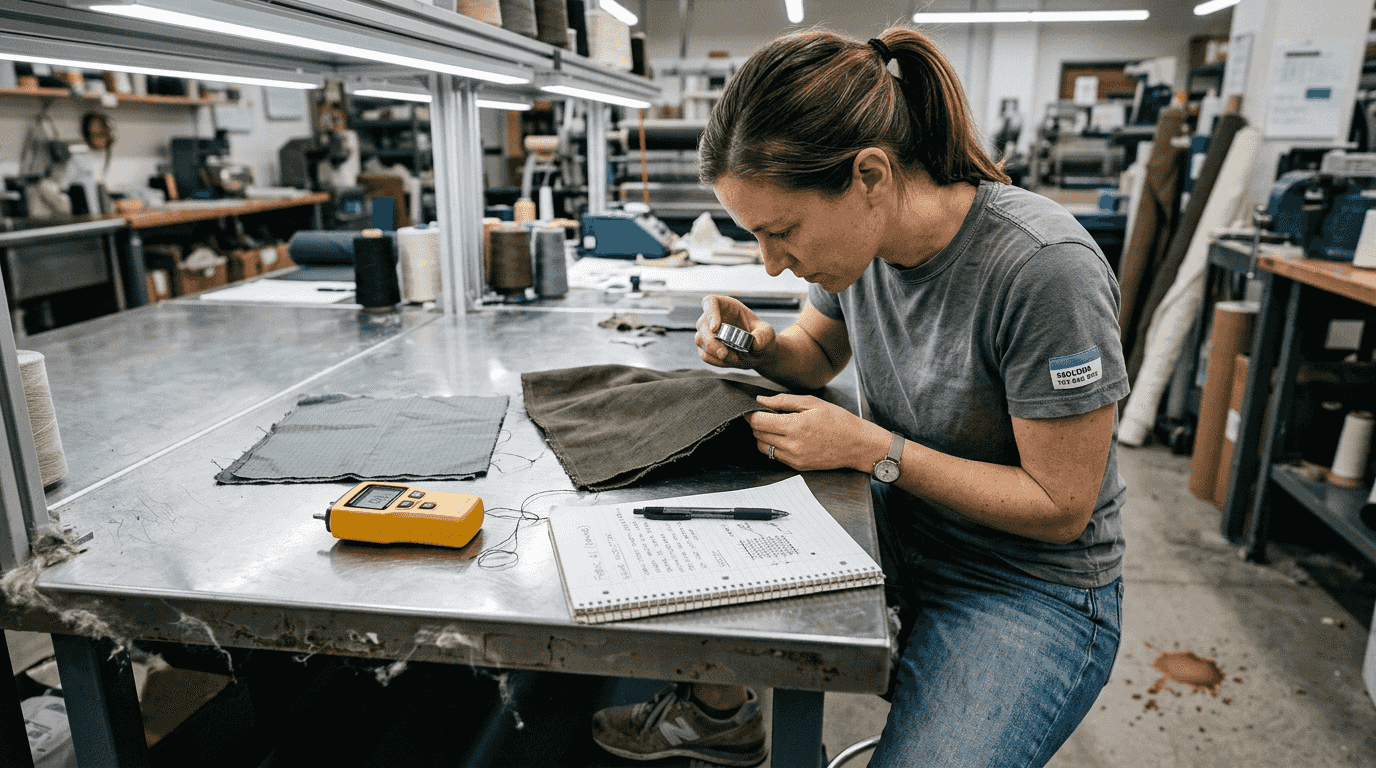
Moisture management technologies transform comfort and longevity. Moisture-wicking and quick-drying properties reduce washing frequency, extending garment life while saving time and resources. Fabrics that move sweat away from skin dry rapidly, preventing bacterial growth that causes odors and degradation.
UV protection built into fabrics shields both skin and fibers from sun damage. This matters for outdoor enthusiasts and anyone spending time in bright environments. UV-resistant treatments prevent color fading and fiber breakdown, maintaining appearance and structural integrity through years of exposure.
Thermal regulation technologies adapt to activity levels and environmental conditions. Phase-change materials absorb excess heat during exertion and release it when you cool down. This keeps you comfortable across temperature ranges while reducing the need for multiple garment layers.
Smart textiles integrate performance features seamlessly. These 4-way stretch shirt features demonstrate how modern fabrics combine mobility, durability, and style without compromise.
Technology | Primary Benefit | Durability Impact |
Cordura/Dyneema | Abrasion resistance | 3-5x longer life in high-wear areas |
Moisture-wicking | Quick-drying comfort | Reduces washing frequency by 40-50% |
UV protection | Sun damage prevention | Maintains color and fiber strength |
Antimicrobial treatment | Odor resistance | Extends wear between washes |
Pro Tip: Look beyond material names to specific technology specifications. Ask brands for wash-cycle testing data and abrasion resistance ratings rather than relying on marketing claims.
Nuances and myths: price, weight, and true durability
The price-durability myth persists despite clear evidence against it. Price shows no correlation with t-shirt durability, with synthetic blends and well-designed cotton both performing strongly regardless of cost. Premium pricing often reflects brand positioning, marketing, or design rather than superior materials or construction.
Fabric weight misleads buyers just as much as price. Lightweight fabrics engineered with high-performance fibers frequently outlast heavier traditional materials. A thin shell made with ripstop nylon provides better tear resistance than thick cotton canvas while weighing a fraction as much.
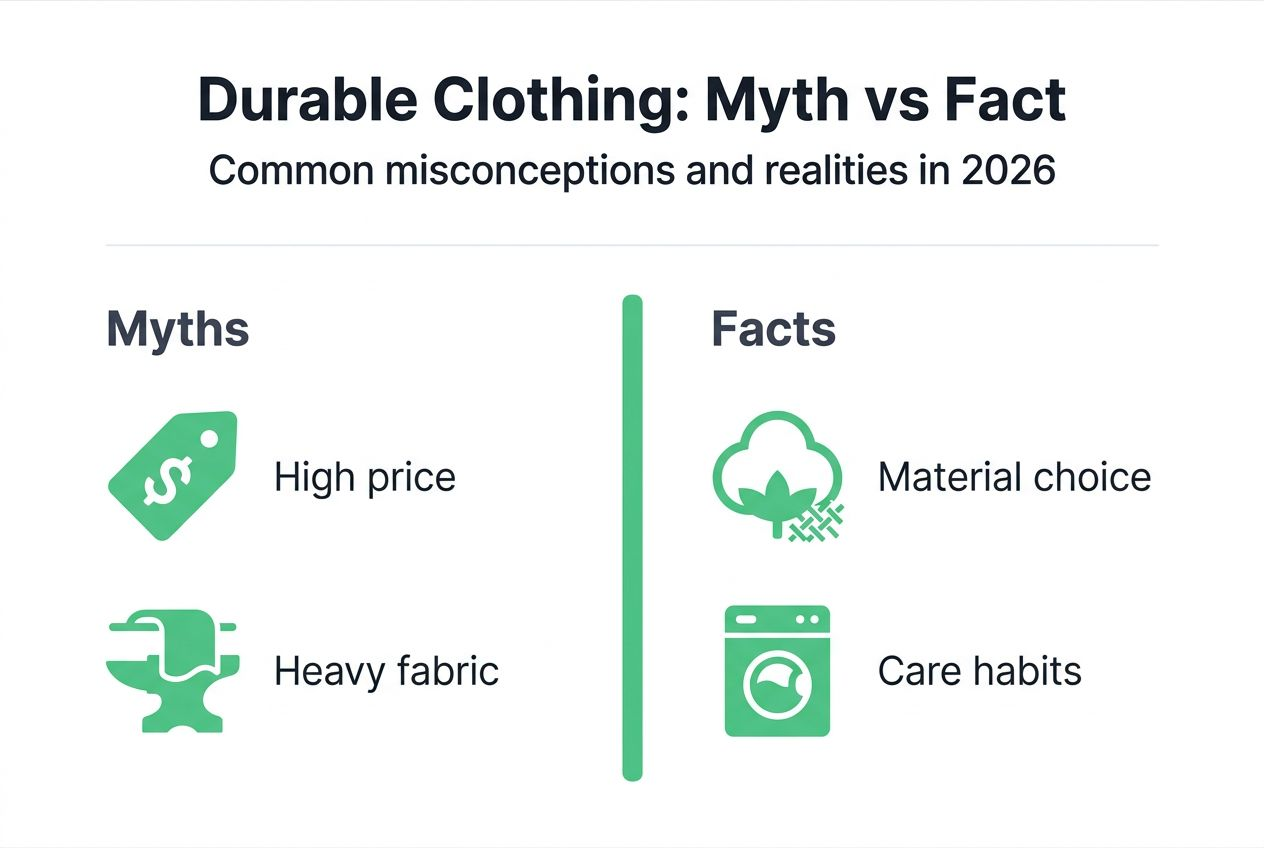
Material composition matters more than category generalizations. Some cotton garments demonstrate excellent durability through careful fiber selection, tight weaves, and quality construction. Synthetic blends aren’t automatically superior, though they often provide specific advantages like faster drying or better shape retention.
Consumer expectations exceed current industry standards. Testing protocols use 50 wash cycles as benchmarks, but active individuals need clothing surviving 200+ washes. This gap means shoppers must research actual performance data rather than trusting standard certifications alone.
Sustainability involves complex trade-offs between competing priorities:
Durability vs. recyclability (mixed-fiber fabrics last longer but complicate recycling)
Performance treatments vs. environmental impact (some finishes reduce washing needs but add chemicals)
Natural vs. synthetic materials (each offers different durability and ecological profiles)
Repair potential vs. initial cost (some garments support repairs better than others)
Factor | Common Assumption | Reality |
Price | Higher cost means better quality | No correlation proven in studies |
Weight | Heavier fabrics last longer | Lightweight technical fabrics often more durable |
Material | Natural fibers always better | Performance depends on construction and use case |
Certifications | Standard tests ensure durability | Industry protocols often below real-world needs |
These classic non-iron shirt details show how technology delivers durability through fabric engineering rather than weight or price.
Choosing durable clothing for your lifestyle: practical tips
Start by evaluating intended use and required performance characteristics. Office wear needs wrinkle resistance and professional appearance after repeated wearing. Active clothing demands moisture management and abrasion resistance. Travel pieces require versatility and easy care. Matching garment capabilities to actual use ensures you invest in relevant durability features.
Examine fiber composition labels carefully. Look for specific percentages and technology names. “Polyester blend” tells you little, while “68% polyester, 28% nylon, 4% elastane with Coolmax moisture-wicking” provides actionable information about performance and care requirements.
Consider washing frequency implications seriously. Washing frequency significantly impacts garment life, with fabrics reducing washing needs saving water, energy, and extending durability. Technologies like antimicrobial treatments and stain resistance cut maintenance time while prolonging garment lifespan.
Research brand warranties and customer reviews for real-world performance data. Manufacturers confident in durability offer guarantees or replacement programs. Customer feedback reveals how garments perform after months or years of use, not just initial impressions.
Follow these steps when evaluating potential purchases:
Identify primary use cases and required performance features
Review fabric composition and specific technology names
Check abrasion resistance ratings and wash-cycle testing data
Examine construction quality at seams, stress points, and closures
Research brand reputation and warranty coverage
Read long-term customer reviews focusing on durability comments
Calculate cost per wear based on realistic usage estimates
Look for sustainability commitments beyond marketing language. Brands genuinely focused on durability provide detailed material sourcing information, repair programs, and transparent lifecycle data. These sweat-proof undershirts exemplify how technical fabrics solve real problems while extending garment life.
Pro Tip: Choose versatile pieces that work across multiple settings. A high-quality shirt suitable for both office and casual wear gets used more frequently, improving cost per wear while reducing total wardrobe size.
Explore durable, stylish performance wear with labfresh
Ready to experience clothing engineered for longevity and performance? LABFRESH combines cutting-edge fabric technologies with thoughtful design, creating garments that resist stains, repel odors, and maintain their appearance through years of active use. These pieces deliver the durability benefits you’ve learned about while meeting the style standards professionals demand.
Explore durable performance shirts that stay fresh longer and resist wrinkles, or discover the blue 4-way stretch shirt combining mobility with professional polish. Performance pants engineered for comfort and durability complete a wardrobe built to last. Invest in clothing that supports your active lifestyle while reducing environmental impact through genuine longevity.
Frequently asked questions
What makes clothing truly durable?
Durability comes from three elements: fiber strength, fabric construction, and finishing treatments. High-performance fibers resist abrasion and tearing. Tight weaves and reinforced seams prevent breakdown at stress points. Quality finishes add stain and water resistance without compromising breathability.
Do advanced fabrics actually last longer?
Yes, engineered fabrics like Cordura and moisture-wicking synthetics demonstrate 3-5 times longer lifespans in testing compared to standard materials. These technologies resist wear, maintain shape, and survive repeated washing better than traditional textiles while delivering superior comfort and performance.
Does expensive clothing always last longer?
No, research shows no correlation between price and durability. Well-constructed garments using quality materials and proven technologies outlast expensive items relying on brand positioning rather than performance engineering. Focus on fabric specifications and construction quality instead of price tags.
How does washing frequency affect clothing lifespan?
Frequent washing accelerates fabric breakdown through mechanical stress, chemical exposure, and heat. Garments requiring less frequent washing through odor-resistant and stain-repellent technologies last significantly longer while saving water and energy. Reducing wash cycles by 50% can double garment lifespan.
What should I look for when buying durable clothes?
Examine fabric composition labels for specific fiber percentages and technology names. Check for abrasion resistance ratings and wash-cycle testing data. Look for reinforced construction at seams and stress points. Research brand warranties and read long-term customer reviews focusing on durability performance rather than initial impressions.
Recommended
Comments