Why choose ethical fabrics: sustainable style & quality
- Leroy Hughes

- Mar 15
- 8 min read

Choosing your wardrobe shouldn’t mean compromising between looking good and doing good. Many believe sustainable clothing sacrifices style or durability, but innovative ethical fabrics prove this outdated. Modern eco-friendly materials combine fashion-forward design with environmental responsibility, offering superior performance without the guilt. This guide reveals how ethical fabrics benefit the planet, enhance garment longevity, and elevate your personal style while supporting a more sustainable fashion industry.
Table of Contents
Key takeaways
Point | Details |
Environmental impact reduction | Ethical fabrics significantly decrease pollution, water consumption, and chemical inputs compared to conventional textiles. |
Innovation drives performance | Advanced production methods like closed-loop systems minimize waste while improving fabric quality and durability. |
Style meets sustainability | Materials such as bamboo-hemp blends and Tencel offer exceptional comfort, durability, and contemporary aesthetics. |
Consumer power | Your fabric choices directly influence carbon footprints, microplastic pollution, and sustainable fashion industry growth. |
Verification matters | Certifications and transparent sourcing help identify genuinely ethical fabrics from greenwashing claims. |
What are ethical fabrics and why do they matter?
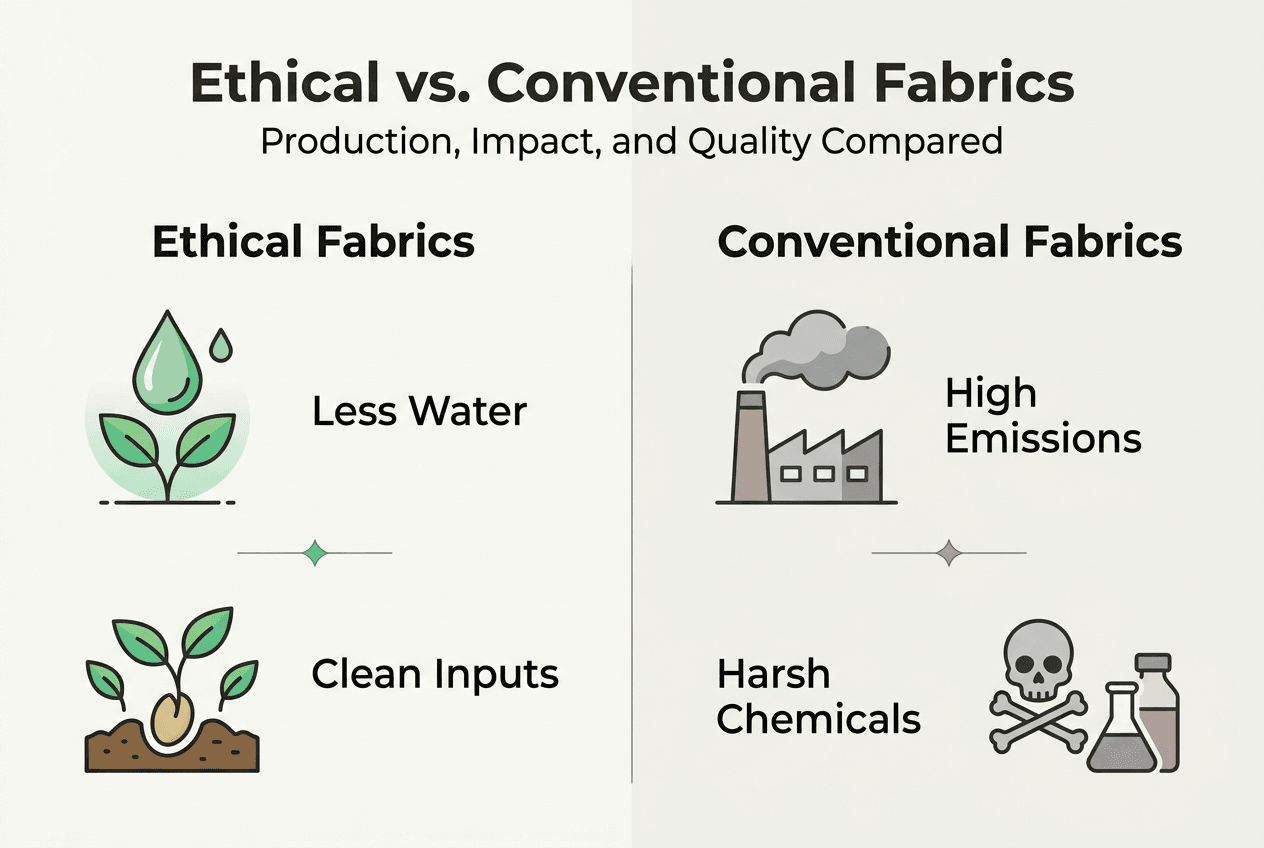
Ethical fabrics represent materials and production methods that minimize environmental harm while avoiding social exploitation throughout the supply chain. These textiles emerge from responsible sourcing practices that prioritize ecological health and fair labor conditions. Eco-friendly materials like hemp, bamboo, and upcycled fabrics significantly decrease the negative impact on the environment compared to conventional alternatives.
The fashion industry ranks among the world’s largest polluters, making material selection critical for reducing your environmental footprint. Ethical fabric options include:
Hemp: requires minimal water and pesticides while improving soil health
Bamboo: grows rapidly without chemical fertilizers or irrigation
Organic cotton: eliminates toxic pesticides and reduces water consumption
Tencel (Lyocell): uses sustainably harvested wood pulp with closed-loop processing
Recycled fibers: diverts waste from landfills and reduces virgin material demand
These materials address multiple sustainability dimensions simultaneously. Environmental benefits include reduced water pollution from chemical runoff, lower greenhouse gas emissions, and decreased microplastic shedding. Social advantages encompass fair wages, safe working conditions, and community investment in production regions.
The distinction between ethical and conventional fabrics extends beyond raw materials to encompass entire production systems. Traditional textile manufacturing consumes massive water volumes, releases toxic chemicals into waterways, and generates substantial carbon emissions. Ethical alternatives fundamentally redesign these processes to operate within planetary boundaries.
Pro Tip: Look for third-party certifications like GOTS (Global Organic Textile Standard), OEKO-TEX, or Fair Trade when shopping to verify ethical claims and avoid greenwashing.
Understanding ethical fabrics empowers you to make informed purchasing decisions that align fashion choices with environmental values. Every garment purchase represents a vote for the production systems you want to support. As consumer demand for sustainable options grows, brands respond by investing in cleaner technologies and more responsible sourcing practices.
Comparing popular ethical fabrics: benefits and impacts
Different ethical fabrics offer distinct advantages depending on your priorities for environmental impact, durability, and comfort. Organic cotton, hemp, bamboo, Tencel, and recycled materials are popular alternatives to conventional textiles, each with unique performance characteristics.
Fabric Type | Water Use | Durability | Environmental Impact | Comfort Features |
Organic Cotton | Moderate | Good | Lower pesticide use, soil health | Soft, breathable, versatile |
Linen (Flax) | Very Low | Excellent | Minimal inputs, carbon sequestration | Cool, moisture-wicking, textured |
Bamboo-Hemp Blend | Low | Very Good | Fast growth, soil regeneration | Antimicrobial, strong, soft |
Tencel (Lyocell) | Low | Good | Closed-loop production, biodegradable | Silky, moisture management, drape |
Recycled Polyester | Minimal | Excellent | Waste diversion, lower emissions | Performance, quick-dry, concerns about microfibers |
Linen (flax) is rain-fed with low inputs, durable, and scores well in impact assessments, making it ideal for warm-weather garments and long-lasting pieces. The fiber’s natural strength increases with washing, and its minimal processing requirements reduce energy consumption throughout production.
Bamboo-hemp blends combine the best attributes of both plants. Bamboo contributes exceptional softness and natural antimicrobial properties, while hemp adds structural strength and moisture-wicking capabilities. This combination creates fabrics perfect for activewear and everyday clothing that resists odors while maintaining comfort during extended wear. The non-iron shirt Light Blue demonstrates how innovative fabric technologies can integrate sustainable materials with practical performance benefits.
Recycled polyester has a lower climate impact at material level but still raises microfiber concerns during washing. While it diverts plastic waste from landfills and oceans, the shedding of synthetic microfibers during laundering remains an environmental challenge requiring solutions like filtration systems or garment bags designed to capture particles.
Tencel represents a breakthrough in sustainable fiber production, combining wood pulp from certified forests with chemical processes that recover and reuse solvents. The resulting fabric feels luxurious while maintaining environmental credentials superior to conventional viscose or rayon. Products like the white non-iron classic shirt showcase how ethical materials can deliver professional aesthetics without compromising sustainability.
Pro Tip: Consider the complete lifecycle when evaluating fabrics. A more durable material that lasts twice as long effectively halves its environmental impact per wear, even if initial production costs are higher.
Innovative ethical fabric production methods reducing impact
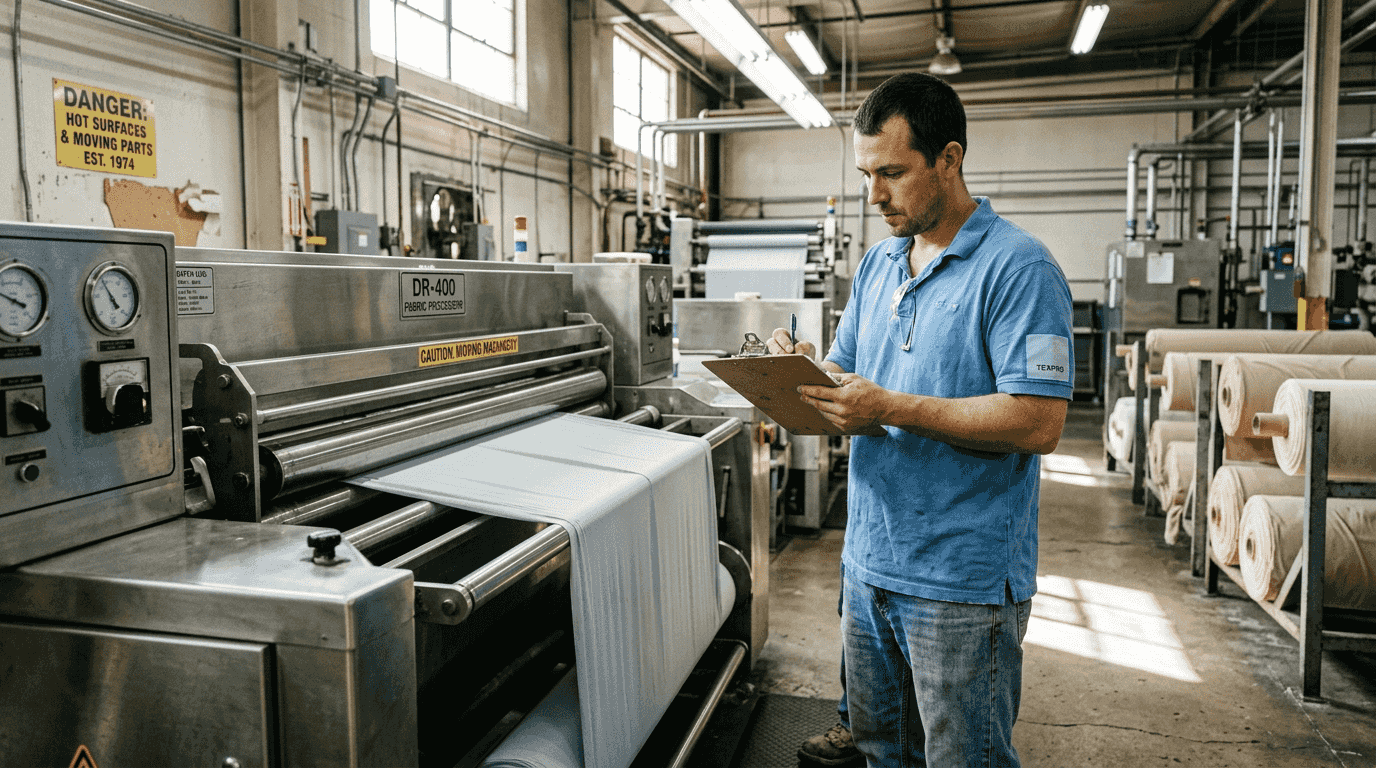
Cutting-edge manufacturing processes transform how ethical fabrics are produced, dramatically reducing pollution and resource consumption. Closed-loop systems represent the most significant advancement, recovering and reusing chemicals, water, and energy that conventional methods release as waste.
Lyocell production achieves near-perfect closed-loop chemical recovery with over 99.8% solvent recovery, setting new standards for sustainable textile manufacturing. This process dissolves wood pulp using non-toxic amine oxide, which is then filtered, purified, and returned to the production cycle rather than discharged into waterways.
The closed-loop production sequence works through these steps:
Sustainably harvested wood pulp enters a dissolving tank with recyclable solvent
The dissolved cellulose is extruded through spinnerets to form fibers
Fibers are washed and the solvent is separated from water
Advanced filtration systems capture and purify the solvent for reuse
Remaining water undergoes treatment before safe discharge or recycling
Finished fibers are dried, processed, and prepared for textile manufacturing
These innovations deliver measurable environmental benefits beyond chemical recovery:
Closed-loop textile systems can reduce water use by up to 95% and eliminate wastewater discharge.
Water savings of this magnitude transform textile production from a major pollution source into a model of industrial efficiency. Traditional fabric dyeing and finishing consume enormous water volumes while releasing toxic chemicals. Closed-loop alternatives recirculate water through multiple filtration stages, removing contaminants and returning purified water to production processes.
Energy efficiency improvements accompany water and chemical recovery systems. Heat exchangers capture thermal energy from production processes, reducing the external energy required for subsequent batches. Some facilities now generate renewable energy on-site through solar panels or biomass systems fueled by production waste.
The light blue non-iron shirt exemplifies how advanced fabric technologies can integrate sustainable production methods with practical garment features that reduce environmental impact throughout the product lifecycle. Non-iron treatments that eliminate energy-intensive ironing multiply the sustainability benefits of ethical base fabrics.
Ongoing industry research continues advancing these methods. Innovations in enzymatic processing, waterless dyeing technologies, and bio-based finishing treatments promise further reductions in environmental impact while maintaining or improving fabric quality and performance characteristics.
Choosing ethical fabrics for sustainability and style in 2026
Selecting ethical fabrics requires balancing environmental responsibility with practical performance and aesthetic preferences. Using ethical fabrics can significantly reduce the fashion industry’s carbon footprint, with organic cotton reducing emissions by up to 46% compared to conventional production.
Sustainability benefits extend across multiple environmental dimensions. Carbon footprint reduction comes from eliminating synthetic fertilizers, reducing energy-intensive processing, and improving soil carbon sequestration in organic agriculture. Microplastic pollution mitigation occurs when choosing natural fibers over synthetic alternatives that shed particles during washing. Water conservation results from both reduced agricultural irrigation and more efficient manufacturing processes.
Durability considerations prove equally important for maximizing environmental benefits. A garment worn 200 times instead of 100 effectively halves its per-wear impact regardless of production methods. Ethical fabrics often excel in longevity due to stronger fiber structures and quality-focused manufacturing that prioritizes lasting performance over disposable fast fashion.
Comfort and performance attributes make ethical fabrics practical for everyday wear. Natural fibers typically offer superior breathability and moisture management compared to synthetic alternatives. Antimicrobial properties in materials like bamboo and hemp reduce odor development, extending time between washes and saving water and energy.
When evaluating ethical fabric garments, ask these questions:
What certifications verify the sustainability claims (GOTS, OEKO-TEX, Fair Trade)?
Does the brand provide transparent information about fiber sourcing and production locations?
Are care instructions designed to minimize environmental impact during garment use?
Does the fabric quality suggest durability for long-term wear?
Can the garment be repaired, and does the brand offer repair services?
Pro Tip: Proper garment care extends fabric life significantly. Wash less frequently in cold water, air dry when possible, and follow care labels precisely to maximize your investment and environmental savings.
Supporting brands that combine style with high sustainability standards drives industry transformation. Consumer demand signals manufacturers that ethical production deserves investment and innovation. The LABFRESH shirts collection demonstrates how contemporary design can integrate sustainable materials with technical performance features that modern consumers expect.
Style considerations no longer require compromising sustainability. Ethical fabrics now offer textures, drapes, and finishes rivaling or exceeding conventional alternatives. From crisp professional shirts to comfortable casual wear, sustainable options exist across every wardrobe category. The LABFRESH performance pants showcase how innovative fabric engineering creates garments that perform exceptionally while minimizing environmental impact.
Your role as a consumer extends beyond individual purchases. Sharing information about ethical fabrics, requesting sustainable options from favorite brands, and supporting policies promoting environmental responsibility all contribute to systemic change. Every conversation about sustainable fashion choices helps normalize eco-conscious consumption and challenges the fast fashion status quo.
Explore ethical and stylish clothing options with LABFRESH
LABFRESH leads sustainable fashion innovation by combining ethical materials with cutting-edge fabric technologies. Our commitment to environmental responsibility drives continuous improvement in material sourcing and production methods. Discover how performance fabrics can deliver exceptional durability while supporting your values.
Our shirts collection features garments engineered for modern lifestyles, integrating stain resistance, odor control, and wrinkle-free performance with sustainable fabric choices. Each piece is designed to reduce environmental impact throughout its lifecycle, from production through years of reliable wear. Explore performance pants that combine professional aesthetics with technical innovations reducing washing frequency and extending garment life. Browse our undershirts collection for base layers that prioritize comfort and sustainability. Join the movement toward fashion that looks good, performs exceptionally, and respects planetary boundaries.
Frequently asked questions about choosing ethical fabrics
What makes a fabric ethical?
A fabric qualifies as ethical when its production minimizes environmental harm and avoids social exploitation throughout the supply chain. This includes using sustainably sourced raw materials, employing clean manufacturing processes, ensuring fair labor practices, and maintaining transparency about production methods. Third-party certifications help verify these claims.
How do ethical fabrics reduce environmental impact?
Ethical fabrics reduce impact through multiple mechanisms including eliminating toxic pesticides, decreasing water consumption, recovering production chemicals in closed-loop systems, and reducing carbon emissions. Natural fibers biodegrade safely while synthetic alternatives from recycled materials divert waste from landfills. The cumulative effect significantly lowers fashion’s environmental footprint.
Are ethical fabrics durable and stylish?
Modern ethical fabrics match or exceed conventional materials in both durability and aesthetics. Natural fibers like hemp and linen offer exceptional strength that improves with age. Advanced processing techniques create diverse textures, finishes, and performance characteristics suitable for any style preference. Sustainable doesn’t mean sacrificing quality or appearance.
How can I verify a fabric’s ethical claims?
Look for recognized third-party certifications such as GOTS for organic textiles, OEKO-TEX for chemical safety, Fair Trade for labor practices, or FSC for sustainably sourced wood-based fibers. Research brand transparency regarding supply chains and production locations. Legitimate ethical brands provide detailed information about their materials and manufacturing processes.
What care tips maximize ethical fabric lifespan?
Wash garments less frequently in cold water using eco-friendly detergents to preserve fibers and reduce energy consumption. Air dry whenever possible to avoid heat damage and save energy. Follow care labels precisely and repair minor damage promptly rather than replacing items. Proper storage away from direct sunlight prevents fading and fiber degradation, extending garment life significantly.
Recommended
Comments