What Is Stain Resistance and Why It Matters
- Leroy Hughes

- Jan 21
- 7 min read

A morning coffee spill or a sudden splash from a rainy street can instantly challenge your favorite outfit’s look and longevity. For style-minded professionals in cities from New York to Tokyo, finding apparel that resists everyday marks without sacrificing aesthetics or sustainability is a real concern. This guide reveals how stain resistance technology works, clears up common myths, and helps you find clothing built for both performance and modern, urban demands.
Table of Contents
Key Takeaways
Point | Details |
Stain Resistance Technology | Stain resistance involves advanced fabric treatments that create barriers against liquids and stains, improving clothing durability. |
Common Myths | Stain-resistant garments are not completely immune to stains; their effectiveness depends on various factors like treatment quality. |
Care Instructions | Proper maintenance, including gentle cleaning and avoiding high temperatures, is essential to preserve the integrity of stain-resistant fabrics. |
Lifestyle Benefits | Stain-resistant clothing offers significant advantages for busy lifestyles, reducing laundry frequency and prolonging garment life. |
Stain Resistance Defined and Common Myths
Stain resistance represents a sophisticated fabric technology designed to protect clothing from unexpected spills and marks. Defined by scientific research, it involves creating a protective barrier that prevents fluid absorption and particle adherence on fabric surfaces.
At its core, stain resistance is about more than simply repelling liquids. The technology works through advanced surface treatments that modify fabric fibers, making them less likely to trap and retain staining substances. These treatments typically create a microscopic protective layer that disrupts the chemical interaction between the stain and the fabric material. Key mechanisms include:
Hydrophobic treatments that push water-based liquids away
Oleophobic coatings that resist oil-based substances
Molecular modifications that reduce surface tension
Despite advanced technologies, several persistent myths surround stain resistance. Many consumers believe that a stain-resistant garment is completely immune to staining. Research indicates this is fundamentally incorrect. Stain resistance reduces the likelihood of permanent staining but does not guarantee total protection. Factors like stain chemistry, fabric composition, and treatment quality all influence how effectively a fabric resists discoloration.
Pro tip: Always test stain-resistant clothing with a small, inconspicuous liquid drop to understand its actual resistance capabilities before relying on it completely.
How Stain-Resistant Fabrics Work
Stain-resistant fabric technologies represent an innovative approach to protecting clothing from unexpected spills and dirt. Advanced chemical treatments create microscopic barriers that fundamentally change how fabrics interact with liquids and contaminants.
The core mechanism of stain resistance involves modifying fabric surfaces at a molecular level. Hydrophobic and oleophobic treatments reduce the surface energy of fabrics, causing liquids to form small beads that can easily roll off instead of penetrating the material. These treatments typically use specialized chemical compounds that:
Create a protective molecular shield
Reduce fabric’s ability to absorb liquids
Prevent particle adhesion
Minimize chemical bonding between stains and fibers
Textile engineering research reveals multiple strategies for implementing stain resistance. Some approaches involve fluorochemical coatings that create an invisible protective layer, while others use silicone-based treatments that modify fiber structures. The effectiveness depends on factors like coating density, fiber composition, and the specific chemical properties of potential staining substances.

Pro tip: Refresh your fabric’s stain-resistant properties periodically by following manufacturer care instructions and avoiding high-temperature washing that might degrade protective treatments.
Types of Stain-Resistant Technologies Used
Modern stain-resistant technologies represent a sophisticated blend of chemical engineering and materials science, offering multiple approaches to protecting fabrics from unwanted stains and spills.
The primary stain-resistant technologies can be categorized into several key approaches:
Fluorochemical Treatments
Create water and oil-repellent surfaces
Provide durable protection against multiple stain types
Historically most common approach
Silicone-Based Coatings
Offer softer, more flexible stain protection
Work well on delicate fabric types
Less environmental impact than fluorochemicals
Nanotechnology Solutions
Use microscopic particle treatments
Create ultra-thin protective layers
Enable more breathable fabric surfaces
Recent textile engineering research highlights emerging non-fluorinated technologies that focus on sustainable and environmentally conscious stain-resistant solutions. These innovative approaches utilize advanced polymer dispersions, inorganic nanoparticles, and specialized surface coatings that not only repel stains but also provide additional functionalities like antimicrobial protection.
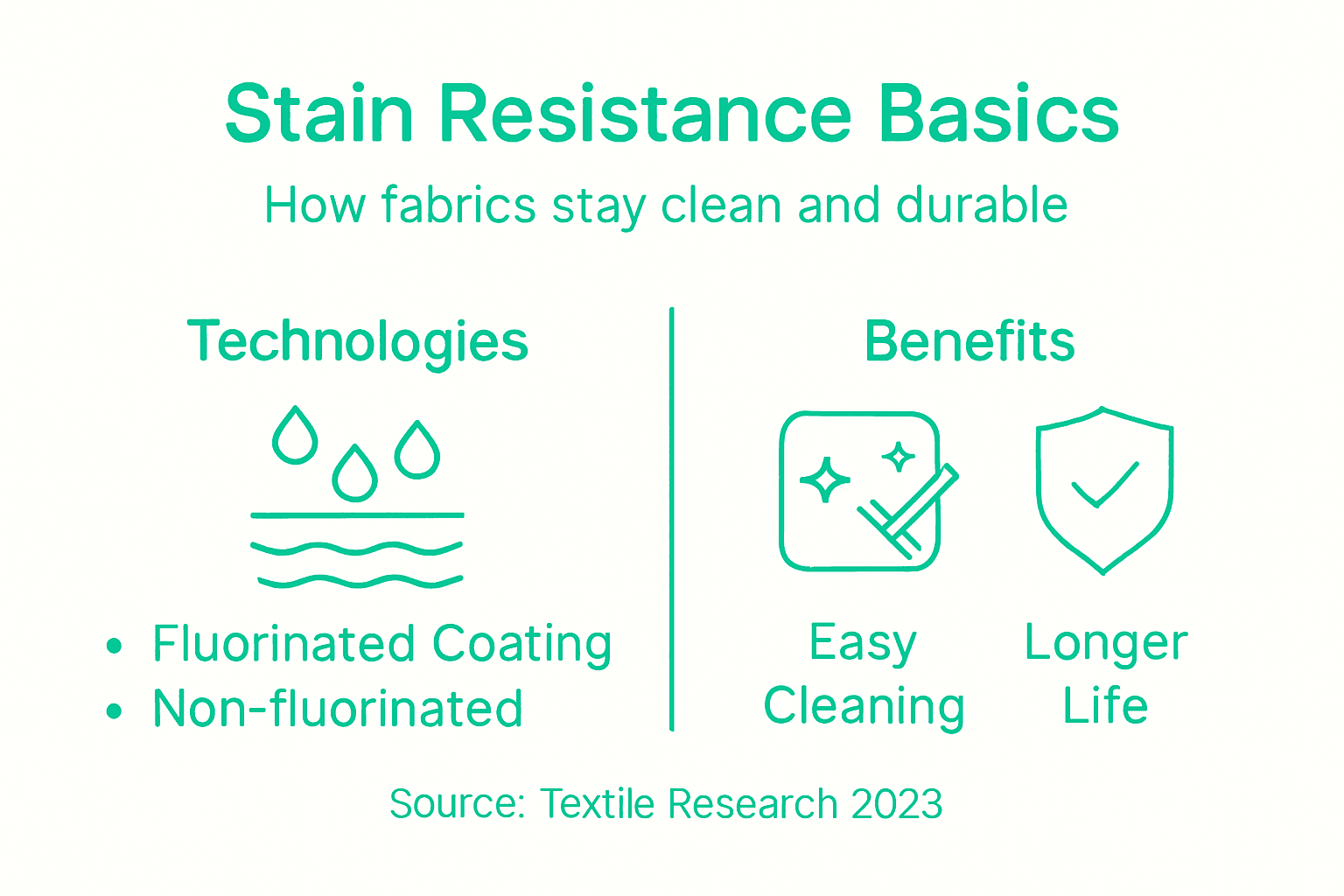
Here’s a comparison of leading stain-resistant technology types and their common attributes:
Technology Type | Typical Use Case | Key Advantage | Environmental Impact |
Fluorochemical | Casual/work apparel | High durability, repellency | Significant, often nonrenewable |
Silicone-Based | Delicate fabrics | Flexible feel, gentle care | Lower, more eco-friendly |
Nanotechnology | High-performance sports | Ultra-thin, breathable layer | Variable, often more sustainable |
Polymer Dispersions | Everyday wear | Stain and microbial barrier | Sustainable, emerging option |
Pro tip: Choose stain-resistant clothing with technologies that balance performance, comfort, and environmental sustainability for the best long-term wear experience.
Everyday Benefits for Apparel and Lifestyle
Stain-resistant fabrics transform everyday living by simplifying clothing maintenance and extending the functional lifespan of personal wardrobes. These innovative textiles address real-world challenges faced by active professionals, parents, and individuals with dynamic lifestyles.
The practical advantages of stain-resistant apparel extend far beyond simple convenience. Fabrics engineered with advanced protective technologies offer multiple lifestyle benefits:
Reduced Laundry Frequency: Less washing means less wear and tear
Time Savings: Minimal cleaning effort required
Cost Effectiveness: Longer-lasting clothing reduces replacement expenses
Improved Appearance: Sustained fabric quality and color retention
Textile research confirms that stain-resistant technologies are particularly valuable for households with children, pets, or professionals working in unpredictable environments. The ability to repel liquids and resist soil accumulation means clothing maintains its aesthetic appeal and functional integrity through multiple wear cycles.
The table below summarizes which lifestyle needs align best with stain-resistant clothing features:
Lifestyle Factor | Stain-Resistance Benefit | Long-Term Effect |
Busy Professionals | Less time spent cleaning | Prolonged clothing life |
Families with Kids | Fast cleanup after spills | Lower garment replacement |
Pet Owners | Reduced pet hair/dirty paw marks | Maintained appearance |
Outdoor Enthusiasts | Protection from mud and sweat | Apparel remains functional |
Pro tip: Select stain-resistant garments that balance performance features with breathability to ensure comfort alongside protection.
Caring for Stain-Resistant Clothes Effectively
Proper maintenance of stain-resistant clothing requires a nuanced approach that preserves the fabric’s protective technologies while ensuring optimal performance and longevity. Understanding the delicate balance between cleaning and protecting is key to maintaining these advanced garments.
Essential care strategies for stain-resistant apparel include:
Gentle Cleaning Techniques
Blot spills immediately instead of rubbing
Use mild, specialized detergents
Avoid harsh scrubbing or aggressive washing methods
Temperature and Washing Considerations
Wash in cool or lukewarm water
Select gentle wash cycles
Avoid high-heat drying that can damage protective coatings
Wool garment care demonstrates the importance of preserving natural protective properties. Similar principles apply to technologically treated fabrics, emphasizing minimal intervention and smart maintenance techniques. Professional laundering or following specific manufacturer instructions can significantly extend the life of stain-resistant clothing.
Pro tip: Always check the care label and test cleaning methods on a small, inconspicuous area before treating the entire garment to preserve its stain-resistant properties.
Comparing Stain Resistance to Alternatives
Material technologies offer diverse approaches to protecting fabrics from stains, each with unique mechanisms and performance characteristics. Understanding these alternatives helps consumers make informed choices about fabric protection.
Key stain management technologies include:
Stain Resistance
Actively repels liquids and particles
Provides immediate protection
Highest level of prevention
Stain Release
Allows stains to be more easily removed
Less immediate protection
Lower barrier against initial contamination
Nanocoating Technologies
Microscopic protective layers
Enhanced breathability
More environmentally sustainable
Emerging non-fluorinated technologies demonstrate significant advances in sustainable fabric protection. These alternatives focus on reducing environmental impact while maintaining high-performance standards. Polymer-based treatments and morphological alterations represent innovative approaches that balance effectiveness, durability, and ecological considerations.
Pro tip: Consider your specific lifestyle and environmental priorities when selecting fabric protection technologies, as each approach offers different performance characteristics.
Discover Practical Stain Resistance with Labfresh Apparel
The article highlights how stain resistance technology is vital for protecting fabrics from everyday spills and stains while emphasizing that true stain resistance involves advanced fabric treatments rather than a complete stain-proof guarantee. If you often find yourself challenged by stubborn stains or constant outfit changes, Labfresh offers innovative solutions that combine stain resistance with odor control and low-maintenance wear. Their FreshCore™ and Seawool fabric technologies are crafted to repel common stains and keep garments fresh throughout your busy day without sacrificing style or comfort.

Explore the Labfresh collection today and experience clothing designed for real-life durability and convenience. With a focus on sustainable, tech-integrated apparel, Labfresh empowers you to save time on laundry, maintain a polished appearance, and invest in garments that truly perform. Visit Labfresh now to upgrade your wardrobe with premium stain-resistant apparel. Make your next clothing choice smarter and enjoy the confidence that comes with easy-care fashion.
Learn more about how stain-resistant technology works and choose apparel that supports your active lifestyle at Labfresh. Check out their full range of stylish, functional shirts, polos, pants, and outerwear designed for lasting wear and effortless care.
Frequently Asked Questions
What is stain resistance?
Stain resistance is a fabric technology designed to prevent clothing from absorbing liquids and maintaining its appearance by creating a protective barrier against spills and stains.
How do stain-resistant fabrics work?
Stain-resistant fabrics use advanced surface treatments, such as hydrophobic and oleophobic coatings, that modify fabric fibers at a molecular level. This prevents liquids from penetrating the material and helps disallow stain adherence.
What are the common myths about stain-resistant clothing?
A common myth is that stain-resistant clothing is completely immune to stains. In reality, while these fabrics reduce the likelihood of permanent staining, they do not guarantee total protection from all stains, as effectiveness depends on various factors like fabric composition and stain chemistry.
How should I care for stain-resistant clothing?
To properly care for stain-resistant clothing, use gentle cleaning techniques such as blotting spills instead of rubbing, washing in cool or lukewarm water, using mild detergents, and avoiding high-heat drying to preserve the protective coatings.
Recommended
Comments