What is smart casual wear? A 2026 style guide
- Leroy Hughes

- Mar 7
- 11 min read
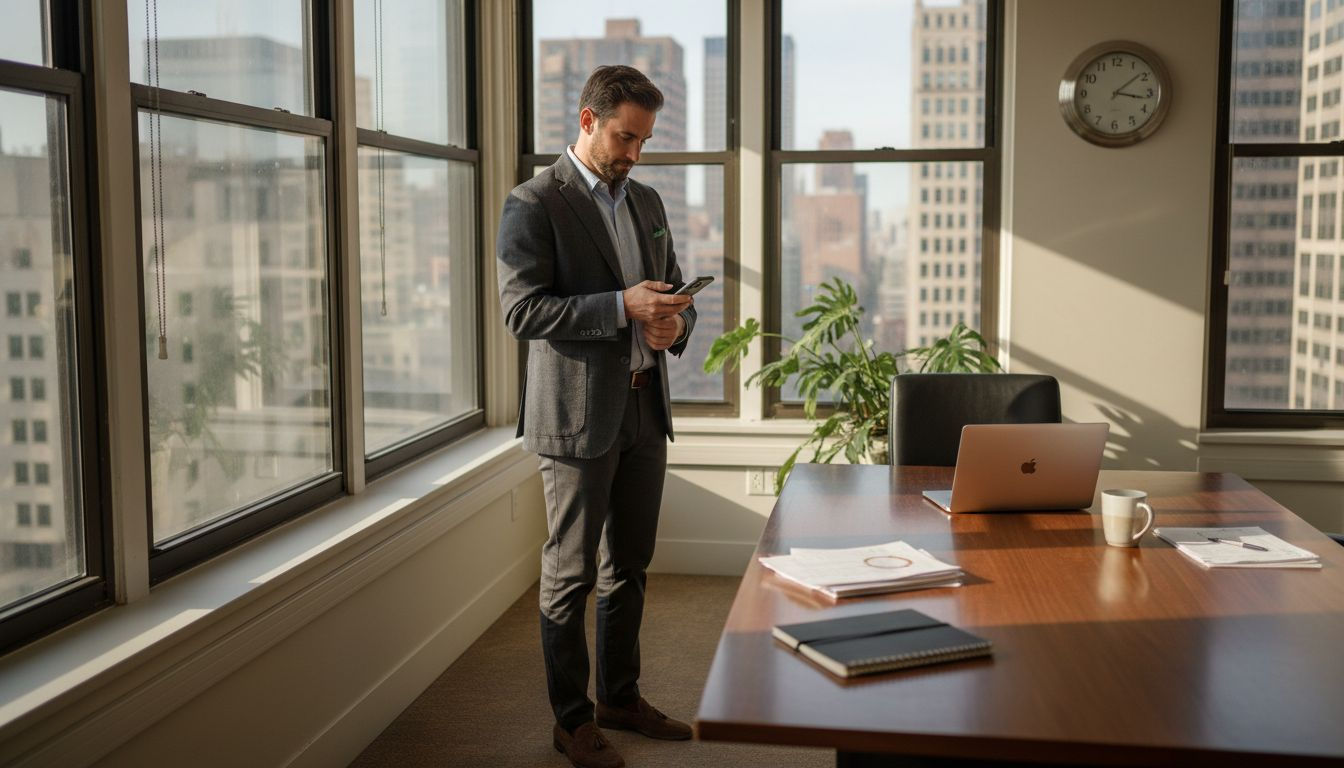
Many professionals believe smart casual simply means casual clothes with a bit of polish. That common misconception leads to workplace wardrobe missteps. Smart casual represents a deliberate balance between professional elegance and relaxed comfort, crafted for busy urban lifestyles where functionality meets style. This guide clarifies what smart casual truly means, which garments belong in your wardrobe, how innovative fabrics enhance durability, and practical strategies to master this dress code in 2026.
Table of Contents
Key takeaways
Point | Details |
Smart casual bridges formal and casual | It balances professional polish with comfortable, practical garments suitable for active urban environments. |
Specific garments define the dress code | Tailored pants, blazers, button-down shirts, and polished footwear form the foundation of smart casual attire. |
Innovative fabrics enhance functionality | Technologies like odor resistance and stain proofing extend garment life while reducing maintenance demands. |
Common misconceptions create styling errors | Smart casual differs from business casual and excludes sneakers, graphic tees, and overly relaxed garments. |
Sustainability supports modern smart casual | Durable, tech-enhanced clothing reduces textile waste while maintaining professional appearance for years. |
Understanding smart casual wear: definition and historical context
Smart casual emerged as professionals sought clothing that bridged the gap between rigid formal wear and completely relaxed casual attire. Smart casual evolved as a midpoint between traditional business suits and weekend wear, offering flexibility without sacrificing professional appearance. This dress code gained prominence as workplaces relaxed their formal requirements while still expecting employees to project competence and polish.
The core elements of smart casual center on balance. You combine structured pieces like blazers or tailored trousers with more relaxed items such as knit polos or quality sweaters. The result projects professionalism while allowing comfort and personal style expression. This approach works particularly well for urban professionals navigating diverse settings throughout their day, from client meetings to casual networking events.
Smart casual applies across numerous professional and social contexts. You might wear it to business lunches, creative industry offices, upscale casual dining, or networking mixers. The dress code provides appropriate coverage for situations requiring more polish than jeans and sneakers but less formality than full business attire. Understanding these boundaries helps you avoid being overdressed or underdressed.
What smart casual is not matters as much as what it includes. It excludes athletic wear, distressed denim, graphic t-shirts, and beach sandals. These items fall into purely casual territory and undermine the professional edge smart casual demands. Recognizing these distinctions keeps your wardrobe choices appropriate for semi-professional environments where first impressions carry weight.
Key components of smart casual wear for professionals
Tailored pants and blazers are staples of smart casual wardrobes, forming the foundation of countless outfit combinations. Well-fitted trousers in neutral colors like navy, gray, or khaki pair effortlessly with button-down shirts, polos, or lightweight sweaters. Blazers add instant polish without the rigidity of a full suit, allowing you to dress up or down depending on your day’s demands.
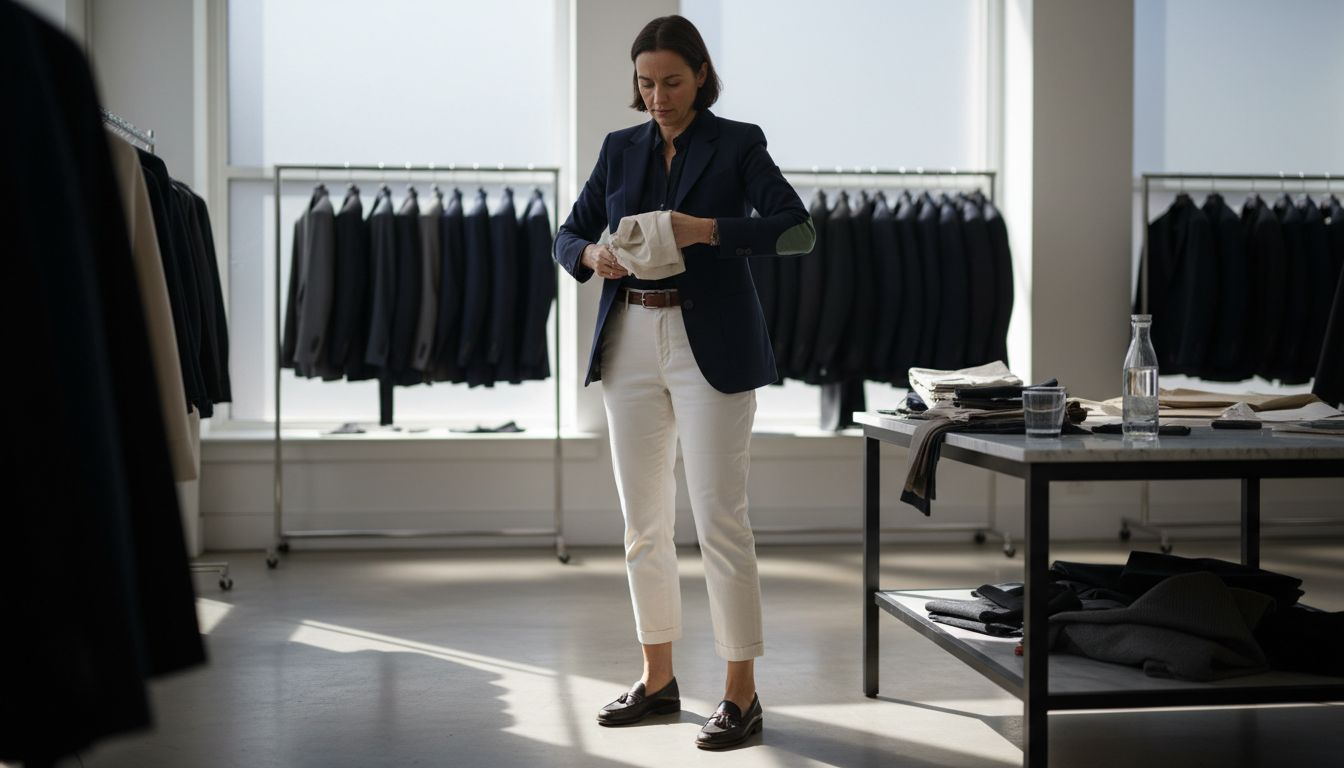
Footwear choices significantly impact your smart casual presentation. Leather dress shoes, loafers, or quality suede boots maintain the semi-formal aesthetic. Avoid athletic shoes or worn sneakers that signal casual weekend wear rather than professional environments. Your shoes should complement your outfit’s color palette while offering comfort for active urban schedules.
Appropriate color palettes support professional elegance without appearing stuffy. Build your wardrobe around neutrals like navy, charcoal, beige, and white as anchor pieces. Add depth with burgundy, forest green, or muted blues. These colors work across seasons and mix easily, maximizing outfit versatility. Strategic color choices also help garments coordinate seamlessly, reducing decision fatigue during busy mornings.
Fabric selection prioritizes both appearance and durability. Quality materials maintain their shape and finish through repeated wear. Consider these fabric priorities:
Cotton blends offering breathability and structure
Wool for warmth without bulk in cooler months
Performance fabrics resisting wrinkles and stains
Stretch materials providing comfort during movement
Tech-integrated textiles reducing maintenance needs
Accessories complete your smart casual look without overwhelming it. A quality leather belt matching your shoes, a simple watch, and minimal jewelry maintain the balance between styled and overdone. Your selection of smart casual shirts should include both classic button-downs and modern performance pieces that adapt to your schedule’s varied demands.
Innovative fabric technologies enhancing smart casual functionality
Modern fabric innovations transform smart casual wear from merely stylish to genuinely functional for busy professionals. Labfresh FreshCore™ fabric extends wear life with odor resistance lasting 30+ washes, dramatically reducing laundering frequency. These technologies embed performance features directly into fibers, creating garments that actively work to maintain freshness and appearance throughout long, demanding days.
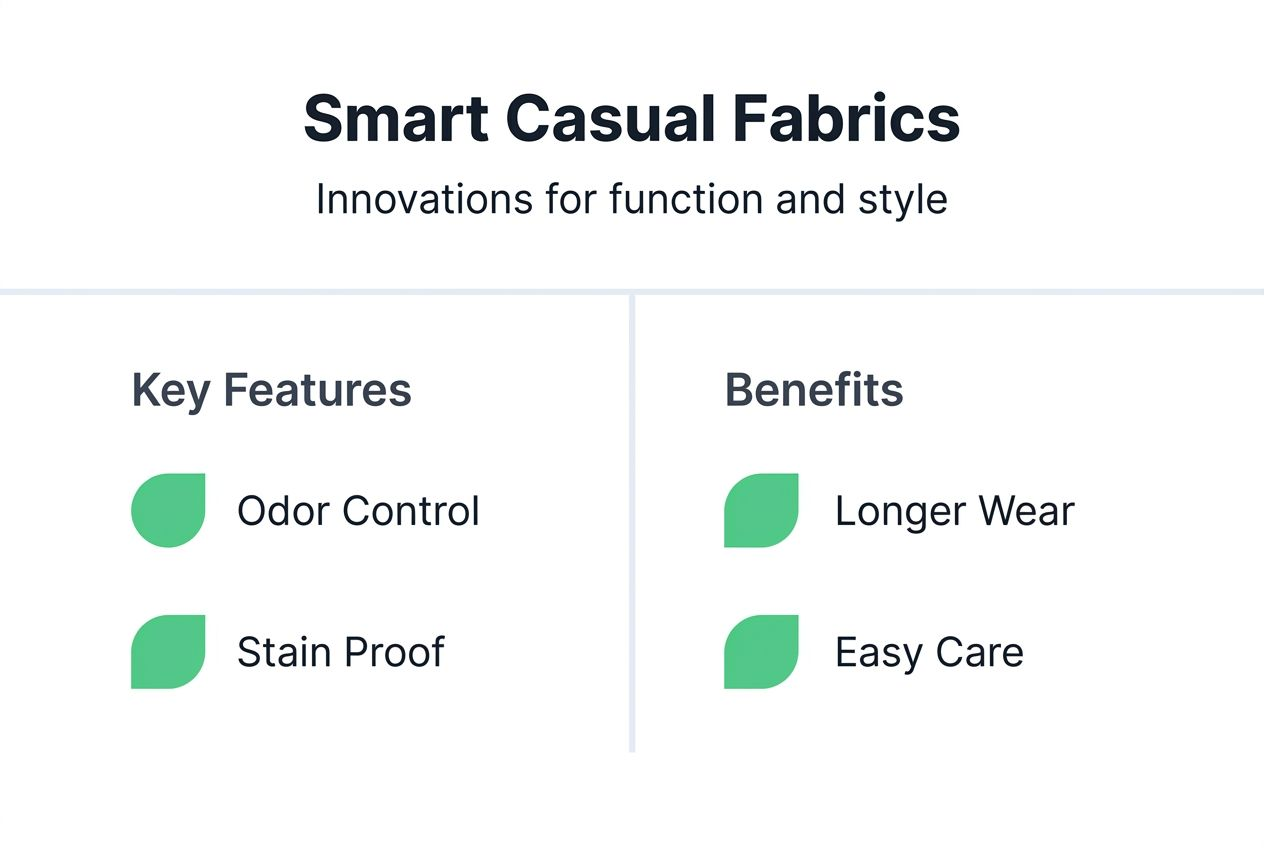
Odor resistance technology blocks bacteria growth that causes unpleasant smells. Instead of absorbing sweat and developing odor after a few hours, treated fabrics stay fresh through full workdays and beyond. This benefit proves particularly valuable for professionals moving between meetings, commutes, and social engagements without time for wardrobe changes. You maintain confident presentation regardless of your schedule’s intensity.
Stain-proofing treatments repel liquids and resist absorption, giving you precious seconds to address spills before they set. Coffee, wine, and food mishaps that would ruin traditional garments simply bead up on treated fabrics, wiping away cleanly. This protection extends garment lifespan by preventing permanent staining that forces premature replacement. Your professional wardrobe investment delivers longer value.
Durability technologies strengthen fibers against wear, pilling, and shape loss. Enhanced fabrics maintain their fit and finish through countless wear cycles that would degrade standard materials. The result means fewer replacements, reduced shopping time, and lower long-term wardrobe costs. Your non-iron stretch shirts stay crisp and professional without constant pressing.
These innovations align with sustainable fashion principles by extending garment utility. Longer-lasting clothes reduce textile waste and resource consumption associated with frequent replacements. Choosing tech-enhanced smart casual wear supports both personal convenience and environmental responsibility. Learn more about labfresh sustainability practices driving these fabric advances.
Pro Tip: Invest in garments featuring multiple fabric technologies. Pieces combining odor resistance, stain protection, and wrinkle resistance deliver maximum versatility, reducing the total number of items you need while increasing outfit options.
Common misconceptions about smart casual dress code
Many professionals mistakenly believe smart casual simply means any neat casual clothing. This oversimplification ignores the semi-formal nature distinguishing smart casual from purely casual wear. The dress code requires intentional garment selection balancing polish with relaxation, not just clean versions of weekend clothes. Understanding this distinction prevents inappropriate wardrobe choices in professional settings.
Confusing smart casual with business casual creates another frequent error. Business casual typically demands more formality, often requiring dress shirts, ties (optional but common), and more conservative styling. Smart casual allows greater flexibility with knit tops, open collars, and creative combinations. Recognizing where each dress code applies helps you match your attire to specific workplace expectations and social contexts.
The sneaker question divides opinions, but in most professional smart casual environments, athletic shoes remain inappropriate. Sneakers signal leisure and recreation rather than the semi-formal presentation smart casual requires. Even clean, minimalist sneakers typically fall short of the polish expected. Leather shoes, loafers, or quality boots better maintain the dress code’s professional edge while offering comparable comfort.
Graphic tees and logo-heavy garments undermine smart casual’s refined aesthetic. These pieces draw attention to branding or messages rather than your professional presence. Smart casual emphasizes subtle personal style expressed through fit, quality, and thoughtful combinations, not bold graphics. Save statement tees for genuinely casual settings where they belong.
Maintaining semi-professional appearance requires attention to garment condition. Wrinkled, stained, or worn items negate even correct style choices. Your smart casual wardrobe must stay well-maintained, with clothes appearing fresh and intentionally chosen. This standard separates thoughtful dressing from simply wearing acceptable garment categories without proper care.
Comparing smart casual with related dress codes
Formality levels create the primary distinction between dress codes. Business casual sits more formal, requiring structured garments and conservative styling suitable for traditional office environments. Smart casual relaxes these requirements slightly, permitting knit tops and more personal style expression while maintaining professional appearance. Casual wear drops formality entirely, embracing comfort and self-expression over workplace appropriateness.
Garment flexibility increases as formality decreases across dress codes. Business casual typically mandates button-down shirts and dress pants with limited variation. Smart casual welcomes polos, quality sweaters, and tailored chinos alongside traditional pieces. Full casual permits jeans, t-shirts, and sneakers without professional constraints. Understanding these boundaries helps you navigate different environments appropriately.
Dress Code | Formality Level | Typical Garments | Appropriate Settings | Creative Freedom |
Business Casual | High-Medium | Dress shirts, trousers, blazers | Traditional offices, formal meetings | Limited |
Smart Casual | Medium | Button-downs, polos, tailored pants, blazers | Creative industries, client lunches | Moderate |
Casual | Low | T-shirts, jeans, sneakers | Weekend activities, relaxed social events | High |
Workplace and social contexts determine which dress code applies. Traditional corporate environments often require business casual during work hours. Creative industries, tech companies, and modern workplaces frequently adopt smart casual as their standard. Social events specify dress codes based on formality, with smart casual fitting upscale dining, networking events, or cultural outings where full casual appears too relaxed.
The visual comparison reveals how smart casual occupies valuable middle ground. You gain styling flexibility and comfort without sacrificing the professional edge many situations demand. This positioning makes smart casual ideal for urban professionals whose days span multiple contexts requiring adaptable, polished appearance. Your wardrobe works harder when built around smart casual fundamentals.
Practical styling frameworks for busy professionals
Layering creates versatile outfits adapting seamlessly from day to night. Start with a quality base like a button-down shirt or polo. Add a blazer or lightweight sweater for polish during professional hours. Remove the outer layer for more relaxed evening settings. This adaptability maximizes wardrobe utility while minimizing the need for complete outfit changes. 70% of style guides endorse layering as a core strategy for versatile smart casual looks.
Combining tech fabrics with classic styles delivers modern functionality without sacrificing timeless appeal. A wrinkle-resistant button-down maintains professional appearance through long days without ironing. Stain-resistant trousers from your performance pants collection protect against mishaps during client meals. These innovations integrate invisibly, supporting your professional image through practical performance features.
Balancing fashion with function requires strategic wardrobe building. Focus on these elements:
Neutral base pieces that mix effortlessly
Statement items adding personality without overwhelming
Comfortable footwear supporting active schedules
Accessories providing polish without fuss
Tech-enhanced garments reducing maintenance time
Urban schedules demand clothing that transitions smoothly between activities. Your morning meeting outfit should work equally well for afternoon site visits and evening networking. Choose pieces performing across contexts rather than highly specialized items with limited utility. This approach reduces wardrobe size while increasing practical options.
Pro Tip: Build outfits around one statement piece, keeping remaining items neutral. A distinctive blazer or quality sweater creates visual interest while simplified supporting pieces ensure appropriate smart casual balance. This framework simplifies morning decisions and guarantees polished results.
Sustainability and performance in modern smart casual wear
Durable garments directly reduce textile waste by extending useful life far beyond fast fashion alternatives. When your shirts and pants last years instead of seasons, fewer items end up in landfills. This longevity shift represents one of fashion’s most impactful sustainability contributions. Choosing quality over quantity transforms personal style into environmental action.
Innovative materials support sustainability through multiple pathways:
Reduced washing requirements conserving water and energy
Longer lifespan decreasing production demand
Stain resistance preventing premature disposal
Quality construction minimizing repair needs
Recyclable fibers supporting circular fashion systems
Sustainable production methods complement material innovations. Ethical manufacturing, reduced chemical treatments, and renewable energy use during production lower environmental footprints. Brands prioritizing these practices demonstrate that performance and responsibility need not conflict. Your wardrobe choices signal values while delivering practical benefits.
Performance wear aligns naturally with eco-responsible fashion goals. Garments requiring less frequent replacement, laundering, and maintenance reduce resource consumption across their lifecycle. This alignment means your investment in quality smart casual wear serves both personal convenience and broader environmental objectives. Style, function, and sustainability converge in thoughtfully designed apparel.
Explore comprehensive approaches to sustainability practices shaping modern fashion. Understanding these connections helps you make informed choices supporting both your professional image and environmental values. Additional perspectives on modern sustainable styling demonstrate how conscious fashion extends across wardrobe categories.
Maintaining your smart casual wardrobe: tips for longevity and ease
Reduced washing frequency enabled by odor-resistant fabrics dramatically simplifies garment care. Instead of laundering shirts after every wear, tech-enhanced pieces remain fresh for multiple uses. This reduction saves time, conserves water and energy, and decreases fabric wear from washing machine agitation and heat. Your clothes literally last longer when washed less frequently.
Effective stain management begins with immediate action. Blot spills quickly rather than rubbing, which spreads stains deeper into fibers. For stain-resistant garments, simple wiping often removes fresh marks completely. Keep a stain removal pen handy for occasional stubborn spots. Addressing stains promptly prevents them from setting, maintaining garment appearance without emergency dry cleaning.
Care routines extending garment lifespan include:
Following manufacturer wash instructions precisely
Using cold water for most loads
Air drying when possible to prevent heat damage
Storing clothes properly on hangers or folded
Rotating garments to distribute wear evenly
Addressing minor repairs before they worsen
Time savings from low-maintenance smart casual wardrobes compound significantly. Minutes saved daily on ironing, frequent washing, and stain treatment accumulate into hours monthly. These efficiency gains matter for busy professionals already juggling demanding schedules. Your wardrobe should support your lifestyle, not create additional burdens.
Preserving professional appearance requires consistent attention to garment condition. Regular inspection catches loose buttons, minor tears, or excessive wear before they become obvious. Quick maintenance preserves your investment and ensures you always present polished professionalism. Smart casual done right means looking effortlessly put together because your quality wardrobe maintains itself with minimal intervention.
Explore durable smart casual wear at LABFRESH
Your smart casual wardrobe deserves garments matching your commitment to style and functionality. LABFRESH specializes in innovative apparel engineered for busy professionals demanding both elegance and durability. Our smart casual shirts collection features odor-resistant, stain-proof fabrics that maintain professional appearance through your longest, most demanding days.
Discover durable performance pants that resist wrinkles and stains while providing comfort for active urban schedules. Add water-repellent performance jackets completing versatile outfits that transition seamlessly across your day’s varied contexts. Each piece integrates advanced fabric technologies reducing maintenance while extending lifespan, aligning your wardrobe with both professional standards and sustainability values. Explore how LABFRESH makes smart casual work smarter for you in 2026 and beyond.
Frequently asked questions
What is the difference between smart casual and business casual?
Smart casual offers greater flexibility than business casual, permitting tech-enhanced fabrics, knit tops, and more creative styling. Business casual maintains stricter formality with button-down shirts and conservative garment choices. Smart casual bridges professional appearance with personal style expression, making it ideal for modern creative workplaces and varied urban schedules.
Can sneakers ever be part of smart casual wear?
Sneakers generally remain too casual for smart casual in professional settings. Even minimalist, clean sneakers typically lack the polish smart casual requires. Opt for leather shoes, quality loafers, or suede boots maintaining semi-formal appearance. These alternatives offer comparable comfort while preserving the professional edge distinguishing smart casual from purely casual wear.
How do innovative fabrics improve smart casual clothing?
Labfresh FreshCore™ fabric extends wear life with odor resistance, reducing washing frequency dramatically. These technologies maintain garment freshness through multiple wears while resisting stains and wrinkles. Enhanced durability means clothes last years longer, reducing replacement needs. You save time on maintenance while your wardrobe delivers consistent professional appearance with minimal intervention.
What are the top tips for maintaining a smart casual wardrobe?
Wash tech-enhanced garments less frequently since odor resistance maintains freshness through multiple wears. Address stains immediately by blotting rather than rubbing. Follow care instructions precisely, using cold water and air drying when possible. Rotate garments to distribute wear evenly and inspect regularly for minor repairs. These practices extend lifespan while keeping your smart casual wardrobe looking sharp.
Recommended
Comments