What is recycled fabric? Benefits for sustainable activewear
- Leroy Hughes

- Mar 9
- 10 min read
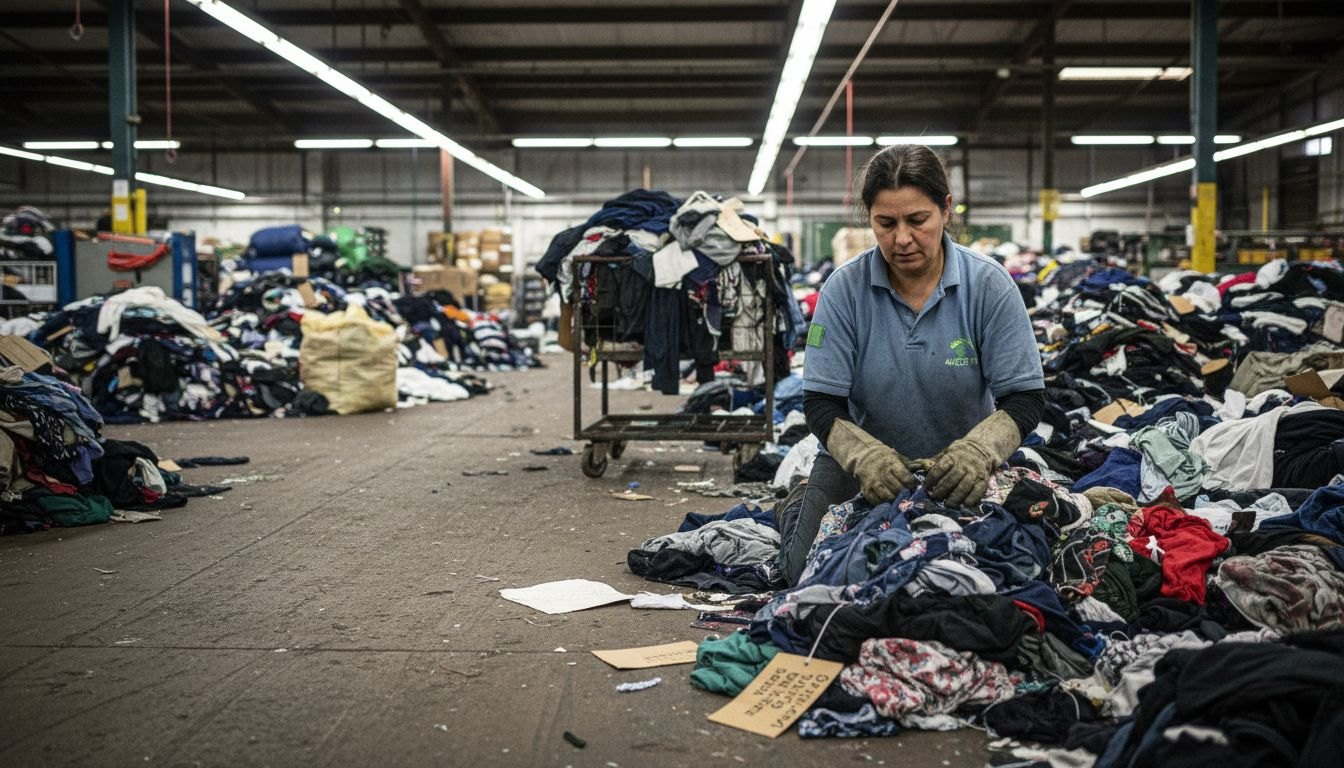
Recycled fabrics cut greenhouse gas emissions by up to 75% compared to virgin materials, making them a powerful choice for eco-conscious consumers. These textiles transform waste like PET bottles and discarded polyester into functional, durable activewear. Understanding how recycled fabrics work, their environmental advantages, and performance capabilities helps you make informed decisions about sustainable clothing that supports both your active lifestyle and the planet.
Table of Contents
Key takeaways
Point | Details |
Recycled fabrics repurpose waste | Created from post-consumer PET bottles and pre-consumer polyester waste, diverting materials from landfills. |
Major environmental savings | Reduces greenhouse gas emissions by 75% and water consumption by 80% versus virgin fabrics. |
Advanced tech enhances performance | Odor resistance, stain repellency, and durability features make recycled activewear highly functional. |
Comparable strength to virgin fabrics | Recycled polyester retains 90-95% tensile strength, suitable for demanding athletic use. |
Certifications verify authenticity | Global Recycled Standard and OEKO-TEX® help identify genuinely recycled products. |
Introduction to recycled fabric
Recycled fabric represents a fundamental shift in textile production, creating new materials from existing waste rather than extracting virgin resources. These fabrics transform discarded items into functional textiles, addressing the fashion industry’s environmental footprint while delivering performance characteristics modern consumers demand.
The most common sources include:
Post-consumer PET bottles collected from recycling programs and converted into polyester fibers
Pre-consumer textile waste like factory scraps and manufacturing offcuts repurposed before reaching landfills
Discarded garments and textile products broken down and reprocessed into new fibers
Recycled fabrics play a critical role in sustainable textile manufacturing by reducing dependence on petroleum-based virgin polyester and cotton farming. Traditional fabric production consumes massive quantities of water, energy, and raw materials while generating substantial pollution. Recycled alternatives intercept waste streams, giving materials a second life and shrinking the industry’s ecological impact.
For activewear specifically, recycled fabrics offer technical benefits beyond sustainability. Modern processing techniques create fibers with moisture-wicking properties, stretch recovery, and breathability that match or exceed virgin fabric performance. This combination of environmental responsibility and functional excellence makes recycled textiles increasingly popular among brands serving active, eco-conscious consumers.
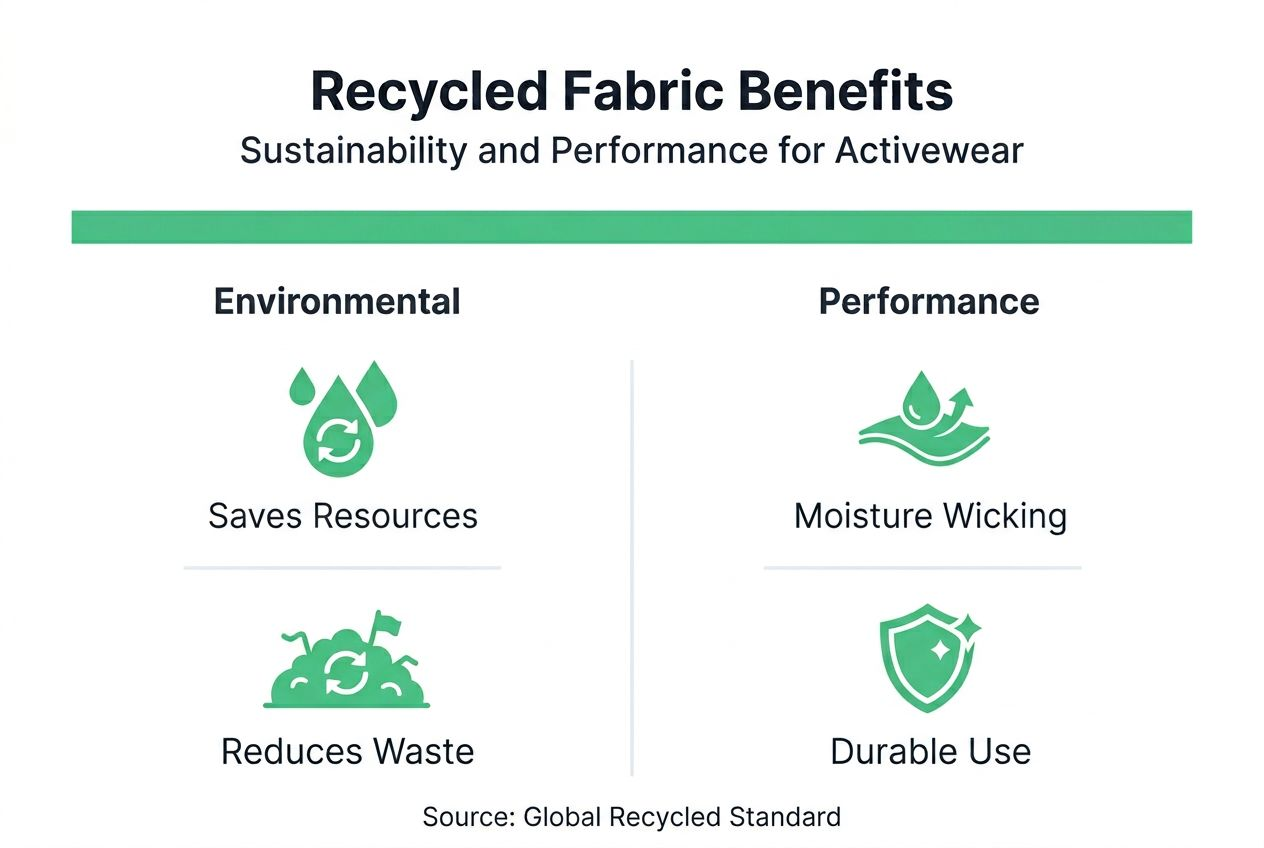
The shift toward recycled fabrics also supports circular economy principles, where materials cycle continuously through production and consumption rather than following a linear path to disposal. This approach extends resource value, minimizes waste generation, and creates a more regenerative system.
How recycled fabric is made
Two primary methods transform waste into wearable fabric fibers, each with distinct quality implications and suitability for different textile applications.
Mechanical recycling physically shreds plastic bottles or textile waste into small pieces, melts them, and extrudes new fibers. This process maintains polymer structure but can slightly reduce fiber length and strength compared to virgin materials. Mechanical recycling works efficiently for synthetic materials like polyester but struggles with natural fiber blends due to structural differences.
Chemical recycling breaks materials down to their molecular building blocks, then reconstructs polymers into fresh fibers. This method produces higher-quality output that closely mirrors virgin fiber properties, though it requires more energy and specialized facilities. Chemical processes excel at handling mixed-fiber fabrics and heavily contaminated materials that mechanical recycling cannot process.
Key production approaches include:
Bottle-to-fiber conversion where PET bottles are cleaned, shredded, melted, and spun into polyester thread
Textile-to-textile recycling that processes old garments into new fabric, preserving material within the fashion cycle
Polymer depolymerization breaking plastics into base chemicals for reconstitution into pure fibers
Many manufacturers blend recycled fibers with virgin materials to optimize both sustainability and performance. A 50/50 blend, for example, cuts environmental impact while maintaining the durability and stretch characteristics critical for activewear. This strategic mixing allows brands to balance ecological goals with technical requirements.
Pro Tip: Look for products specifying their recycling method and blend ratio. Chemical recycling or high-percentage recycled content typically indicates superior quality, while mechanical recycling with modest virgin fiber blending offers excellent performance at lower environmental cost.
Environmental benefits of recycled fabrics
Recycled textiles deliver measurable ecological advantages that extend far beyond simply reusing materials, creating quantifiable improvements across multiple environmental metrics.

Greenhouse gas emission reductions stand among the most significant benefits. Producing recycled polyester generates up to 75% fewer emissions than manufacturing virgin polyester, primarily because recycling skips the petroleum extraction and refining stages. This dramatic decrease helps brands and consumers reduce their carbon footprint substantially.
Water conservation represents another critical advantage:
Virgin polyester production consumes thousands of liters per kilogram of fabric for cooling, processing, and finishing
Recycled fabric manufacturing reduces water usage by up to 80% through streamlined processing
This conservation proves especially valuable in water-stressed regions where textile factories operate
Recycled fabrics also address the waste crisis plaguing both consumer markets and natural environments. Millions of tons of plastic bottles and discarded textiles enter landfills annually, where they persist for centuries without decomposing. Diverting these materials into fabric production prevents environmental contamination and reduces demand for landfill space.
Circular economy principles gain traction through recycled textile adoption. Rather than extracting new resources, using existing materials, and disposing of products at end-of-life, recycling creates closed loops where materials continuously cycle through production and consumption. This regenerative approach extends resource lifespan indefinitely while minimizing extraction and disposal impacts.
Recycled fabric environmental impact reduction:
75% lower greenhouse gas emissions
80% less water consumption
Diverts millions of tons from landfills annually
Supports circular economy transition
These quantified benefits make recycled fabrics essential for achieving fashion industry sustainability targets and individual consumer environmental goals.
Technological enhancements in recycled activewear fabrics
Modern recycled fabrics integrate advanced technologies that elevate performance beyond basic sustainability, transforming eco-friendly materials into high-functioning activewear essentials.
Odor resistance treatments significantly improve wearability for active consumers. Specialized antimicrobial technologies embedded during fiber production or applied as fabric finishes reduce bacterial growth that causes unpleasant smells. Testing shows these treatments can improve freshness by up to 50% compared to untreated fabrics, allowing multiple wears between washes. This extended use cycle further reduces environmental impact through decreased laundering frequency.
Stain resistance represents another performance breakthrough in recycled textiles. Advanced molecular treatments create hydrophobic surfaces that repel liquids and prevent absorption. For activewear users who transition directly from workouts to other activities, this technology maintains appearance and convenience without compromising breathability or comfort.
Durability enhancements ensure recycled fabrics withstand repeated stress from athletic movement, washing, and wear:
Reinforced fiber construction increases abrasion resistance for high-friction areas
Stretch recovery technologies maintain shape after repeated elongation
Colorfastness treatments prevent fading from UV exposure and laundering
These technical features make recycled activewear functionally superior to many conventional options while delivering environmental benefits. A blue non-iron 4-way stretch shirt combining recycled content with wrinkle resistance and multidirectional stretch exemplifies how technology enhances sustainability without sacrificing performance.
Pro Tip: Tech-enhanced recycled fabrics offer dual value by reducing environmental impact while providing convenience features like odor control and easy care. Products combining recycled content with functional technologies, including white anti-odour socks, maximize both ecological and practical benefits for active lifestyles.
Durability and performance comparison with virgin fabrics
Recycled fabrics match or closely approach virgin material performance across critical durability metrics, dispelling concerns about compromised quality in sustainable textiles.
Tensile strength, measuring how much force fabric withstands before breaking, shows recycled polyester retains 90-95% strength of virgin polyester. This marginal difference proves negligible for most activewear applications, where even the slightly reduced strength exceeds typical stress demands. Advanced chemical recycling methods achieve even higher retention by producing purer fibers.
Abrasion resistance testing reveals comparable wear characteristics between recycled and virgin synthetics. Both fabric types endure repeated friction from movement, washing machine agitation, and contact with surfaces without significant degradation. This equivalence makes recycled polyester suitable for demanding athletic use where fabric must survive intense physical activity.
Longevity assessments examining how fabrics perform over extended use cycles show recycled synthetics maintaining functionality through hundreds of wear and wash cycles. Color retention, shape stability, and mechanical properties remain consistent, delivering lifespan comparable to virgin fabric garments.
Recycled synthetic fibers demonstrate superior efficiency compared to recycled natural fibers like cotton. Natural fiber recycling faces challenges from structural degradation that shortens fibers and weakens fabric. Synthetic recycling preserves polymer integrity better, making recycled polyester more practical for performance textiles.
Recycling Method | Fiber Quality | Strength Retention | Best Applications |
Mechanical | Good | 85-90% | Casual wear, blends |
Chemical | Excellent | 90-95% | Activewear, technical fabrics |
Blended (50% recycled) | Very Good | 92-97% | High-performance apparel |
These performance characteristics demonstrate that choosing recycled fabrics requires no compromise on durability or function. Brands committed to sustainability can deliver products meeting rigorous activewear standards while advancing environmental goals through their fresh take on sustainability.
Common misconceptions about recycled fabrics
Several persistent myths undermine consumer confidence in recycled textiles, though evidence contradicts these misunderstandings.
Recycled content percentages vary widely across products marketed as recycled. Some items contain minimal recycled material, perhaps 30% or less, while claiming recycled status prominently. Without certification verification, consumers cannot determine actual recycled content from marketing claims alone. This labeling ambiguity creates confusion and enables greenwashing.
Quality perceptions incorrectly assume recycled fabrics sacrifice durability and performance:
Testing data shows recycled polyester performs comparably to virgin materials in strength and longevity
Modern recycling technology produces fibers meeting or exceeding quality standards for demanding applications
Consumer experiences with poorly made “eco-friendly” products from unrelated contexts wrongly transfer to all recycled fabrics
The distinction between “recycled” and “sustainable” requires clarification. Recycled fabrics address material sourcing and waste reduction, representing one sustainability dimension. Broader sustainable practices encompass ethical labor, reduced chemical use, lower energy consumption, and responsible end-of-life management. A fabric can be recycled without being comprehensively sustainable if production involves exploitative labor or excessive pollution.
Marketing language often exaggerates environmental benefits without substantiation. Phrases like “eco-friendly” and “green” carry no regulated meaning, allowing brands to make vague claims without verification. Genuine recycled fabric products provide specific certifications, transparent recycled content percentages, and traceable supply chain information.
Consumers should verify certification rather than accepting marketing at face value. Third-party standards ensure products meet defined criteria for recycled content, processing methods, and environmental impact. This verification separates authentic recycled fabrics from conventional materials dressed in sustainability messaging.
How to identify authentic recycled fabric products
Recognizing genuine recycled fabrics requires examining specific indicators that verify claims and reveal actual environmental credentials.
Global Recycled Standard (GRS) certification provides comprehensive verification of recycled content, processing standards, and supply chain traceability. Products bearing GRS labels meet strict criteria for minimum recycled percentage, prohibited chemicals, and social responsibility. OEKO-TEX® certification confirms fabrics are free from harmful substances, though it does not specifically verify recycled content.
Fabric composition labels legally required on garments detail fiber content by percentage. Look for specific information like “80% recycled polyester, 20% elastane” rather than vague “made with recycled materials” statements. Higher recycled percentages generally indicate stronger environmental commitment, though blends balancing sustainability and performance remain valid.
Verification steps to confirm recycled fabric authenticity:
Examine product labels and tags for recognized certification marks like GRS or OEKO-TEX®
Read detailed fabric composition information specifying exact recycled content percentage
Check brand websites for transparency reports explaining sourcing and manufacturing processes
Use certification database tools to verify certification numbers and confirm validity
Research brand reputation through independent sustainability ratings and consumer reviews
Certification databases maintained by standards organizations allow consumers to validate certification claims by entering product codes or brand information. These tools expose fraudulent certification use and confirm genuine credentials.
Brand transparency reports published by companies committed to sustainability provide supply chain details, recycled material sources, and environmental impact metrics. Companies serious about recycled fabrics openly share this information, while those making superficial claims avoid specifics.
The LABFRESH shirts collection demonstrates transparent product information, clearly communicating fabric technologies and sustainability features that help consumers make informed choices about recycled and performance-enhanced apparel.
Explore sustainable activewear with advanced recycled fabrics
You now understand how recycled fabrics deliver environmental benefits without sacrificing performance. Putting this knowledge into practice means choosing activewear that combines sustainability with the functional features active lifestyles demand.
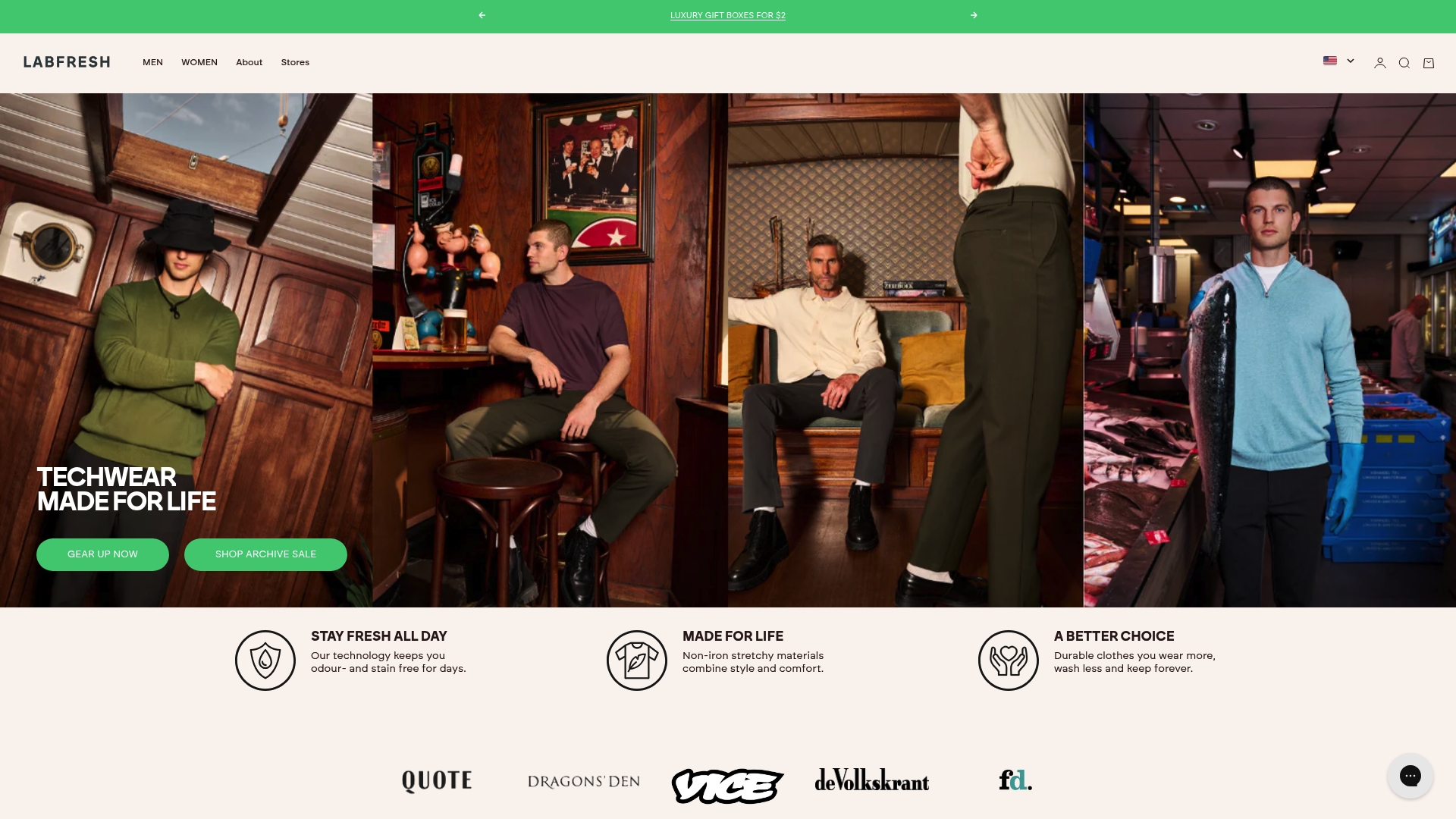
LABFRESH offers shirts engineered with advanced fabric technologies including recycled materials, odor resistance, and stretch performance. The blue non-iron 4-way stretch shirt and white non-iron 4-way stretch shirt exemplify how recycled fabrics integrate seamlessly with technical features like wrinkle resistance and multidirectional stretch.
These garments prove sustainability and high performance coexist in functional apparel designed for active, convenience-focused consumers who value both environmental responsibility and practical benefits in their wardrobe choices.
Frequently asked questions
What is recycled fabric made from?
Recycled fabrics are primarily created from post-consumer PET plastic bottles and pre-consumer textile manufacturing waste. Mechanical recycling physically processes these materials into new fibers, while chemical recycling breaks them down molecularly for reconstruction into pure polymers. Certifications like Global Recycled Standard verify that fabrics genuinely contain recycled content rather than virgin materials.
How does recycled fabric reduce environmental impact?
Producing recycled fabrics generates up to 75% fewer greenhouse gas emissions compared to manufacturing virgin polyester by eliminating petroleum extraction and refining stages. Water consumption drops by as much as 80% through streamlined processing that requires less cooling and finishing. Recycling also diverts millions of tons of plastic and textile waste from landfills annually, supporting circular economy principles that extend material lifespan.
Are recycled fabrics less durable than virgin fabrics?
Recycled polyester fabrics maintain 90-95% tensile strength compared to virgin polyester, making them suitable for demanding activewear applications. Abrasion resistance and longevity testing show comparable performance between recycled and virgin synthetics. Advanced chemical recycling methods produce fibers with quality nearly identical to virgin materials, dispelling durability concerns.
Can recycled fabrics handle intense athletic activities?
Yes, recycled synthetic fabrics perform excellently under athletic stress due to strength retention and durability enhancements. Modern processing creates fibers with moisture-wicking properties, stretch recovery, and breathability that match virgin fabric performance. Many professional and recreational athletes choose recycled activewear without compromising functionality or comfort during intense physical activity.
How can I verify a product contains genuine recycled fabric?
Look for Global Recycled Standard or OEKO-TEX® certification marks on product labels and tags. Read fabric composition details specifying exact recycled content percentages rather than vague sustainability claims. Use certification database tools to validate certification numbers, and review brand transparency reports explaining sourcing and manufacturing processes to confirm authentic recycled fabric credentials.
Recommended
Comments