Why tech-integrated apparel delivers durability and style


Imagine wearing a shirt that resists wrinkles, fights odors, and keeps you comfortable through a full day of meetings and a gym session. Tech-integrated apparel evolved from materials originally designed for space travel, now combining advanced fabrics with embedded sensors to serve style-conscious professionals and active lifestyle enthusiasts. These garments deliver durability, easy care, and smart functionality without sacrificing modern aesthetics. This article explores the advanced materials, embedded technologies, performance benefits, market growth, and ethical considerations that define tech apparel, helping you understand how innovation meets everyday style.
Table of Contents
Key Takeaways
Point | Details |
Moisture management fabrics | Garments use moisture wicking synthetics and phase change materials to manage heat and sweat throughout the day. |
Odor control tech | Antimicrobial treatments inhibit bacteria to reduce odor between washes and extend garment life. |
Wrinkle resistant design | Blends and knitting techniques keep a crisp appearance without ironing, improving travel and office polish. |
Embedded sensing integration | Sensors and electronics merge with fabric through modular platforms, enabling health and motion tracking without sacrificing comfort. |
Advanced materials behind tech-integrated apparel
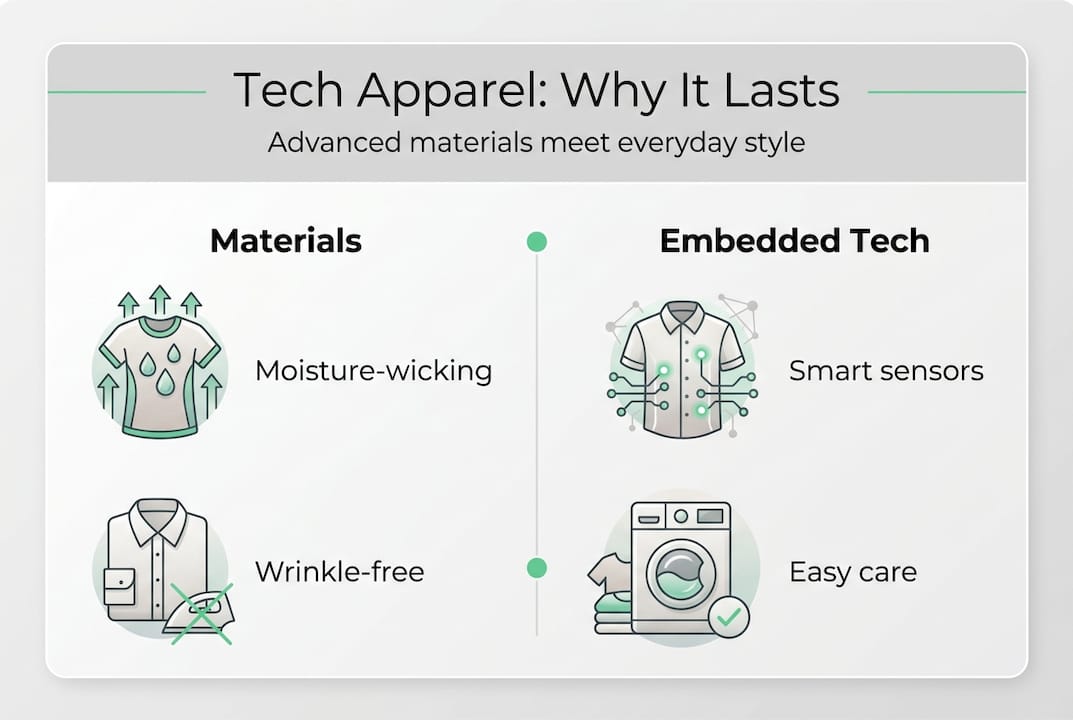
Tech-integrated apparel uses advanced materials like moisture-wicking synthetics, phase change materials (PCMs), and smart fabrics for temperature regulation, odor control, and wrinkle resistance. These innovations trace back to space exploration programs where astronauts needed clothing that managed extreme temperatures and perspiration in confined environments. Today, those same principles power garments designed for boardrooms and bike commutes.
Phase change materials stabilize body temperature by absorbing excess heat when you warm up and releasing it when you cool down. This dynamic thermal regulation keeps you comfortable during temperature fluctuations throughout your day. PCMs embedded in fabric fibers respond automatically to your body’s needs, eliminating the constant layering and adjusting that traditional clothing requires.
Antimicrobial treatments like Polygiene prevent odor-causing bacteria from multiplying on fabric surfaces. You can wear these garments multiple times between washes without developing unpleasant smells, reducing laundry frequency and extending garment lifespan. This technology proves especially valuable for travelers, busy professionals, and active users who need reliable performance without constant maintenance.
Wrinkle-resistant fabric blends combine synthetic fibers with natural materials to maintain a crisp, professional appearance straight from your bag or closet. The non-iron stretch shirt white exemplifies this approach, using engineered fibers that spring back to shape after compression. You eliminate ironing time while projecting polish in professional settings.
Modern technical clothing balances aesthetics with durability by engineering fabrics at the molecular level. Manufacturers blend performance fibers with traditional materials to achieve the drape and hand feel of conventional fabrics while adding functional benefits. The knitted non-iron shirt light blue demonstrates how knitting technology creates stretch and recovery properties that enhance both comfort and appearance.
Pro Tip: Look for garments that specify their fabric technology clearly. Terms like “moisture-wicking,” “antimicrobial,” and “wrinkle-resistant” indicate specific material engineering rather than marketing language. Check care labels to confirm these features withstand regular washing.
Key material innovations include:
Moisture-wicking synthetics that pull sweat away from skin to fabric surface for rapid evaporation
Phase change materials that absorb and release thermal energy to stabilize body temperature
Antimicrobial treatments that inhibit bacterial growth and control odor between washes
Wrinkle-resistant blends that maintain shape and appearance without ironing
Stretch fibers that provide freedom of movement while returning to original shape
Embedded technology: seamlessly smart clothing
Sensors and electronics integrate via modular platforms, pogo pin connections, and system-on-fiber technologies, enabling health monitoring without losing comfort. These integration methods represent a fundamental shift from wearable devices you attach to clothing toward electronics that become part of the fabric itself. The technology disappears into the garment structure, making smart features invisible to both the wearer and observers.
Modular pogo pin connectors allow manufacturers to attach sensor modules to garments at strategic points, then remove them for washing or replacement. This approach solves the durability problem by separating delicate electronics from the washable fabric base. You snap sensors into place when wearing the garment and remove them before laundering, extending both component and garment lifespan.
System-on-fiber technology embeds complete electronic circuits directly into yarn during the spinning process. These conductive fibers weave into fabric just like traditional threads, creating flexible, durable, and washable smart textiles. The circuits bend and stretch with the fabric, maintaining functionality through the full range of body movement without creating stiff or uncomfortable zones.
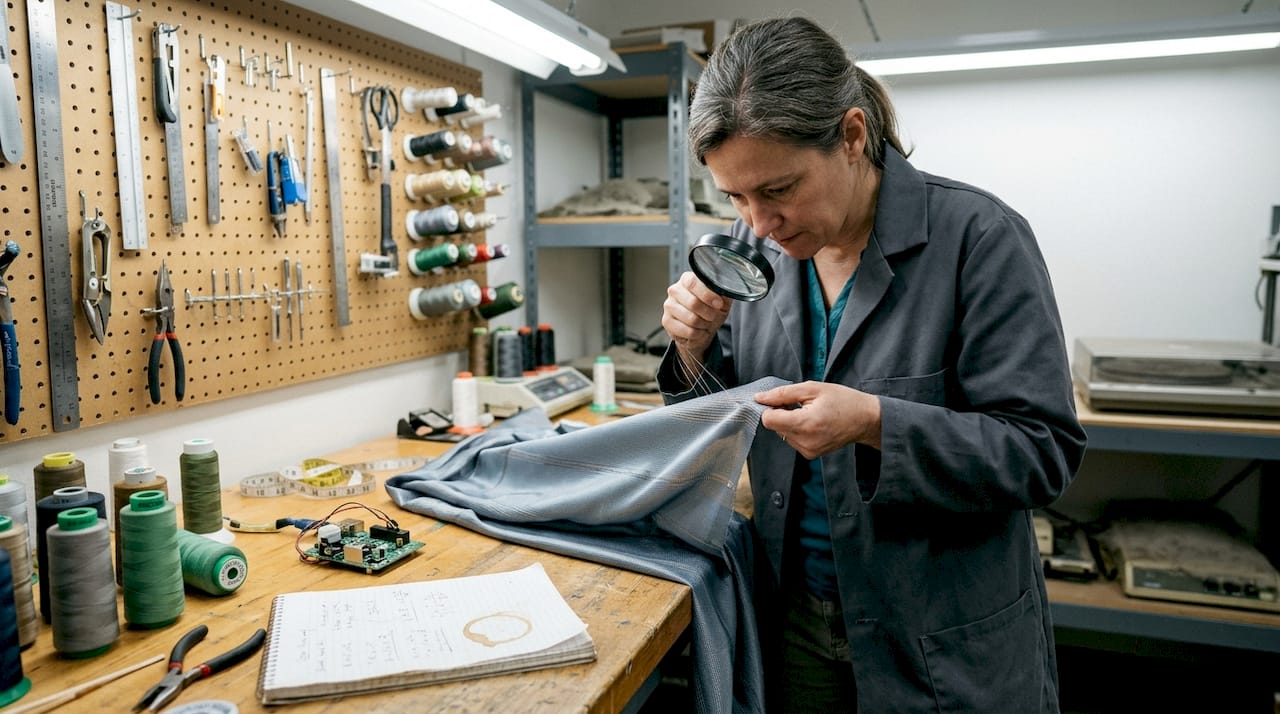
3D knitting methods produce garments with integrated electronic functionality in a single manufacturing step. Machines knit conductive yarns alongside traditional fibers, creating sensor zones precisely where monitoring is needed. This seamless construction eliminates the bulk and irritation of attached devices while positioning sensors optimally for accurate data collection.
Sensors track motion and vital signs with over 98% accuracy by maintaining consistent contact with skin through fabric compression and strategic placement. Capacitive sensors detect pressure changes, accelerometers measure movement patterns, and temperature sensors monitor thermal fluctuations. The 4-way stretch shirt blue demonstrates how stretch fabrics maintain sensor contact during activity without restricting movement.
Integration technologies follow this progression:
Modular systems use removable sensor pods that connect via pogo pins or magnetic contacts for easy maintenance and washing
Conductive yarns weave electronic pathways directly into fabric structure for flexibility and durability
System-on-fiber embeds complete circuits into individual fibers during yarn production for seamless integration
3D knitting produces garments with sensor zones positioned precisely for optimal data collection
Flexible batteries and energy harvesting systems power electronics without adding bulk or weight
Pro Tip: When choosing smart apparel, prioritize garments with removable electronic components. This design extends garment life by allowing you to wash the fabric normally and replace electronics independently as technology improves.
The sweat-proof undershirt white illustrates how moisture management technology combines with sensor integration. Fabric wicks perspiration away from sensor contact points, maintaining accurate readings even during intense activity. This dual functionality makes tech apparel practical for real-world use rather than laboratory conditions.
Sensor Type | Elasticity (%) | Thermal Conductivity (W/mK) | Classification Score |
Capacitive pressure | 150-200 | 0.3-0.5 | 98.2 |
Piezoelectric motion | 120-180 | 0.2-0.4 | 96.7 |
Temperature monitoring | 100-150 | 0.4-0.6 | 99.1 |
Heart rate optical | 130-170 | 0.3-0.5 | 97.5 |
Performance benefits and market growth
Empirical benchmarks show sensitivities up to 10,000 kPa−1 and motion recognition improvements up to 40%, with market growth driven by urban lifestyles. These performance metrics translate directly into practical benefits for users who demand accurate health tracking without sacrificing style or comfort. The technology has matured from experimental prototypes to reliable products that function in daily wear scenarios.
Capacitive sensor sensitivity at 10,000 kPa−1 enables detection of subtle pressure changes like pulse waves and breathing patterns through fabric layers. This precision allows garments to monitor cardiovascular health and stress levels continuously without chest straps or wrist devices. You receive health insights from clothing you already wear rather than adding separate monitoring equipment.
Loose fitting sensor configurations improve prediction efficiency for everyday wear by accommodating natural body movement and fabric shifting. Earlier generations required tight compression to maintain sensor contact, limiting comfort and style options. Modern sensors function accurately even when fabric moves slightly against skin, making tech apparel suitable for professional and casual settings.
The wearable textile market projects growth to $70 billion by 2028, reflecting compound annual growth rates between 10% and 18% depending on product category. This expansion stems from converging trends in health awareness, remote work flexibility, and urban lifestyle demands. Consumers increasingly value clothing that serves multiple functions, reducing wardrobe size while expanding capability.
“Urban professionals need clothing that transitions seamlessly from office to gym to social settings. Tech-integrated apparel delivers this versatility by combining professional aesthetics with athletic performance, eliminating the need for outfit changes throughout the day.”
The LABFRESH shirts collection exemplifies this market shift toward multifunctional garments. Shirts designed for office wear incorporate stretch, moisture management, and wrinkle resistance that support active lifestyles. You maintain professional appearance while gaining performance benefits previously available only in dedicated athletic wear.
Health-conscious consumers drive adoption by seeking continuous wellness monitoring integrated into daily routines. Rather than remembering to wear fitness trackers or charge separate devices, they prefer clothing that automatically collects health data. This passive monitoring approach increases compliance and provides more complete datasets for health insights.
The performance jacket grey demonstrates how outerwear integrates technical features without compromising style. Weather resistance, thermal regulation, and moisture management combine with contemporary design that works in professional and casual contexts. This convergence of function and fashion defines the tech apparel category.
Feature | Traditional Apparel | Tech-Integrated Apparel |
Odor control | Requires frequent washing | Antimicrobial treatment extends wear |
Wrinkle resistance | Needs ironing or steaming | Wrinkle-free fabrics maintain appearance |
Temperature regulation | Passive insulation only | Active phase change materials adapt |
Health monitoring | Requires separate devices | Embedded sensors track continuously |
Moisture management | Cotton absorbs and holds sweat | Synthetic wicking moves moisture away |
Durability | Degrades with washing | Engineered fibers resist wear |
Challenges and ethical considerations in tech apparel
Challenges include wash durability, privacy risks from AI wearables, PFAS chemical concerns, and cost-performance trade-offs. These obstacles represent the growing pains of an emerging industry rather than insurmountable barriers. Understanding these limitations helps you make informed choices and set realistic expectations for tech apparel performance.
Connectors and conductive textiles often fail under repeated washing cycles due to mechanical stress and chemical exposure. Water, detergent, and agitation degrade electrical connections and conductive pathways over time. Manufacturers address this through removable electronics and protective encapsulation, but durability remains below traditional garment standards. You may need to replace electronic components before the fabric itself wears out.
Battery size and weight still challenge garment comfort and visual appeal despite advances in energy density. Flexible batteries thin enough for clothing integration store limited power, requiring frequent recharging. Larger batteries provide longer runtime but create visible bulk that conflicts with sleek aesthetics. Energy harvesting from body heat or movement offers promise but remains in early development stages.
Data privacy and ethical AI use raise concerns about continuous health monitoring and behavior tracking. Garments that collect biometric data create new vectors for surveillance and data breaches. Companies must implement robust encryption, transparent data policies, and user control over information sharing. The ethical dilemmas of AI-powered wearables extend beyond technology into fundamental questions about bodily autonomy and consent.
Chemical treatments like PFAS used in stain and water resistance pose potential health and environmental risks. These “forever chemicals” accumulate in bodies and ecosystems, raising concerns about long-term exposure effects. Manufacturers increasingly seek alternative treatments, but performance trade-offs complicate the transition. The non-transparent classic shirt white demonstrates how thoughtful material selection can achieve performance without problematic chemicals.
Designers push for sustainable, user-centric, and privacy-conscious apparel by prioritizing transparency and ethical practices. This includes clear labeling of chemical treatments, modular designs that extend product life, and data policies that protect user privacy. The industry recognizes that long-term success requires building consumer trust through responsible innovation.
Pro Tip: Before purchasing tech apparel, research the manufacturer’s data privacy policy and chemical disclosures. Look for brands that specify which treatments they use and how they handle health data. Transparency in these areas indicates commitment to ethical practices.
Key challenges facing the industry:
Wash durability of electronic components and conductive pathways degrades faster than fabric
Battery technology limitations create trade-offs between size, weight, and runtime
Data privacy concerns require robust encryption and transparent user control policies
PFAS and other chemical treatments raise health and environmental questions
Cost barriers limit accessibility to premium price points that exclude many consumers
Standardization gaps create compatibility issues between brands and platforms
Explore durable, stylish tech apparel at LABFRESH
You have learned how advanced materials and embedded technologies transform everyday clothing into high-performance gear. LABFRESH translates these innovations into practical apparel designed for professionals and active individuals who refuse to choose between style and function.

Our shirts combine wrinkle-free fabrics, odor-resistant treatments, and stretch technology that moves with you from morning meetings through evening activities. The Blue Non-Iron 4-Way Stretch Shirt and White Non-Iron 4-Way Stretch Shirt eliminate ironing while providing freedom of movement that traditional dress shirts lack. You maintain professional polish without sacrificing comfort or spending time on garment care.
Our performance pants collection extends these benefits to complete outfits with moisture-wicking, wrinkle-resistant bottoms engineered for all-day wear. These garments embody the tech apparel principles explored in this article, delivering durability and easy care that fit your active lifestyle. Discover how LABFRESH makes advanced fabric technology accessible and practical for everyday use.
Frequently asked questions about tech-integrated apparel
Is tech-integrated apparel easy to care for and wash?
Most tech apparel with removable electronics washes like regular clothing once you detach sensor modules. Garments with permanently integrated circuits require gentler care, typically hand washing or delicate machine cycles. Always check manufacturer instructions, as care requirements vary by integration method and fabric type.
How do embedded sensors affect clothing comfort?
Modern embedded sensors use flexible materials and strategic placement that minimize bulk and irritation. System-on-fiber technology integrates electronics directly into yarn, making them virtually undetectable during wear. You should not feel sensors during normal activity if the garment fits properly and uses current integration methods.
Are tech fabrics suitable for formal office wear?
Yes, many tech fabrics now match or exceed traditional materials in appearance and drape. Wrinkle-resistant blends, moisture-wicking dress shirts, and performance suiting maintain professional aesthetics while adding functional benefits. The key is choosing garments designed specifically for business contexts rather than athletic wear adapted for offices.
What are the privacy concerns with wearable tech in clothing?
Wearable tech in clothing collects continuous biometric data that could reveal health conditions, activity patterns, and location information. Privacy risks include data breaches, unauthorized sharing with third parties, and surveillance by employers or insurers. Choose brands with transparent data policies and user control over information collection and sharing.
How does tech apparel benefit active lifestyle users?
Active users gain moisture-wicking that keeps skin dry, antimicrobial treatments that control odor, and stretch fabrics that enhance movement freedom. Motion sensors can track workout intensity and form, while quick-dry properties allow rapid transitions between activities. These features reduce the need for outfit changes and laundry frequency during busy days.
Recommended
Comments