Sustainable wardrobe guide: tech fabrics for 2026 style
- Leroy Hughes

- Mar 10
- 8 min read
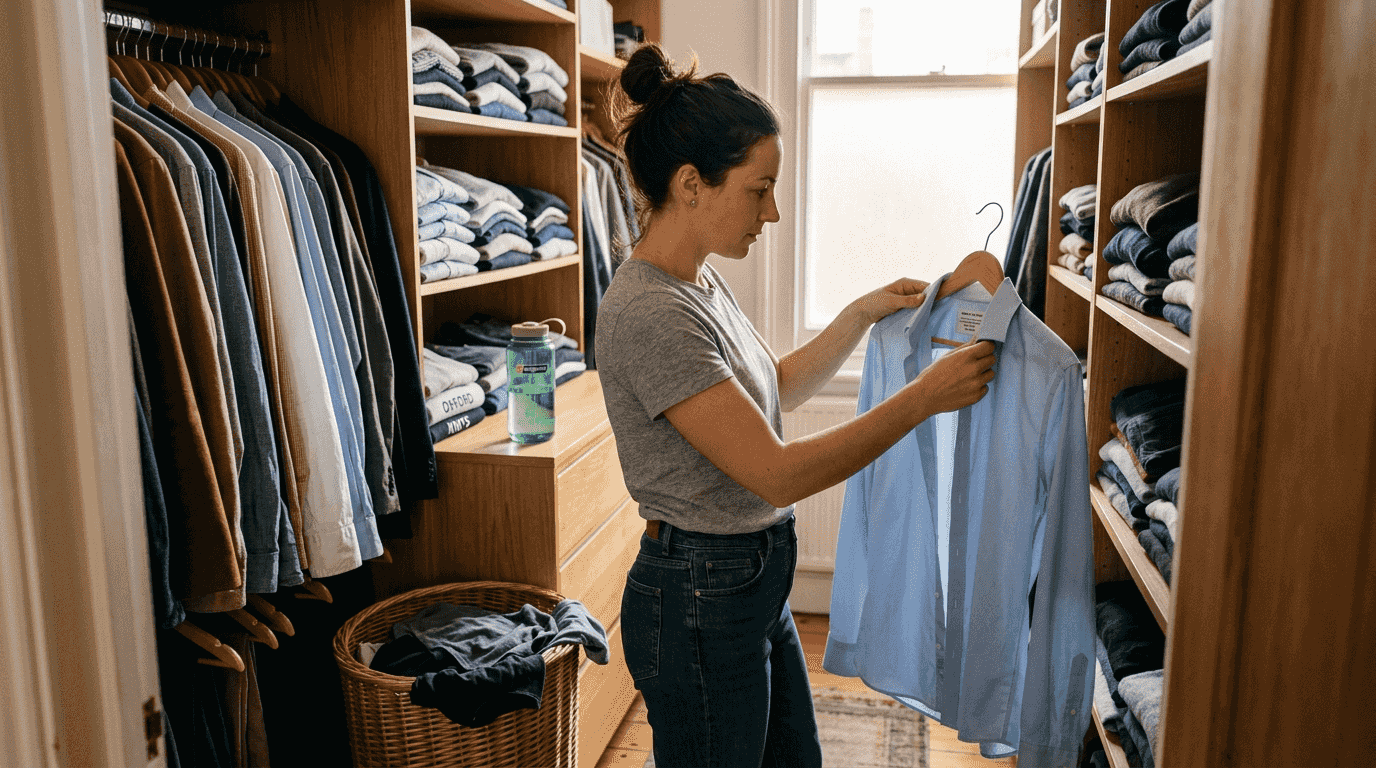
The fashion industry produces 10% of global carbon emissions, more than international flights and maritime shipping combined. For active consumers juggling work, fitness, and social commitments, building a wardrobe that balances style, sustainability, and convenience feels overwhelming. This guide shows you how technical fabrics transform sustainable fashion from a compromise into a practical upgrade for your busy lifestyle.
Table of Contents
Key takeaways
Point | Details |
Tech fabrics drive sustainability | Odor-resistant and stain-resistant materials reduce washing frequency by up to 50%, cutting water and energy consumption significantly. |
Durability beats disposability | High-quality technical garments last 3-5 times longer than conventional clothing, reducing waste and long-term costs. |
Style and sustainability coexist | Modern technical fabrics deliver performance without sacrificing aesthetic appeal for style-conscious consumers. |
Framework simplifies choices | Evaluate garments using four criteria: environmental footprint, longevity, fabric technology, and style compatibility. |
Understanding sustainable wardrobes
A sustainable wardrobe goes beyond buying organic cotton or recycled materials. For active consumers, it means choosing garments that withstand frequent wear, maintain appearance without constant washing, and integrate seamlessly into diverse settings from office to gym.
The fashion industry’s carbon impact stems from multiple sources. Manufacturing processes consume massive energy. Synthetic dyes pollute waterways. Fast fashion encourages overconsumption and rapid disposal. Your clothing choices directly influence this cycle.
Three factors define wardrobe sustainability for your lifestyle:
Fabric durability and resistance to wear, stains, and odors
Garment construction quality that extends usable life
Care requirements that minimize water, energy, and chemical use
Style-conscious consumers often face a false choice between looking good and doing good. Technical innovations now eliminate this trade-off, delivering garments that perform under pressure while reducing environmental impact through extended lifecycles and reduced maintenance needs.
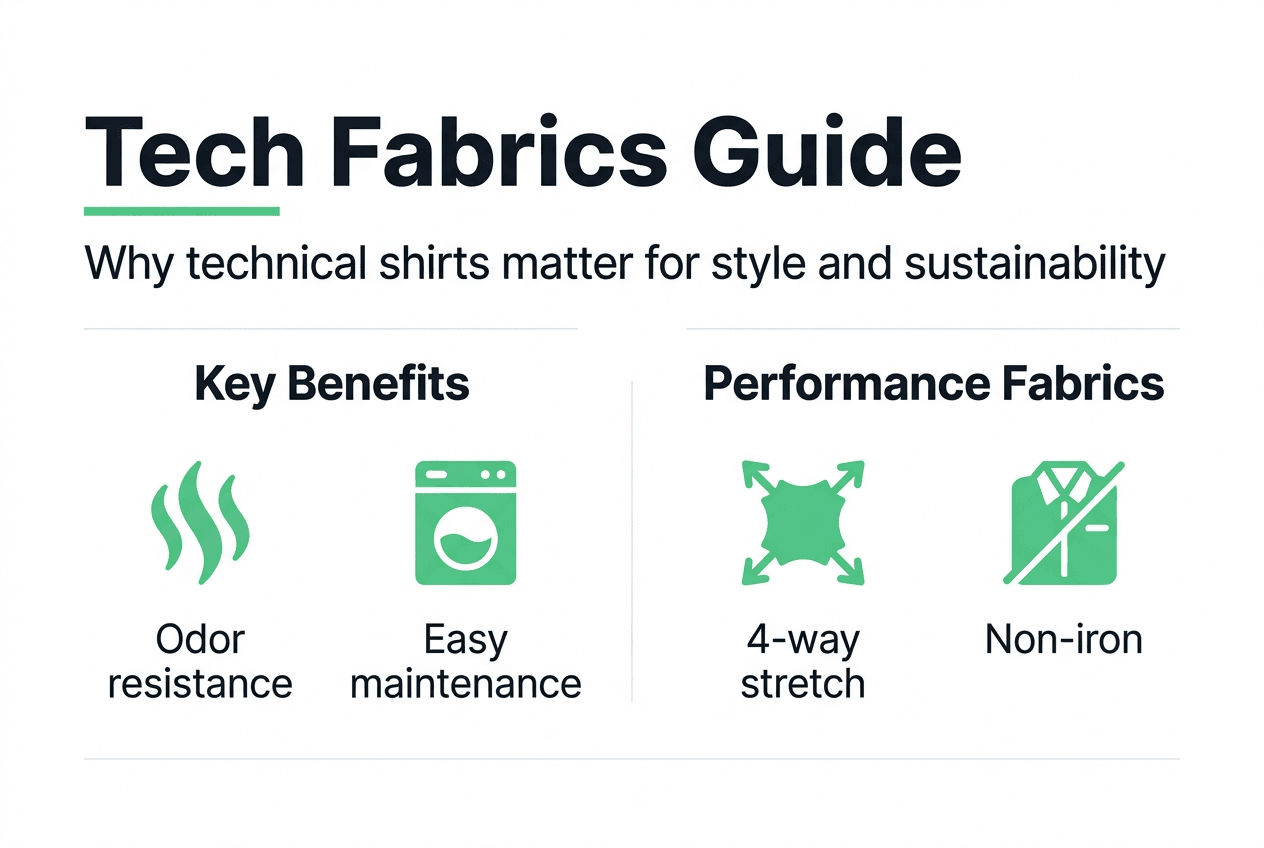
How fabric technology enhances sustainability
Technical fabric innovations revolutionize how clothing supports sustainable lifestyles. Odor-resistant treatments prevent bacterial growth, keeping garments fresh through multiple wears. Stain-resistant finishes repel liquids and particles, reducing emergency laundering. These features decrease wash cycles significantly, cutting resource consumption.
Consider your typical dress shirt. Conventional cotton requires washing after each wear, consuming water, electricity, and detergent. A technical shirt with odor resistance can be worn 3-5 times before washing, reducing environmental impact by 60-80% over its lifetime.
Key technical features that boost sustainability:
Moisture-wicking fabrics that dry quickly and resist odor buildup
Stain-repellent treatments that protect against spills and marks
Wrinkle-resistant construction that eliminates ironing energy use
Reinforced stress points that prevent premature wear and tear
This white non-iron classic shirt exemplifies how technology reduces maintenance. The fabric maintains crisp appearance without ironing, saving time and energy while extending garment life through superior durability.

Fabric Type | Wears Between Washes | Water Use Per Year | Estimated Lifespan |
Standard cotton | 1-2 | 520 gallons | 1-2 years |
Technical blend | 4-6 | 150 gallons | 4-6 years |
Performance synthetic | 5-8 | 100 gallons | 5-8 years |
Pro Tip: Test fabric technology claims before committing to full wardrobe changes. Buy one technical garment, track how many wears you get before washing, and compare against conventional equivalents. Real-world performance often exceeds manufacturer claims for active lifestyles.
Labfresh’s fresh take on sustainability demonstrates how brands integrate environmental responsibility into technical innovation. By prioritizing durability and low-maintenance care, technical fabrics deliver measurable environmental benefits without sacrificing the style active consumers demand.
Common misconceptions about sustainable fashion
Myth: Sustainable clothing looks frumpy or outdated. Reality: Modern technical fabrics match or exceed conventional materials in aesthetic appeal. Performance-oriented brands now employ skilled designers who understand that active consumers refuse to compromise style for sustainability.
Myth: Eco-friendly apparel costs prohibitively more. Reality: While sustainable garments often carry higher upfront prices, total cost of ownership tells a different story. A $120 technical shirt worn 200 times costs $0.60 per wear. A $40 conventional shirt worn 40 times costs $1.00 per wear. Durability transforms premium pricing into better value.
Myth: Washing frequency matters less than production methods. Reality: Garment care accounts for significant environmental impact over a product’s lifecycle. Reducing wash cycles through technical fabrics often generates greater carbon savings than switching to organic materials that still require frequent laundering.
These misconceptions persist because fashion marketing historically separated sustainability from performance and style. Active consumers assume trade-offs exist where technology has eliminated them. Understanding fabric capabilities helps you make informed choices aligned with both values and practical needs.
Key misconception impacts:
Overlooking technical options due to aesthetic assumptions
Focusing solely on purchase price rather than lifecycle value
Prioritizing production origin over use-phase environmental impact
Believing sustainable choices require lifestyle sacrifices
“The biggest barrier to sustainable fashion adoption isn’t availability or cost. It’s outdated perceptions about what sustainable clothing looks like and how it performs in real-world conditions.” Fashion sustainability researcher, 2026 industry report.
Framework for choosing a sustainable wardrobe
Evaluating wardrobe sustainability requires balancing four interconnected criteria. Environmental footprint encompasses production impact, material sourcing, and end-of-life disposal. Garment longevity measures durability, construction quality, and resistance to wear. Fabric technology includes maintenance requirements and performance features. Style compatibility ensures pieces work across your lifestyle contexts.
Follow this evaluation sequence:
Assess fabric composition and treatment technologies for durability markers
Review care instructions to estimate washing frequency and energy use
Examine construction details like reinforced seams and quality hardware
Test style versatility across your typical weekly activities
Calculate cost per wear based on realistic usage estimates
Verify brand transparency about production and materials sourcing
This light blue 4-way stretch shirt demonstrates the framework in practice. Stretch fabric ensures comfort during movement, stain resistance reduces washing needs, and versatile styling works from office to evening events. These features combine to maximize wears while minimizing environmental impact.
Evaluation Criteria | High Sustainability | Medium Sustainability | Low Sustainability |
Wears between washes | 5+ times | 2-4 times | 1 time |
Expected lifespan | 5+ years | 2-4 years | Under 2 years |
Care complexity | Air dry, no iron | Machine wash, air dry | Dry clean or special care |
Style versatility | Multi-context use | 2-3 contexts | Single use case |
Pro Tip: Start wardrobe sustainability improvements with your most-worn items. Replacing five frequently-worn pieces with durable alternatives generates more environmental benefit than buying 20 sustainable items you rarely use. Focus on workhorses, not one-off occasion wear.
Active consumers need pieces that transition seamlessly. A technical shirt that works for client meetings, casual Fridays, and weekend activities eliminates the need for multiple specialized garments, reducing total wardrobe size and associated environmental footprint.
Real-world success stories and practical benefits
Active professionals who switched to technical wardrobes report wearing garments 4-6 times before washing versus 1-2 times for conventional clothing. This translates to 65% fewer wash cycles annually, saving approximately 400 gallons of water and 180 kWh of electricity per person. Over a five-year garment lifespan, the cumulative savings become substantial.
Fitness enthusiasts particularly value odor-resistant fabrics. Post-workout freshness without immediate laundering enables seamless transitions from gym to errands to social activities. Technical undershirts worn under dress clothes provide an invisible performance layer that extends the life of outer garments by reducing direct skin contact and sweat transfer.
Travel frequently? Technical wardrobes transform packing efficiency. Four odor-resistant, wrinkle-resistant shirts handle a week-long business trip versus seven conventional shirts. Reduced luggage weight, eliminated hotel ironing, and simplified packing routines demonstrate how sustainability aligns with convenience.
Practical benefits for active, style-conscious consumers:
Morning routines simplified through wrinkle-resistant fabrics requiring no ironing
Laundry time reduced by 50-70% through extended wear cycles
Travel packing efficiency improved with fewer garments needed
Confidence maintained throughout long days without appearance degradation
Long-term wardrobe costs lowered through reduced replacement frequency
Environmental impact decreased measurably through resource conservation
Consider this blue 4-way stretch shirt or white 4-way stretch shirt for versatility. Stretch technology accommodates movement during active days while maintaining professional appearance. Stain resistance provides insurance against coffee spills and lunch mishaps that would sideline conventional garments.
The shirt jacket and shirt bundle illustrates how building coordinated technical wardrobes maximizes benefits. Layering pieces extend seasonal versatility while maintaining the low-maintenance characteristics that support sustainable use patterns.
Style retention matters as much as durability. Technical fabrics that maintain color vibrancy, shape, and texture through hundreds of wears eliminate the “worn out” appearance that triggers premature replacement of conventional garments still structurally sound.
Conclusion: making the sustainable wardrobe choice
Sustainable wardrobes for active lifestyles combine environmental responsibility with practical performance. Technical fabrics deliver measurable benefits: reduced washing frequency cuts resource consumption, enhanced durability extends garment life, and low-maintenance care saves time and energy. These advantages compound over years of use.
Your clothing choices ripple outward. Every technical garment that replaces three conventional pieces reduces manufacturing demand, lowers water consumption, and decreases landfill waste. For style-conscious consumers, sustainability no longer requires aesthetic compromise. Modern innovations align environmental values with the polished, versatile appearance your lifestyle demands.
Start small. Replace your most-worn items with technical alternatives. Track the difference in washing frequency, maintenance effort, and garment longevity. The framework and criteria outlined here provide clear evaluation tools for making informed choices that serve both your practical needs and environmental values.
Building a sustainable wardrobe isn’t about perfection. It’s about making progressively better choices as you replace worn items and expand your collection. Technical fabrics make those choices easier by eliminating traditional trade-offs between performance, style, and environmental impact.
Explore sustainable tech apparel to elevate your active wardrobe
Ready to experience how technical fabrics transform your daily routine? Labfresh specializes in performance apparel engineered for active, style-conscious consumers who refuse to compromise. Our performance pants collection delivers comfort and durability for everything from office presentations to evening events.
Explore our LABFRESH shirts collection featuring odor-resistant, stain-resistant, and wrinkle-resistant technologies that reduce maintenance while extending garment life. Technical LABFRESH undershirts provide an invisible performance foundation that protects outer layers and enhances all-day comfort. Discover how sustainable innovation meets practical style.
FAQ
What fabrics are best for a sustainable wardrobe?
Technical fabrics with odor and stain resistance offer superior sustainability through extended wear cycles and enhanced durability. Look for materials combining synthetic performance fibers with thoughtful treatments that reduce washing frequency. Verify brand transparency about production processes and material sourcing to ensure comprehensive sustainability.
How does odor resistance in fabrics reduce environmental impact?
Odor-resistant treatments prevent bacterial growth, enabling 3-6 wears between washes versus 1-2 for conventional fabrics. This cuts water consumption by 400+ gallons annually and reduces energy use by 180+ kWh per garment over its lifetime. Lower washing frequency also decreases detergent use and microfiber pollution from synthetic fabrics.
Is sustainable fashion always more expensive?
Sustainable garments often cost more upfront but deliver superior value through extended lifespans and reduced replacement frequency. A $120 technical shirt worn 200 times costs $0.60 per wear versus $1.00 per wear for a $40 conventional shirt worn 40 times. Calculate total cost of ownership rather than purchase price alone.
How can I evaluate if a garment is truly sustainable?
Assess four key factors: fabric durability and technical features, realistic lifespan estimates, care requirements and washing frequency, and style versatility across your lifestyle contexts. Review brand transparency about materials sourcing and production methods. Prioritize pieces that maximize wears while minimizing maintenance needs and environmental impact.
Recommended
Comments