Sustainable Travel Clothing Guide for Effortless Packing
- Leroy Hughes

- Jan 18
- 7 min read

Packing for international business meetings or weekend getaways can quickly become a challenge when you want style, durability, and a smaller carbon footprint all in one travel wardrobe. Urban professionals now demand more from their clothing choices, driven by unpredictable climates and the need for functional, sustainable performance. With new research shedding light on how outdoor thermal comfort and climate comfort analysis are key for travel clothing selection, this guide reveals how to build a wardrobe that meets both environmental values and your active lifestyle requirements.
Table of Contents
Quick Summary
Key Insight | Explanation |
1. Assess Climate Variability | Research your destination’s temperature ranges and weather patterns for better packing choices. |
2. Choose Sustainable Materials | Prioritize eco-friendly base layers like Merino wool and organic cotton for functional travel wear. |
3. Pack Versatile Clothing | Select multi-use items and neutral colors to maximize outfit combinations and save packing space. |
4. Utilize Innovative Outerwear | Look for smart outerwear that adapts to conditions while minimizing care efforts and environmental impact. |
5. Maintain Clothing Effectively | Use spot cleaning and biodegradable detergents to extend the life of your garments while traveling. |
Step 1: Assess your specific travel needs and climate
Assessing your travel clothing strategy starts with understanding the unique environmental challenges of your destination. Climate comfort analysis is crucial for selecting versatile and functional travel apparel that keeps you comfortable across diverse conditions.
Begin by researching your destination’s seasonal temperature ranges and weather patterns. Consider not just average temperatures but potential fluctuations between day and night. Urban travelers will want different clothing strategies compared to those exploring rural or wilderness areas. Outdoor thermal comfort research demonstrates that clothing layers should adapt to changing meteorological conditions. This means thinking beyond simple temperature metrics and considering factors like humidity, wind chill, and potential precipitation.
Take a systematic approach by creating a detailed packing list that accounts for your specific activities. A business traveler attending conferences will need different clothing than an adventure traveler hiking mountain trails. Break down your clothing needs by activity type daily average temperatures expected clothing layers required and potential environmental challenges. Lightweight moisture-wicking fabrics work well for warm climates while insulating layers become critical in cooler regions.
Pro tip: Create a digital spreadsheet or travel clothing checklist that itemizes your clothing needs by day temperature range and planned activities to ensure comprehensive and strategic packing.
Step 2: Choose functional, sustainable base layers
Selecting the right base layers is essential for creating a versatile and eco-conscious travel wardrobe. Sustainable base layer selection involves understanding the complex interplay between material performance, environmental impact, and ethical manufacturing practices.
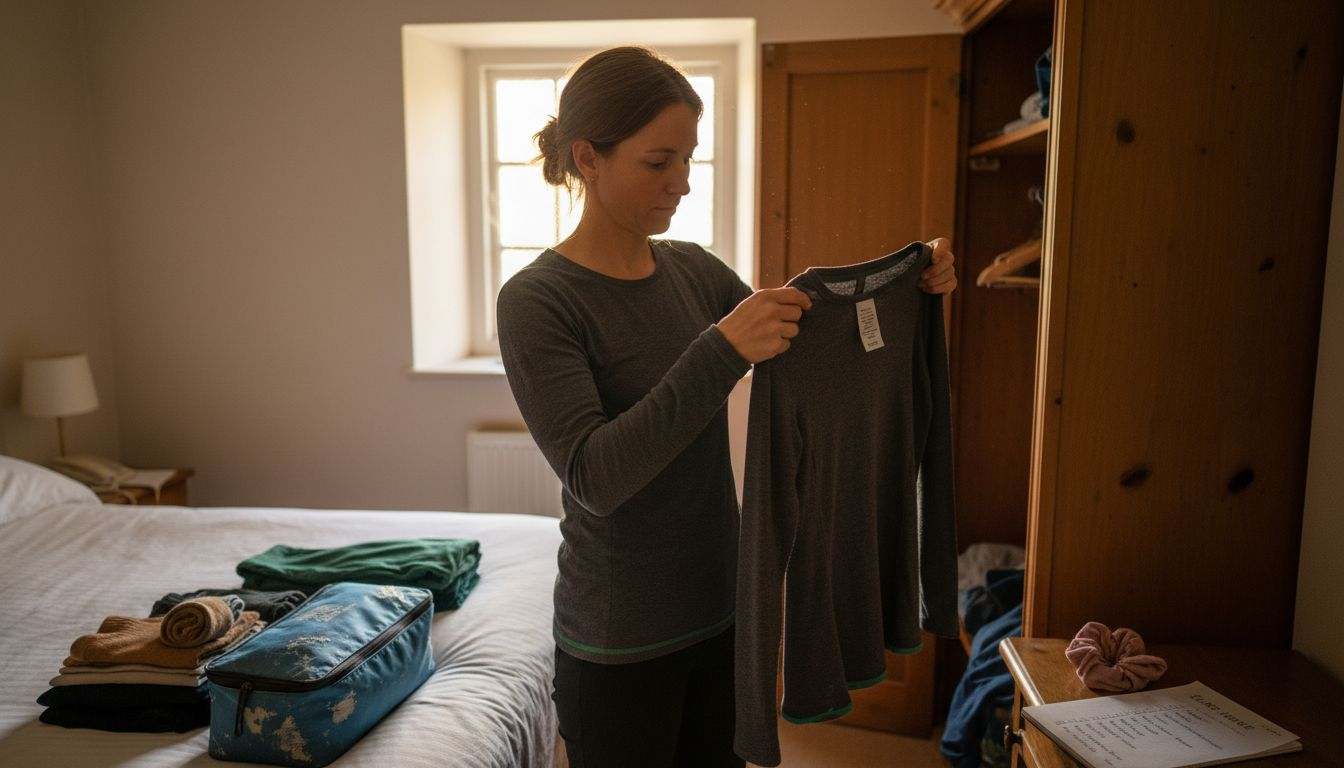
Focus on materials that offer both functional performance and minimal ecological footprint. Merino wool stands out as an exceptional choice, providing natural temperature regulation, moisture wicking, and odor resistance. Organic cotton and recycled synthetic fabrics offer additional sustainable alternatives that reduce environmental strain. Eco-friendly thermal materials like bamboo viscose deliver impressive moisture management and temperature control while supporting responsible production practices.
When evaluating base layers, look beyond immediate performance and consider the broader sustainability framework. Check for certifications such as the Responsible Wool Standard, Global Organic Textile Standard (GOTS), and Fair Trade labels. These indicators ensure that your clothing choices support ethical manufacturing, minimize environmental impact, and contribute to a more responsible global textile ecosystem.
Pro tip: Prioritize multipurpose base layers that can transition between activities and climate conditions to maximize your travel wardrobe efficiency and reduce overall packing volume.
Here’s a quick reference comparing sustainable travel clothing materials and their unique benefits:
Material Type | Key Performance Benefit | Environmental Impact | Best Use Case |
Merino Wool | Regulates temperature, odor | Naturally sourced | Layering in variable climates |
Organic Cotton | Breathable comfort | Lower water usage | Everyday base layers |
Recycled Synthetics | Quick drying, lightweight | Reduces plastic waste | Sport and outdoor activities |
Bamboo Viscose | Superior moisture management | Renewable resource | Hot or humid destinations |
Step 3: Integrate innovative, low-maintenance outerwear
Selecting outerwear for travel demands a strategic approach that balances functionality, sustainability, and minimal maintenance requirements. Innovative textile solutions have revolutionized how travelers can approach their clothing choices, offering smart materials that adapt to changing environments while reducing overall environmental impact.
Focus on multipurpose outerwear that combines advanced fabric technologies with sustainable manufacturing practices. Look for garments featuring recycled materials, regenerative fabric sourcing, and smart design elements that provide temperature regulation, water resistance, and wrinkle prevention. Sustainable outerwear innovations now include biodegradable insulation and fabrics engineered to minimize washing frequency while maintaining performance across diverse travel conditions. Seek out pieces with technical features like moisture wicking, quick drying capabilities, and built in UV protection that reduce the need for frequent cleaning and maintenance.
Prioritize versatile layering pieces that can transition seamlessly between different environments and activities. Consider lightweight jackets or vests with removable insulation, packable designs that compress easily in your luggage, and neutral color palettes that mix and match with multiple outfit combinations. This approach not only simplifies your travel wardrobe but also supports a more sustainable approach to clothing consumption by maximizing each garment’s utility.
Pro tip: Invest in outerwear with modular design features that allow you to adapt your clothing to changing temperatures and conditions without carrying multiple bulky garments.
Step 4: Optimize your packing for versatility and space
Efficient luggage packing strategies transform how travelers approach their travel wardrobes. Packing smartly means creating a flexible clothing system that maximizes utility while minimizing overall volume, allowing you to travel lighter and more intentionally.
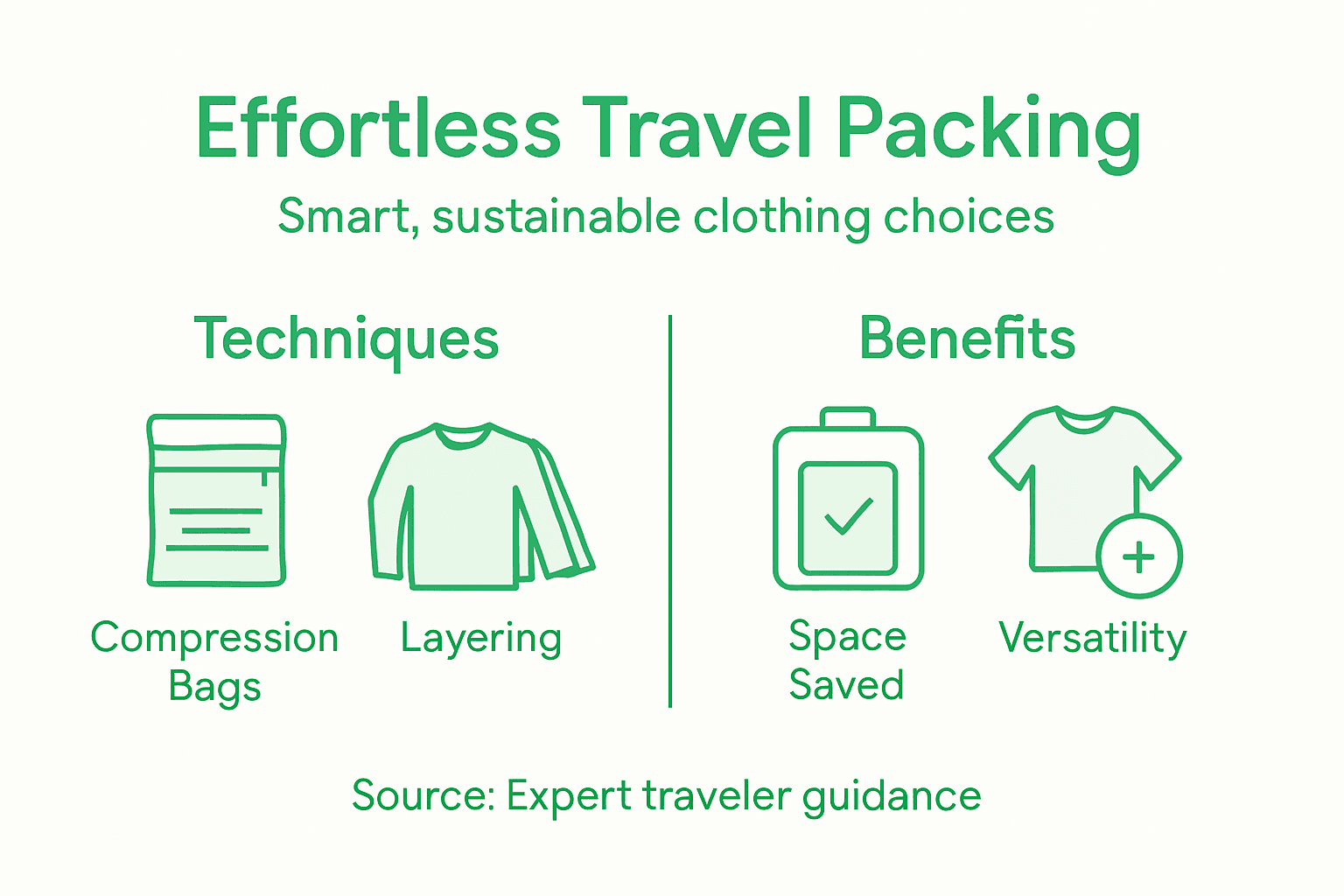
Master the art of strategic layering and versatile clothing selection. Choose neutral color palettes that mix and match effortlessly, enabling you to create multiple outfit combinations from a minimal number of pieces. Layered clothing techniques offer incredible flexibility across changing temperatures and activities. Focus on lightweight, wrinkle resistant fabrics that can be rolled or compressed to save precious luggage space. Invest in multifunctional garments that serve multiple purposes like convertible pants that become shorts or jackets with removable liners.
Utilize advanced packing techniques to maximize efficiency. Compression bags can reduce clothing volume dramatically, while strategic rolling methods prevent wrinkles and create more compact storage. Select luggage with intelligent compartmentalization that allows easy organization and quick access to your essentials. Prioritize technical fabrics that dry quickly, resist odors, and maintain their shape, reducing the overall number of items you need to pack.
Pro tip: Pack clothing items that can be styled in at least three different ways to ensure maximum versatility with minimal luggage weight.
The following table summarizes efficient packing techniques and their unique advantages for travelers:
Packing Technique | Main Advantage | Best for |
Strategic Layering | Versatile outfit options | Changing weather |
Compression Bags | Maximizes luggage space | Long trips |
Rolling Method | Minimizes wrinkles | Lightweight packing |
Multifunctional Items | Reduces packed volume | Minimalist travelers |
Step 5: Maintain and refresh your wardrobe on the go
Sustainable travel clothing requires strategic care and maintenance to extend its lifespan and minimize environmental impact. Recycled clothing practices demonstrate that thoughtful garment maintenance can significantly reduce waste and preserve your travel wardrobe.
Pack a compact travel care kit with essential maintenance tools like quick dry towels, stain removal pens, small sewing kits, and wrinkle release spray. Learn basic spot cleaning techniques that allow you to refresh clothing between formal washings. Focus on technical fabrics designed for easy maintenance these materials often resist odors, dry rapidly, and require minimal intervention to stay clean. Rotate your clothing pieces strategically to distribute wear evenly and prevent excessive strain on individual garments.
Embrace a minimalist approach to clothing care while traveling. Choose performance fabrics that naturally resist odors and wrinkles, reducing the need for frequent washing. When possible hand wash items in your hotel sink using biodegradable detergent and hang them to air dry. This approach not only preserves your clothing but also minimizes water and energy consumption associated with traditional laundering methods.
Pro tip: Select performance clothing made from regenerative or recycled materials that can be spot cleaned and air dried quickly to maintain freshness with minimal environmental impact.
Travel Smarter with Sustainable, Low-Maintenance Apparel
Packing light and staying comfortable throughout your journey is a common challenge faced by every traveler. This guide highlights the importance of versatile layering, sustainable base layers, and innovative outerwear that adapt to changing climates while minimizing your environmental impact. If you struggle with bulky luggage or frequent clothing maintenance on the go, choosing tech-driven, odor-resistant fabrics can be a game changer.
Discover how performance pants and T-shirts made with advanced FreshCore™ technology combine function with sustainability. These garments resist odors and stains, dry quickly, and require minimal care so you stay fresh without overpacking. Explore our Green collection for eco-conscious options designed to support your active, style-conscious lifestyle.
Ready to upgrade your travel wardrobe with durable, easy-care pieces? Visit LABFRESH today for innovative apparel that simplifies packing and keeps you comfortable anywhere. Take control of your journey by choosing smarter, sustainable clothing that moves with you and lasts longer. Shop now and travel effortlessly.
Frequently Asked Questions
How can I assess my travel clothing needs for different climates?
Assess your travel clothing needs by researching the seasonal temperature ranges and weather patterns of your destination. Create a packing list that includes clothing specific to your activities and consider factors like humidity and wind chill for a comprehensive approach.
What materials should I look for in sustainable travel clothing?
Focus on materials like Merino wool, organic cotton, and recycled synthetic fabrics that offer both performance and a minimal ecological footprint. Look for certifications such as the Responsible Wool Standard and Global Organic Textile Standard to ensure sustainable sourcing.
How can I pack my clothing to maximize space and versatility?
Utilize compression bags and strategic layering to minimize the volume of your packed clothing. Choose neutral color palettes and multifunctional garments, which can be styled in various ways, to create multiple outfits while packing light.
What maintenance tips can I use to care for my travel clothing on the go?
Pack a travel care kit with essentials like stain removal pens and quick-dry towels to maintain your clothing while traveling. Learn spot cleaning techniques and prioritize clothing made from performance fabrics that resist odors and wrinkles, reducing the need for frequent washing.
How do I choose the right outerwear for travel?
Select multipurpose outerwear that features advanced fabric technologies, like water resistance and temperature regulation. Opt for lightweight and packable designs that adapt to changing conditions while helping you stay sustainable and minimize laundry needs.
What is the importance of layering in sustainable travel packing?
Layering allows you to adapt to varying temperatures and activities without overpacking. Create outfits with base layers, insulating pieces, and outer layers that you can mix and match to address different weather conditions effectively.
Recommended
Comments