Sustainable Fashion Checklist 2026: 50% Less Washing Guide
- Leroy Hughes

- Mar 2
- 9 min read

Finding sustainable fashion that survives your active lifestyle while staying stylish feels impossible. You cycle through garments too quickly, or they fail to perform under daily demands. Advanced fabric technologies like FreshCore™ achieve 80% odor bacteria reduction, enabling stylish, sustainable, and low maintenance wear. This checklist guides European professionals through selecting durable, eco-friendly apparel that handles real world use without compromise.
Table of Contents
Key Takeaways
Point | Details |
Fabric innovation drives sustainability | Advanced technologies like FreshCore™ reduce washing frequency by up to 50%, cutting environmental impact significantly. |
Certifications verify claims | GOTS and OEKO-TEX standards ensure genuine organic sourcing and safe manufacturing processes. |
Material impacts vary widely | Recycled polyester cuts CO2 emissions dramatically compared to virgin fibers, while organic cotton uses 40% less water. |
Maintenance extends garment life | Cold washing and air drying preserve fabric performance and reduce wear, maximizing sustainability benefits. |
Long term value matters | Higher upfront costs often deliver better durability and lower total ownership expenses over time. |
Selection Criteria for Sustainable Fashion
Evaluating sustainable fashion requires looking beyond marketing claims to measurable performance factors. Fabric innovation forms the foundation, with technologies that enhance durability while reducing environmental impact through extended wear cycles.
Certifications provide essential verification. GOTS certification guarantees organic fiber sourcing and strict environmental criteria throughout manufacturing. OEKO-TEX certification ensures textiles are tested for harmful substances, supporting ethical sustainability. These standards protect you from greenwashing while supporting genuinely responsible brands following sustainability standards.
Environmental impact metrics reveal the true cost of production. Water consumption, CO2 emissions, and chemical usage vary dramatically between materials and manufacturing methods. Garments designed for longevity reduce replacement frequency, creating substantial environmental savings over their lifetime.
Maintenance requirements directly affect sustainability outcomes. Fabrics requiring frequent washing consume more water and energy while degrading faster. Low maintenance options preserve both environmental resources and garment integrity.

Economic considerations balance upfront investment against long term value. Premium sustainable apparel often costs more initially but delivers superior durability and performance, potentially lowering total wardrobe spending over several years.
Pro Tip: Request detailed sustainability reports from brands rather than accepting surface level claims. Legitimate companies provide transparent data on environmental impact, certifications, and manufacturing processes.
Critical evaluation factors include:
Fabric technology features like odor resistance and stain protection
Third party certifications from recognized standards organizations
Documented environmental impact data for materials and production
Expected garment lifespan based on fabric composition and construction
Care requirements affecting long term maintenance costs
Fabric Technologies and Durability for Active Professionals
Advanced fabric technologies transform sustainable fashion from a compromise into a performance advantage. FreshCore™ fabric reduces washing frequency by up to 50%, dramatically cutting water consumption and energy use while extending garment life. This technology matters for professionals who need reliable clothing that performs under pressure.
Odor and stain resistance technologies fundamentally change garment maintenance. Traditional fabrics trap bacteria and absorb stains, requiring frequent washing that degrades fibers and wastes resources. Performance fabrics repel both, maintaining fresh appearance with minimal intervention. The performance of LABFRESH shirts demonstrates how technology enables professional style without constant care.
Seawool blends showcase innovation in natural fiber enhancement. Seawool blends show 20-30% higher tensile strength compared to conventional wool blends, extending garment lifespan substantially. This increased durability means fewer replacements, multiplying sustainability benefits over time.
Tech fabrics maintain performance characteristics under active use conditions. Unlike traditional materials that lose functionality after repeated wear and washing, engineered fabrics sustain their properties throughout extended lifecycles. This consistency proves critical for professionals whose schedules demand reliable wardrobe performance.
Longer lasting garments create cascading environmental benefits. Reduced manufacturing frequency lowers resource consumption across the supply chain. Fewer replacements mean less textile waste reaching landfills. The compound effect of durability makes it perhaps the single most important sustainability factor.
Pro Tip: Test fabric performance by wearing garments in your most demanding situations before committing to an entire wardrobe refresh. Real world performance data beats marketing claims every time.
Key technology benefits for professionals:
Odor resistance extending wear between washes to 3-5 days
Stain repellent finishes reducing cleaning frequency and intensity
Enhanced tensile strength preventing premature fabric failure
Performance consistency throughout hundreds of wear cycles
Lower environmental impact through extended usable lifespan
Explore fabric innovation insights and review durability data on wool blends to understand how technology drives sustainable performance.
Material Environmental Impact and Certification Explained
Different sustainable materials carry distinct environmental profiles. Recycled polyester dramatically reduces CO2 emissions compared to virgin synthetic fibers while diverting plastic waste from landfills. It offers excellent durability for active wear applications, though concerns about microplastic shedding require ongoing attention.
Organic cotton represents the gold standard for natural fibers. Organic cotton uses approximately 40% less water than conventional cotton but may require blends for durability in activewear. Pure organic cotton works beautifully for less demanding applications, while blends with performance fibers extend its utility.
Certifications translate complex supply chains into understandable quality signals. GOTS certification covers the entire production process from field to finished garment, ensuring organic integrity. OEKO-TEX focuses on chemical safety, testing for hundreds of potentially harmful substances. Together, these standards provide comprehensive assurance.
Understanding tradeoffs helps you match materials to specific needs. Natural fibers offer comfort and biodegradability but may lack durability. Synthetic performance fabrics deliver superior longevity but require responsible end of life management. The best solutions often combine both through intelligent blending.
Material Type | Durability Rating | Water Impact | CO2 Impact | Key Certifications |
Recycled Polyester | Excellent | Low | Very Low | GRS, OEKO-TEX |
Organic Cotton | Good | Medium | Medium | GOTS, OEKO-TEX |
Seawool Blend | Excellent | Low | Low | OEKO-TEX |
Conventional Cotton | Fair | High | High | None Required |
Virgin Polyester | Excellent | Low | Very High | None Required |
Following sustainability practices means choosing materials aligned with your priorities, whether minimizing water use, reducing carbon emissions, or ensuring chemical safety. Review detailed water usage comparison data to inform your decisions.
Material selection considerations:
Recycled polyester for maximum durability with lower carbon footprint
Organic cotton for natural comfort in low stress applications
Blended fabrics combining natural feel with synthetic performance
Certified materials ensuring verified environmental and safety standards
Economic Considerations and Value Assessment for Sustainable Fashion
Sustainable fashion economics extend beyond sticker prices to total cost of ownership. Higher initial prices often reflect advanced fabric technologies delivering longer wear and requiring less maintenance. Labfresh FreshCore™ apparel commands a 20-30% higher upfront price but offers longer garment lifespan and reduced care costs.
Long term savings accumulate through multiple channels. Durable garments require fewer replacements, spreading initial investment across more years. Reduced washing frequency lowers utility bills while preserving fabric integrity. Professional appearance maintenance costs drop when garments resist staining and retain shape.
Consumer research shows professionals increasingly prioritize combined value propositions. Pure price competition loses to offers balancing durability, sustainability, and convenience. The shift reflects growing awareness that cheapest initial purchase often proves most expensive over time.
Calculating value requires systematic comparison across expected garment lifetime:
Estimate realistic wear cycles based on fabric composition and construction quality
Project maintenance costs including washing frequency, special care requirements, and potential repairs
Calculate replacement frequency by dividing total wear needs by single garment lifespan
Sum total cost including all purchases and maintenance over your planning horizon
Compare cost per wear across options to identify true value leaders
Budget constraints remain real, but strategic spending maximizes returns. Investment in durable shirts concentrates resources where they deliver maximum impact, building a core wardrobe that performs reliably.
Pro Tip: Start sustainable wardrobe transitions with highest use items like work shirts or everyday pants. Concentrate investment where durability and performance matter most, then expand gradually as budget allows.
Balance immediate affordability with lifecycle value. A €120 shirt lasting 5 years with minimal care costs less per wear than a €40 shirt requiring replacement annually plus frequent professional cleaning. The math favors quality when you account for total ownership experience.
Maintenance and Longevity Best Practices
Proper care dramatically extends garment lifespan while preserving fabric technology benefits. Cold washing protects fiber integrity and maintains performance treatments, with the added benefit of reducing energy consumption by up to 90% compared to hot water cycles.
Air drying represents the single most impactful care decision. Heat from mechanical dryers degrades fabrics, shrinks garments, and destroys performance coatings. Natural drying preserves everything manufacturers engineered into your clothing while eliminating dryer energy use entirely.
Detergent selection affects both fabric longevity and environmental impact. Harsh chemicals strip protective treatments and weaken fibers. Gentle, eco-friendly detergents clean effectively without compromising garment integrity. Use minimal amounts since modern fabrics and front loading washers require less soap than traditional methods.
Washing frequency optimization balances hygiene with garment preservation. Advanced fabrics like FreshCore™ and Seawool resist odor and staining, legitimately extending wear between cleanings. Most professionals can wear performance shirts 3-5 times before washing, drastically reducing wear cycles.
Specific care for high-tech fabrics follows manufacturer guidelines closely. Some treatments require particular detergent types or temperature ranges. Following recommendations ensures technology continues performing as designed throughout the garment’s lifetime. Check care practices for longevity for detailed guidance on maintaining advanced fabrics.
Essential maintenance practices:
Wash in cold water using gentle, eco-friendly detergents
Air dry whenever possible to preserve fabric structure and treatments
Spot clean minor stains rather than washing entire garments
Follow specific care instructions for technical fabric blends
Store properly on hangers or folded to prevent permanent creasing
Address damage promptly through simple repairs before issues worsen
Good maintenance habits create compound benefits. Each avoided wash cycle preserves fabric while saving resources. Extended garment life multiplies sustainability advantages across your entire wardrobe. The time investment remains minimal while returns prove substantial.
Summary Comparison and Situational Recommendations
Choosing optimal sustainable fashion requires matching fabric characteristics to your specific lifestyle demands and priorities. The comparison below synthesizes key attributes to guide decision making:
Fabric Type | Durability Score | Environmental Impact | Maintenance Need | Best Certification | Ideal Use Case |
FreshCore™ Tech Blend | 9/10 | Very Low | Minimal | OEKO-TEX | Active professionals needing maximum performance |
Seawool Blend | 8/10 | Low | Low | OEKO-TEX | Durable outerwear and cold weather wear |
Organic Cotton | 6/10 | Medium | Moderate | GOTS | Casual wear prioritizing natural fibers |
Recycled Polyester | 9/10 | Low | Minimal | GRS | High durability athletic and active wear |
Cotton/Poly Blend | 7/10 | Medium | Moderate | OEKO-TEX | Versatile everyday wear balancing comfort and performance |
Situational recommendations help apply these comparisons to real wardrobe decisions. For maximum durability in demanding professional environments, FreshCore™ technology or recycled polyester delivers unmatched longevity and performance. The higher upfront investment pays dividends through extended wear and minimal maintenance.
Lowest environmental footprint comes from recycled polyester in terms of production impact, while organic cotton wins for biodegradability and natural resource use. Your priority between manufacturing impact and end of life considerations determines the better choice.
Certification seekers should prioritize GOTS for comprehensive organic and environmental standards. OEKO-TEX provides essential chemical safety assurance across any material type. Combining both offers maximum confidence in sustainability claims.
Active lifestyle demands favor technical fabrics with odor resistance, stain protection, and durability under stress. Performance features prove essential rather than luxury for professionals whose clothing must perform reliably across diverse situations.
Easy care priorities point directly toward advanced fabric technologies. Minimal washing, no ironing, and air dry compatibility save time while preserving garments. For busy professionals, maintenance simplicity justifies premium pricing through recovered time and sustained appearance.
Budget conscious buyers should focus investment on highest use items first, building gradually toward complete sustainable wardrobe. One excellent quality shirt worn regularly delivers more value than three mediocre options requiring frequent replacement.
Discover Durable, Sustainable Apparel at LABFRESH
Applying these sustainable fashion principles becomes effortless when brands build them into every product. LABFRESH specializes in apparel engineered for active professionals who refuse to compromise style, performance, or environmental responsibility.
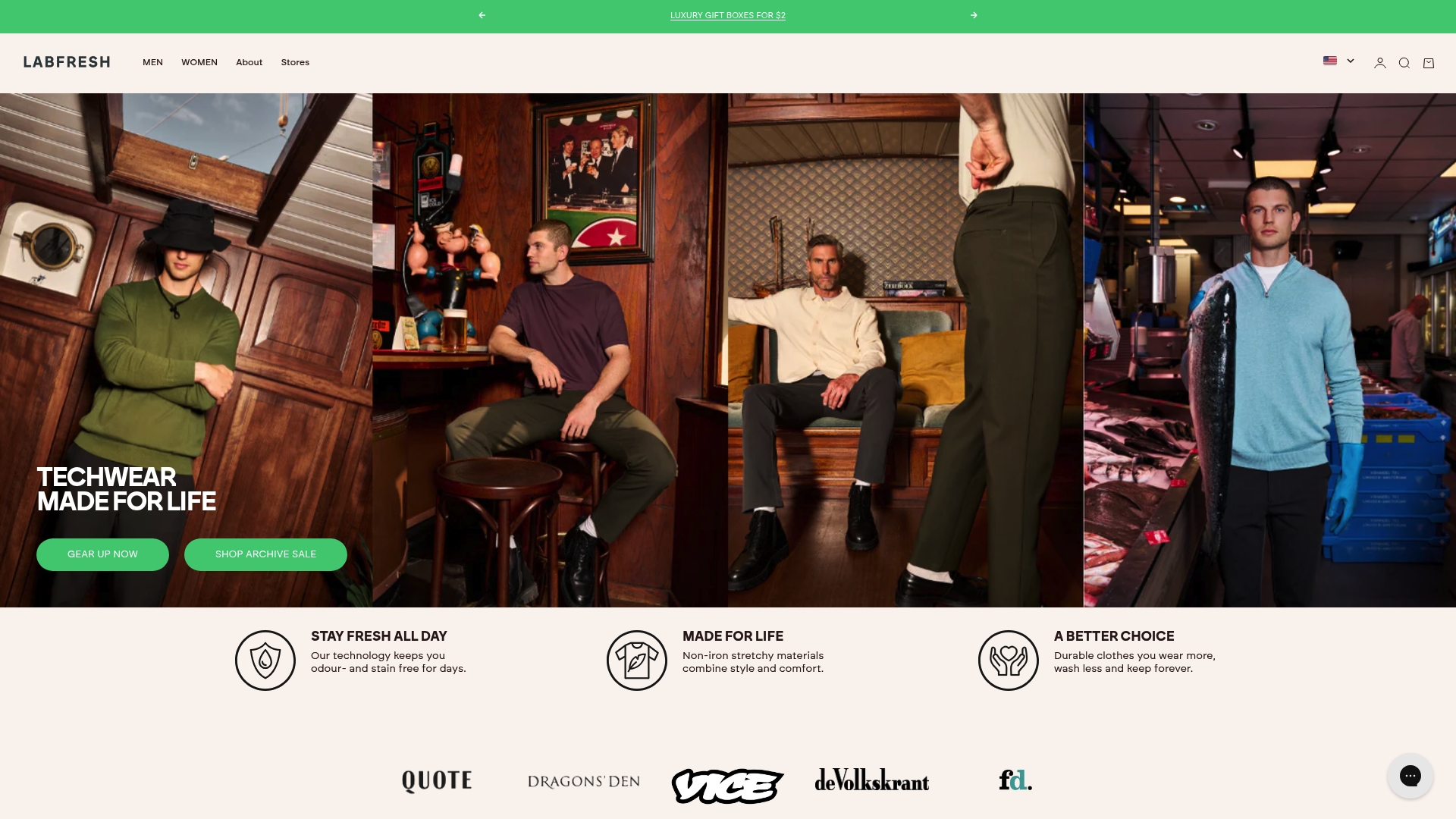
The collection features advanced fabric technologies delivering genuine odor and stain resistance, extending wear between washes while maintaining professional appearance. Certifications verify sustainability claims, ensuring your wardrobe choices align with environmental values. Every garment combines durability with easy care, designed specifically for busy lifestyles demanding reliable performance.
Explore durable sustainable shirts engineered to handle demanding professional schedules without constant maintenance. Discover performance pants for active professionals that move with you while resisting wear. Consider the water-repellent performance jacket for weather protection without environmental compromise. Each piece embodies the sustainable fashion checklist in practical, wearable form.
Frequently Asked Questions
What certification ensures a product is truly organic and sustainable?
GOTS certification provides the most comprehensive guarantee for organic textiles, covering fiber production through finished garment manufacturing. It verifies organic farming practices, environmental processing standards, and social compliance throughout the supply chain. OEKO-TEX adds chemical safety assurance by testing for harmful substances in finished products.
How does fabric technology reduce environmental impact beyond material choice?
Advanced fabrics extend wear between washes, cutting water and energy consumption by up to 50% over garment lifetime. Odor and stain resistance preserve appearance without constant cleaning, while enhanced durability reduces replacement frequency. These functional improvements deliver environmental benefits exceeding material selection alone.
Can sustainable garments remain stylish and professional in demanding work settings?
Modern sustainable fashion combines performance technology with contemporary design, eliminating old tradeoffs between ethics and aesthetics. Technical fabrics maintain crisp appearance throughout long days, resist wrinkling during travel, and offer style variety matching conventional professional wear. Sustainability no longer requires visual compromise.
What maintenance routines best preserve high-tech sustainable fabrics?
Cold washing with gentle detergents protects performance treatments and fiber integrity. Air drying eliminates heat damage while reducing energy use. Following manufacturer care guidelines ensures technologies continue functioning as designed. Most performance fabrics actually require less maintenance than traditional materials.
Is investing in durable sustainable fashion cost-effective long-term?
Higher quality sustainable garments typically cost 20-30% more initially but last 2-3 times longer while requiring less maintenance. Total cost per wear often proves lower than budget alternatives requiring frequent replacement. Factor in time savings from reduced care needs and environmental benefits for complete value assessment.
Recommended
Comments