Smart Textiles: The Future of Functional Fashion
- Leroy Hughes

- Feb 8
- 8 min read

Finding clothing that truly adapts to your demanding lifestyle often feels like a compromise between style, durability, and cutting-edge technology. Smart textiles are reinventing what it means to wear apparel by offering fabrics that actively respond to environmental changes while maintaining comfort and flexibility. For those living in cities across North America, Europe, and Asia, understanding the core concepts and misconceptions behind these interactive materials will empower smarter buying decisions and help you spot genuine innovation for your wardrobe.
Table of Contents
Key Takeaways
Point | Details |
Smart Textiles Defined | Smart textiles are fabrics that dynamically interact with their environment through sensing and adaptive capabilities, transcending traditional textile functions. |
Types of Smart Textiles | Smart textiles are categorized into three types: Passive, Active, and Ultra-Smart, based on their interaction levels and functionalities. |
Real-World Applications | These advanced textiles have applications across various sectors, including healthcare monitoring, sports performance, and military operations, enhancing user experience and functionality. |
Challenges in Development | Key challenges include ensuring durability, safety, and environmental sustainability, necessitating interdisciplinary collaboration for effective solutions. |
Smart textiles defined: Core concepts and misconceptions
Smart textiles represent a sophisticated fusion of textile engineering and advanced materials science, enabling fabrics that dynamically interact with their environment. Unlike traditional textiles, these innovative materials can sense, react, and adapt to external stimuli, transforming passive clothing into intelligent, responsive systems.
At their core, smart textiles are defined by their ability to actively respond to environmental changes. This functionality spans multiple domains, including electrical, thermal, chemical, and magnetic interactions. Key characteristics include:
Ability to sense environmental conditions
Dynamic adaptation capabilities
Integrated functional responses
Interdisciplinary design approach
A common misconception is that smart textiles exclusively involve electronic components. However, research demonstrates that smart textiles encompass a broader spectrum of interactive materials beyond just tech-enhanced fabrics. These innovative textiles can provide sophisticated functionalities through intrinsic material properties, not just electronic integration.
The development of smart textiles requires collaboration across multiple scientific disciplines, including:
Materials science
Chemistry
Physics
Microelectronics
Computer science
By combining expertise from these fields, researchers can create textiles that transcend traditional fabric limitations, offering unprecedented levels of functionality and responsiveness.
Pro tip: When exploring smart textile technologies, focus on understanding the material’s inherent adaptive capabilities rather than solely examining electronic components.
Types of smart textiles and key distinctions
Smart textiles have evolved into a sophisticated technological ecosystem, with distinct classifications that reflect their increasing complexity and adaptive capabilities. Understanding these categories is crucial for recognizing the transformative potential of modern textile technologies.
Smart textile types are categorized across three generational stages, each representing a progressively advanced level of functionality and interaction. These stages include:
Passive Smart Textiles: Basic sensing capabilities without active response
Active Smart Textiles: Ability to sense and respond to environmental stimuli
Advanced/Ultra-Smart Textiles: Autonomous sensing, response, and adaptive capabilities
Passive smart textiles represent the foundational level of intelligent fabric technology. These materials can detect environmental changes but lack the ability to react independently. For instance, a fabric that changes color when temperature shifts demonstrates passive smart textile characteristics.
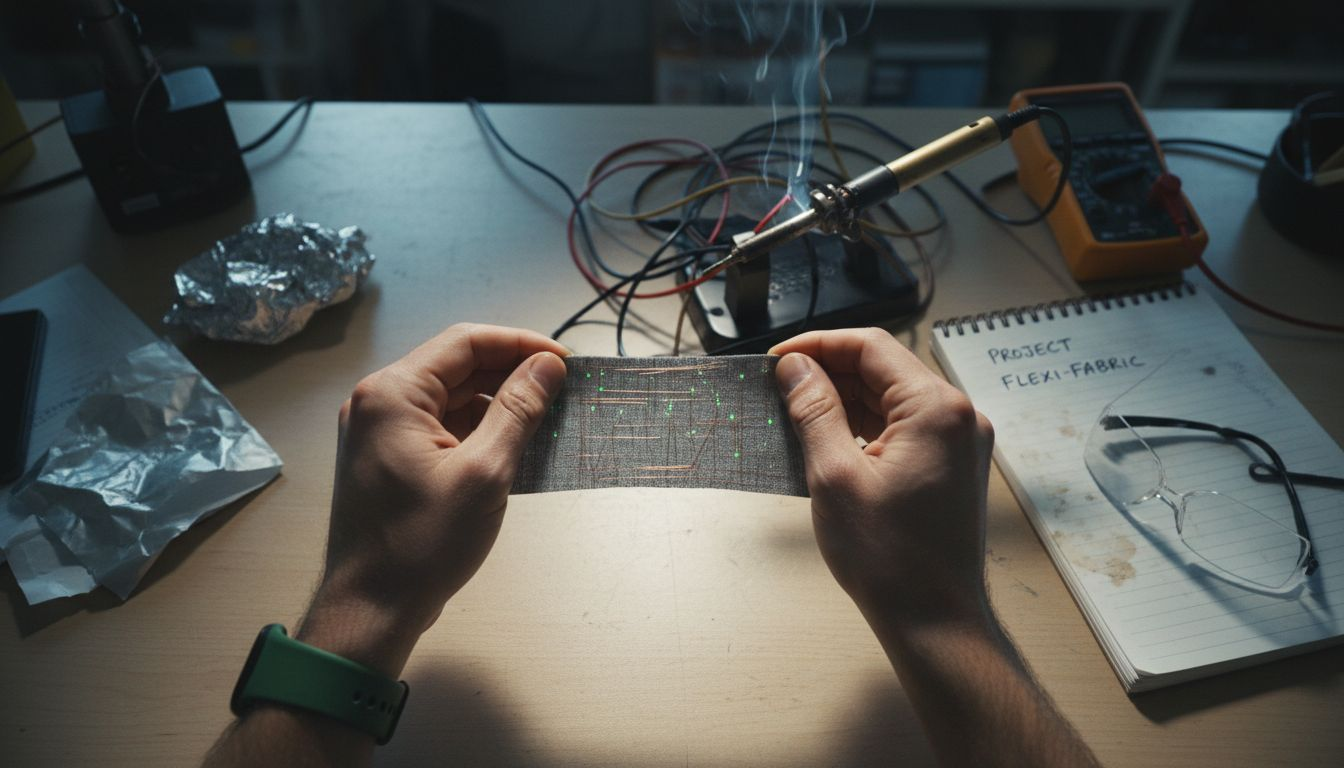
Active smart textiles introduce a more sophisticated interaction model. These textiles not only detect but actively respond to environmental stimuli. An example might include clothing that adjusts its thermal properties in response to body temperature or external weather conditions.
The most advanced category, ultra-smart or very smart textiles, represents the pinnacle of textile innovation. These materials integrate complex sensor systems, computational capabilities, and autonomous adaptive mechanisms. Key features include:
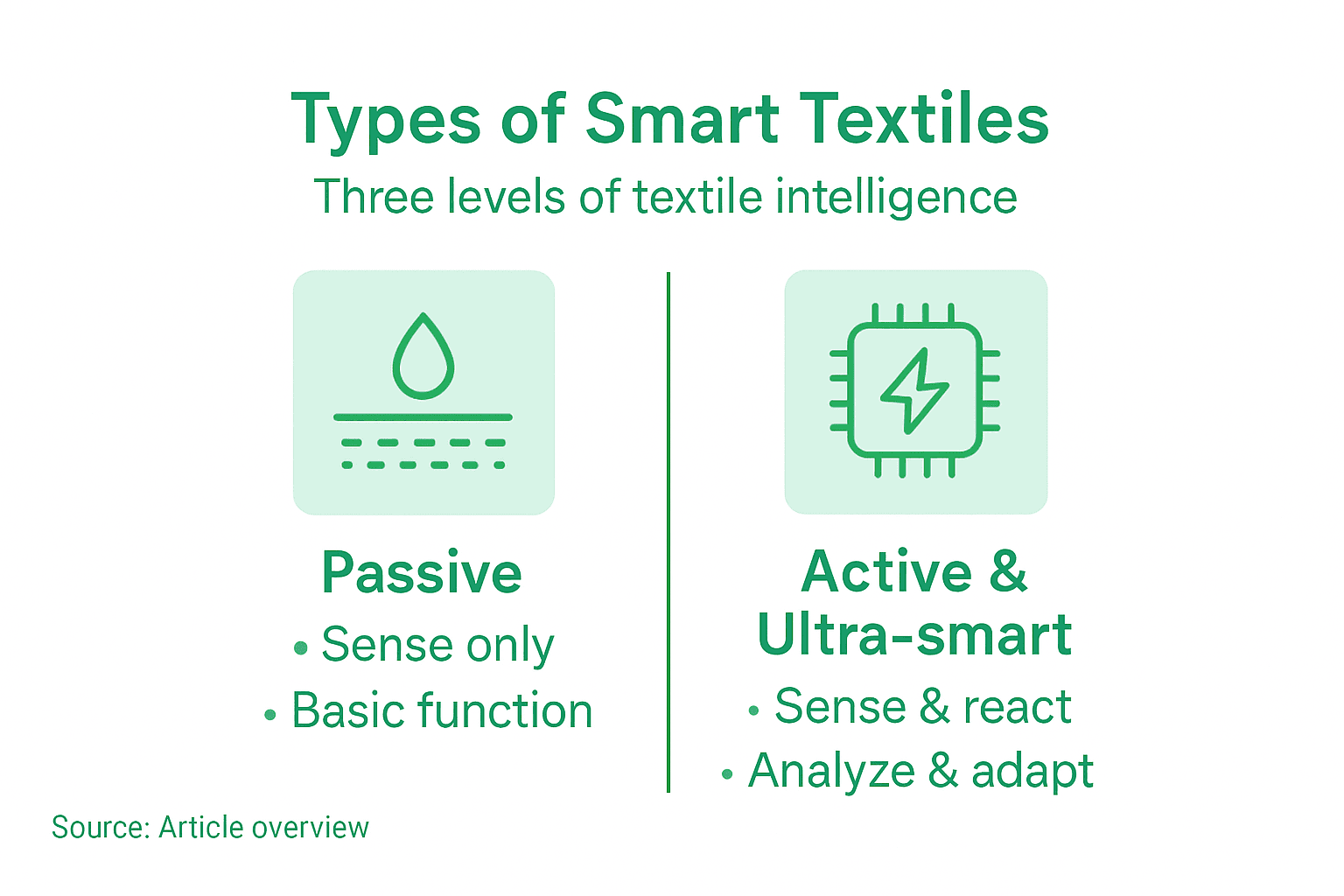
Here’s a quick comparison between the three generations of smart textiles:
Generation Type | Interaction Level | Example Application |
Passive Smart Textiles | Senses changes, no reaction | Color-changing fabric |
Active Smart Textiles | Detects and responds to stimuli | Self-heating clothing |
Ultra-Smart Textiles | Autonomous sensing and adaption | Health-monitoring garments |
Real-time environmental monitoring
Intelligent response mechanisms
Self-adjusting functional properties
Computational integration
Pro tip: When evaluating smart textile technologies, focus on their adaptive complexity rather than just their individual features.
How smart textile technology actually works
Smart textile technology represents a sophisticated fusion of materials science, electronics, and advanced engineering, transforming traditional fabrics into intelligent, responsive systems. The core mechanism involves intricate integration of multiple technological components that work seamlessly to create adaptive and interactive clothing.
Smart textile technology integrates multiple critical components to enable dynamic functionality. These essential elements include:
Sensors: Environmental and physiological stimulus detectors
Actuators: Mechanisms that trigger responsive actions
Conductive fibers: Enabling electrical signal transmission
Microcontrollers: Processing environmental data
Communication devices: Facilitating data exchange
The technological process begins with sophisticated fabric production techniques that incorporate electronic elements directly into textile structures. Unlike traditional electronics, these components must maintain fabric flexibility, comfort, and durability while providing advanced functionalities.
Each smart textile system follows a fundamental operational sequence:
Environmental stimulus detection
Signal processing by integrated microcontrollers
Appropriate responsive action execution
Continuous performance monitoring
Technical challenges in smart textile development primarily revolve around maintaining robust signal quality and ensuring washability. Engineers must design systems that can withstand regular use, mechanical stress, and cleaning processes without compromising technological integrity.
Pro tip: Always prioritize fabric comfort and flexibility when evaluating smart textile technologies.
Real-world applications in apparel and beyond
Smart textiles have transcended their initial conceptual boundaries, emerging as transformative technologies with applications spanning multiple critical sectors. From athletic performance to military operations, these intelligent fabrics are revolutionizing how we interact with clothing and environmental systems.
Advanced textile technologies enable comprehensive health monitoring across diverse professional and personal contexts. Key application domains include:
Sports and athletic performance tracking
Medical and healthcare monitoring
Military personnel protection and performance optimization
Entertainment and adaptive fashion design
In athletic environments, smart textiles provide unprecedented insights into physiological performance. Sensors embedded within clothing can track heart rate, muscle activity, hydration levels, and biomechanical movements with remarkable precision. Athletes can now receive real-time feedback about their physical condition, enabling more intelligent training and injury prevention strategies.
Military applications represent another frontier of smart textile innovation. Fiber-based computing in combat garments enables comprehensive physiological monitoring that enhances soldier safety and situational awareness. These advanced textiles can:
Monitor vital signs continuously
Detect potential health risks
Track physical and mental stress levels
Provide environmental adaptation capabilities
Healthcare represents perhaps the most transformative domain for smart textile technologies. Medical professionals can now leverage clothing that monitors chronic conditions, tracks rehabilitation progress, and provides early warning systems for potential health complications.
Pro tip: When exploring smart textile applications, prioritize solutions that seamlessly integrate technological functionality with user comfort and natural fabric performance.
Durability, safety, and common challenges
Smart textiles represent a complex technological frontier, where cutting-edge innovation meets practical performance challenges. Integrating electronic components into flexible fabric structures requires addressing multiple intricate technical and safety considerations that can potentially compromise the overall functionality and user experience.
Smart textile durability involves complex material engineering that must balance technological sophistication with practical performance requirements. Key durability challenges include:
Resistance to mechanical stress
Maintaining electronic functionality after repeated washing
Withstanding stretching and abrasion
Preserving sensor accuracy over time
Safety represents another critical dimension in smart textile development. Electronic components must be carefully designed to prevent potential health risks, ensuring that embedded technologies do not cause discomfort or introduce unintended physiological interactions.
Environmental sustainability emerges as a significant challenge in smart textile production. Circular design strategies are essential for addressing waste management and recyclability concerns. Smart textile manufacturers must navigate complex considerations such as:
Developing separable electronic components
Creating biodegradable material options
Designing for long-term material reuse
Minimizing electronic waste generation
Production challenges further complicate smart textile development. High manufacturing costs, lack of standardized testing protocols, and energy sourcing for embedded devices create significant barriers to widespread adoption. These technical and economic hurdles require continuous interdisciplinary research and innovative design approaches.
Pro tip: Prioritize modular design approaches that enable easier component replacement and repair in smart textile technologies.
Comparing smart textiles with standard fabrics
The evolution of textile technology has created a profound distinction between traditional fabrics and intelligent, responsive smart textiles. While conventional fabrics serve fundamental protective and aesthetic purposes, smart textiles represent a technological leap that transforms clothing from passive coverings to active, interactive systems.
Smart textiles fundamentally differ from standard fabrics through their innovative design and functional capabilities. Key differentiating characteristics include:
Integrated sensor technologies
Dynamic environmental interaction
Adaptive performance capabilities
Electronic communication functions
Real-time data processing abilities
Traditional fabrics are designed primarily for protection, comfort, and aesthetic appeal. In contrast, smart textiles function as sophisticated platforms that can sense, respond, and communicate. These advanced materials transform clothing from static objects into dynamic, intelligent interfaces that actively engage with the wearer and environment.
Below is a summary of the main differences between smart textiles and standard fabrics:
Aspect | Standard Fabrics | Smart Textiles |
Core Function | Protection and comfort | Sensing and interaction |
Performance Adaptation | Static | Dynamic, real-time response |
Technology Integration | Absent | Embedded sensors, electronics |
Application Scope | Clothing, home, décor | Healthcare, military, sports |
Electronic and optoelectronic functions distinguish smart textiles across multiple application domains. Potential performance advantages include:
Health monitoring capabilities
Temperature regulation
Energy harvesting potential
Enhanced situational awareness
Adaptive performance optimization
The primary challenge in smart textile development remains maintaining core fabric properties such as flexibility, breathability, and comfort while integrating advanced technological functionalities. Successful smart textile design requires a delicate balance between technological innovation and fundamental textile performance standards.
Pro tip: When evaluating smart textiles, assess not just technological features but also how seamlessly they integrate with traditional fabric performance requirements.
Experience the Future of Functional Fashion Today
The article highlights the challenges of integrating advanced smart textile technologies that combine comfort, adaptability, and durability. Customers often seek fabrics that not only perform with intelligent responses but also maintain the essential qualities of flexibility and easy care. If you value dynamic, innovative apparel that meets the demands of an active lifestyle while offering tech-driven benefits like odor resistance and stain prevention, LABFRESH has you covered.
Discover our cutting-edge collections such as The Smartest T-shirts | LABFRESH and The Perfect Performance Shirts | LABFRESH designed with advanced fabric technologies like FreshCore™ for superior freshness and longevity.

Don’t wait to elevate your wardrobe with apparel that seamlessly combines functionality, sustainability, and style. Visit https://labfresh.eu now to explore these smart, high-performance clothing options crafted for your busy and modern lifestyle.
Frequently Asked Questions
What are smart textiles?
Smart textiles are innovative fabrics that can sense, react, and adapt to environmental changes. They combine textile engineering and advanced materials science to create clothing that interacts dynamically with the wearer and surroundings.
How do smart textiles work?
Smart textiles work by integrating multiple components, including sensors, actuators, and microcontrollers, into the fabric. This allows them to detect environmental stimuli, process data, and perform responsive actions, like adjusting temperature or monitoring health metrics.
What are the different types of smart textiles?
Smart textiles are generally categorized into three types: Passive Smart Textiles, which only sense changes; Active Smart Textiles, which can sense and respond to stimuli; and Ultra-Smart Textiles, which have autonomous sensing and adaptive capabilities.
What are some real-world applications of smart textiles?
Smart textiles have applications across various fields, including sports for performance tracking, healthcare for monitoring chronic conditions, military for enhancing soldier performance and safety, and entertainment for adaptive fashion design.
Recommended
Comments