Practical steps to extend garment lifespan for eco-conscious care

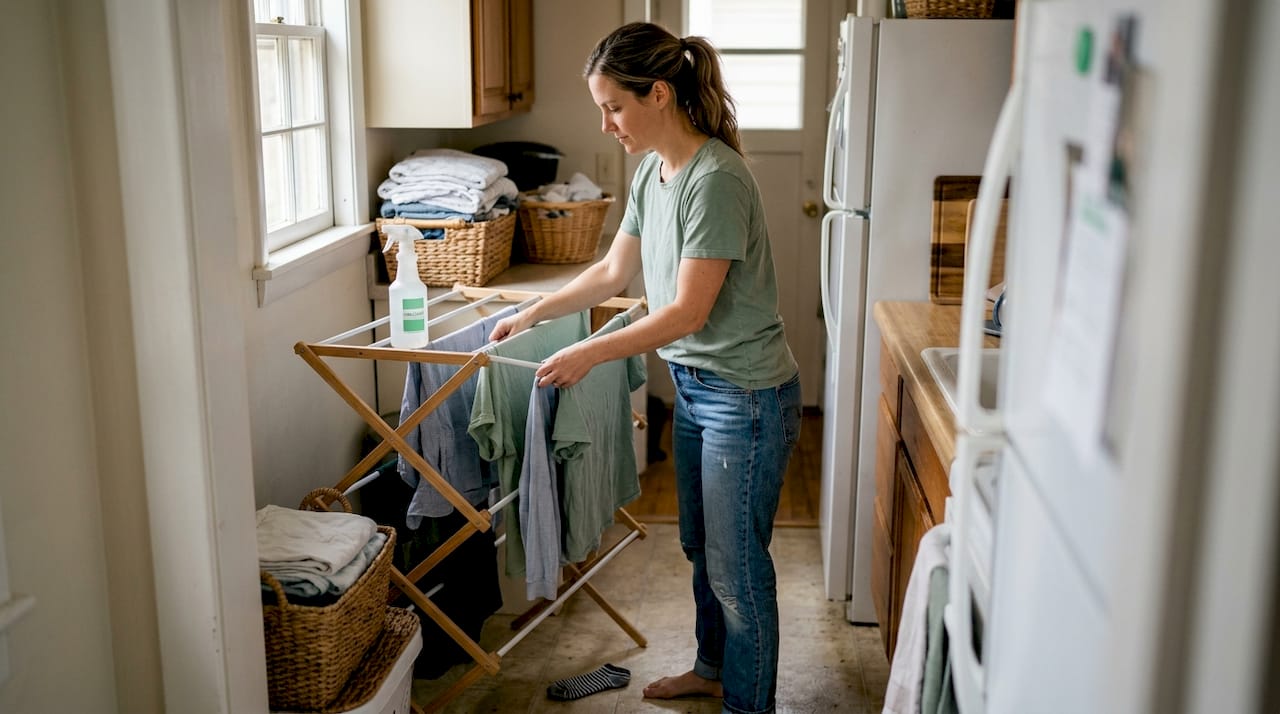
Throwing away a favorite shirt because it pilled, faded, or lost its shape is one of the most avoidable forms of waste in a modern wardrobe. The average garment gets discarded long before its useful life is over, and that cycle burns through water, energy, and raw materials at a staggering rate. Extending garment life by just 9 months reduces its carbon, water, and waste footprint by up to 20 percent. This guide gives you a practical, step-by-step system for keeping your high-tech and everyday clothes performing longer, so you spend less, waste less, and feel better about every item in your closet.
Table of Contents
Key Takeaways
Point | Details |
Smarter washing habits | Washing less often and with cold water greatly extends garment life. |
Tune care to fabric | Follow material-specific rules for laundering and storage to avoid damage. |
Repair and upcycle | Quick home fixes and creative reuse keep clothes in use far longer. |
Eco impact reduction | Even nine extra months of use reduces waste and saves resources. |
Why garment lifespan matters
Before learning the how-to, it helps to understand the value each care choice creates for you and the planet. Clothing production is one of the most resource-intensive industries on earth, and short garment lifecycles are a major driver of that pressure. When you wash too often, dry on high heat, or store carelessly, you accelerate the breakdown of fibers that took enormous resources to produce.
The good news is that small habit changes deliver outsized results. Extending garment life by 9 months cuts environmental impact by up to 20 percent across carbon, water use, and waste. That is not a marginal improvement. It is a meaningful shift you can achieve without buying anything new.
One of the most surprising findings from durability research is that how you care for a garment matters more than what you paid for it. Price does not predict durability according to WRAP’s global testing program. A well-cared-for mid-range shirt can outlast a neglected premium one by years.
Here is what drives premature garment failure:
Over-washing breaks down fibers and degrades technical coatings faster than normal wear
High heat drying shrinks and weakens elastane and synthetic blends
Harsh detergents strip water-repellent finishes and odor-resistant treatments
Poor storage invites moths, mildew, and permanent creasing
Ignoring small damage like loose buttons or tiny tears that escalate quickly
Exploring sustainable wardrobe strategies and reading up on sustainability insights can help you build a care routine that aligns with your values from day one.
What you need: Tools and prerequisites
Now that you know why it matters, here is what you will need to start. You do not need a laundry room full of specialty products. A few targeted tools and the right habits will cover most situations.
Essential care toolkit:
Item | Purpose | Notes |
Gentle detergent | Cleans without stripping technical finishes | No softeners or bleach for tech fabrics |
Mesh laundry bags | Protects delicates from friction in the drum | Use for shirts, knits, and lightweight layers |
Cold water setting | Reduces fiber stress and color fading | 30°C or below for most garments |
Air drying rack | Prevents heat damage from tumble dryers | Essential for wool, silk, and tech fabrics |
Needle, thread, patches | Enables quick home repairs | Iron-on patches work for most casual wear |
Stain remover pen | Handles spot cleaning between washes | Reduces full wash frequency significantly |
For technical fabrics like merino wool, water-repellent shells, and odor-resistant blends, care instructions for technical fabrics are clear: wash less frequently, use cold water, stick to a gentle cycle, and avoid fabric softeners or bleach entirely. Softeners coat fibers and destroy the moisture-wicking and odor-resistant properties that make these garments worth owning.
The proper garment care approach for shirts and structured pieces also means skipping the dryer whenever possible. Heat is the single biggest enemy of fabric integrity over time.
Pro Tip: Turn garments inside out before washing. This protects surface finishes, printed graphics, and color vibrancy from direct drum friction and detergent contact.
For clothing maintenance techniques on structured shirts, always button the top button before washing to prevent collar distortion in the machine.
Step-by-step guide to extending garment lifespan
You have gathered the supplies. Here is how to put them into practice for every wear and wash.
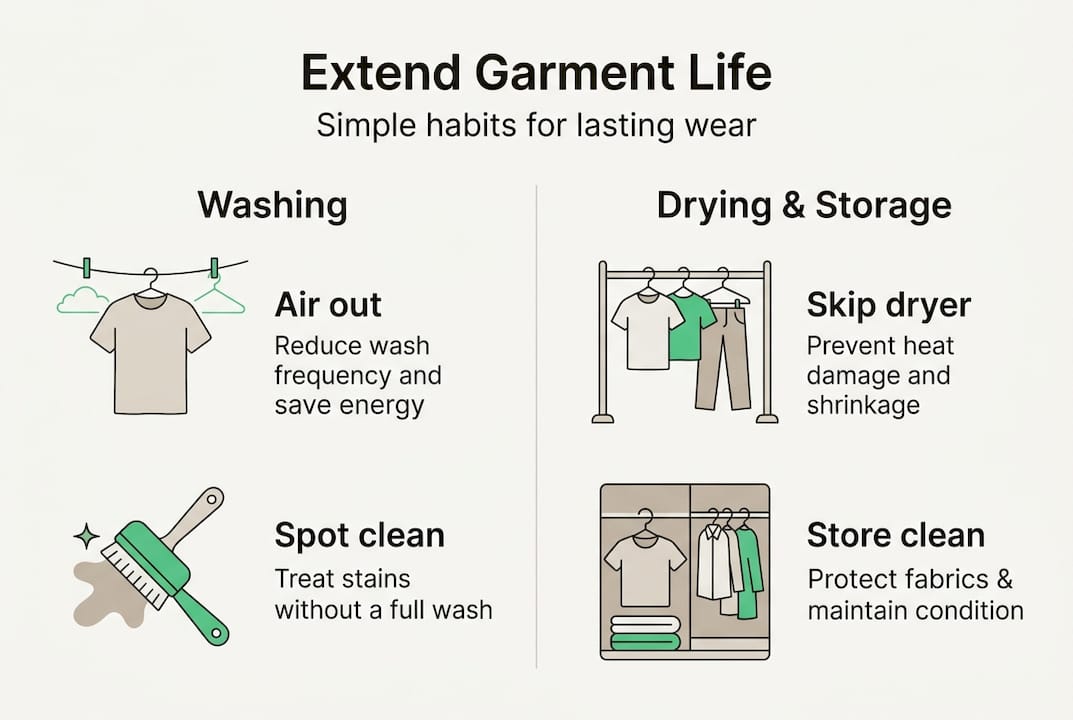
Step 1: Air out after every wear. Hang garments on a ventilated rack for at least two hours after wearing. This removes body heat and moisture that would otherwise break down fibers and create odor if the item is folded away immediately.
Step 2: Spot clean before reaching for the machine. A stain remover pen or a damp cloth with a drop of gentle detergent handles most small marks. This single habit dramatically reduces how often you run a full wash cycle.
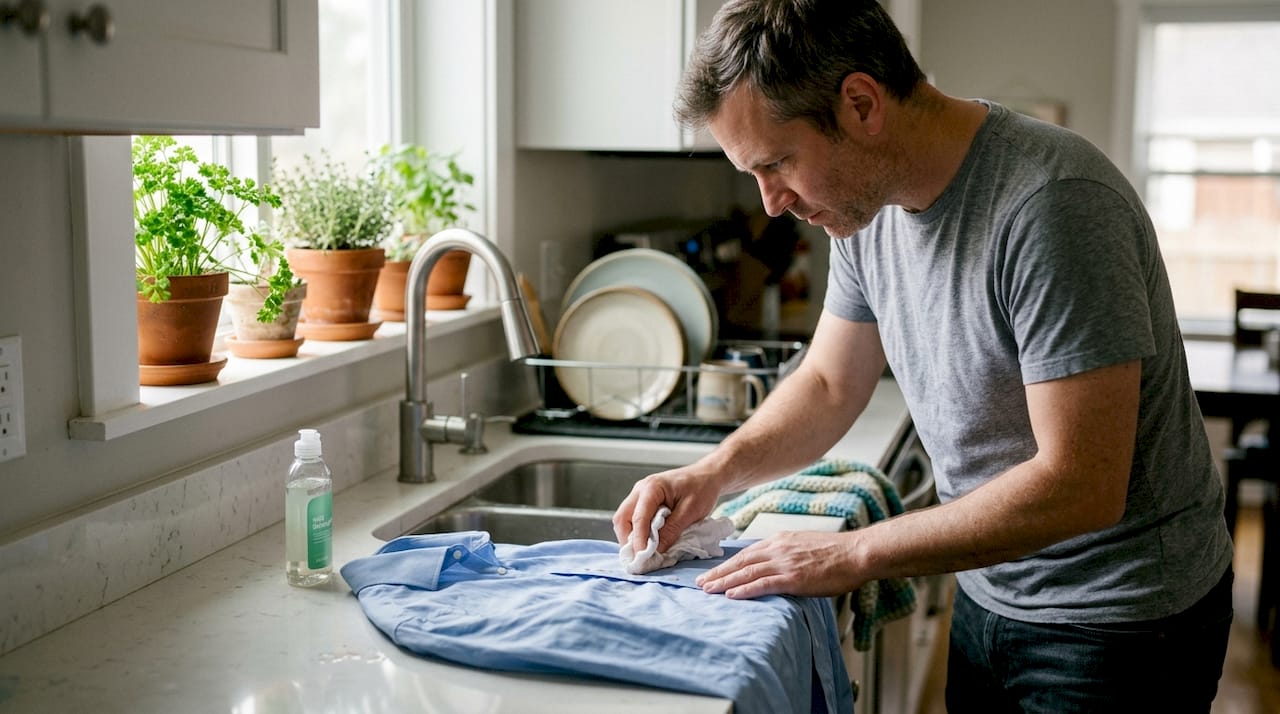
Step 3: Follow fabric-specific wash intervals. Not all garments need the same frequency. Merino wool performs well after 3-4 active wears before washing, while technical shells can go 5 to 20 wears depending on activity level.
Step 4: Use cold water and a gentle cycle every time. Set your machine to 30°C or below. Use the delicate or hand-wash cycle. This is non-negotiable for anything with a technical finish or natural fiber content.
Step 5: Skip the dryer. Lay flat or hang to dry. For structured pieces like the light blue shirt, reshape while damp and hang on a proper hanger to maintain collar and shoulder structure.
Step 6: Store clean, not dirty. Never store a garment with body oils or stains on it. These set permanently over time and attract insects.
Wash frequency reference by fabric type:
Fabric type | Recommended wash interval | Special notes |
Merino wool | Every 3-4 active wears | Hand wash or wool cycle, cold |
Technical shells | Every 5-20 wears | Wash when DWR (water repellency) fails |
Cotton shirts | Every 1-2 wears | Cold, gentle cycle |
Synthetic blends | Every 2-3 wears | Avoid softeners |
Silk | Every 3-5 wears | Hand wash only, no wringing |
A year-long wear experiment found that garments averaged 62 wears and only 12 washes over 300 days while remaining in good condition. That ratio, roughly 5 wears per wash, is a useful benchmark for most everyday garments.
Pro Tip: For stretch shirt maintenance, always wash on a gentle cycle and never wring or twist the fabric. Elastane fibers lose their recovery when stressed repeatedly while wet.
Handling tough situations: Stains, odors, and contamination
Occasionally, you will face tough dirt or contamination. Use these methods to preserve your clothes without compromising safety or the fabric’s integrity.
For heavily soiled or contaminated technical gear, the approach matters as much as the product you use. Bleach is effective but destructive on wool, silk, and most technical finishes. Instead, reach for oxygen-based bleach alternatives or enzyme cleaners that break down organic matter without attacking fiber structure.
For contaminated high-tech gear, disinfect with bleach alternatives and air dry in direct sunlight. Sunlight is a genuinely powerful natural sanitizer. UV exposure kills bacteria and neutralizes odors without any chemical input, making it ideal for garments you want to refresh between washes.
Here is a quick reference for tough situations:
Protein stains (sweat, blood): Cold water first, never hot. Hot water sets protein stains permanently.
Oil stains: Apply a small amount of dish soap directly, let it sit for 10 minutes, then rinse cold.
Persistent odors: Soak in a solution of white vinegar and cold water for 30 minutes before washing.
Mold or mildew: Sunlight and fresh air first. If the smell persists, use an oxygen-based cleaner.
Stubborn set-in stains: Consult a professional cleaner rather than escalating chemical treatments at home.
For safe cleaning for white knits, avoid any chlorine bleach. It yellows natural fibers and permanently weakens the knit structure. Oxygen bleach is your safer alternative for brightening whites.
The best stain treatment is the fastest one. Act within the first 60 seconds of a spill and you eliminate the need for harsh chemicals almost entirely.
For a broader look at eco-friendly cleaning techniques, the core principle is always the same: use the mildest effective method and work from the outside of the stain inward to avoid spreading it.
Repair, upcycle, and store: Keeping garments in rotation
Even with the best care, wear and tear is inevitable. Here is how you can keep clothes usable and out of the landfill for longer.
Durability is not a static feature of a garment. It is dynamic, shaped by how you repair and maintain it over time. A shirt with a missing button is not a worn-out shirt. It is a shirt that needs two minutes of attention.
Quick home repairs to do now:
Reattach loose buttons with a doubled thread and a small backing button on the inside for reinforcement. This prevents the fabric from tearing around the button hole.
Patch small tears with iron-on patches on the inside of the fabric. For visible areas, use matching fabric from a seam allowance.
Fix zipper jams by rubbing the zipper teeth with a graphite pencil or a bar of soap. This lubricates without staining.
Reinforce worn cuffs and collars with a simple whip stitch before the fraying spreads.
Re-hem pants that have started to drag. A few minutes with needle and thread prevents the hem from unraveling entirely.
Smart upcycling ideas:
Cut worn T-shirts into cleaning rags or reusable wipes
Convert old dress shirts into casual lounge shirts by removing the collar and shortening the sleeves
Use fabric scraps as stuffing for pincushions or draft stoppers
Repurpose worn denim into patches for other garments
Storage best practices:
Store off-season wool in sealed bags with cedar blocks, not mothballs, to repel insects without chemical odor
Never store damp garments. Even slight moisture causes mildew within days.
Fold heavy knits instead of hanging them to prevent shoulder distortion
Keep technical outerwear loosely hung in a breathable garment bag, not compressed in a drawer
Sustainable solutions for garment longevity
You are ready to get the most from your wardrobe. The care habits in this guide work best when the garments themselves are built to last.

At LABFRESH, we design shirts built for longevity using technologies like FreshCore™ and Seawool that are inherently odor-resistant, stain-resistant, and low-maintenance. That means fewer washes, less detergent, and a longer useful life built directly into the fabric. Our performance pants collection follows the same principle: durable construction that rewards the kind of thoughtful care routine you have just built. When your garments are engineered to work with your care habits rather than against them, every step in this guide delivers even greater results. Explore LABFRESH to find pieces that align with your values and your lifestyle.
Frequently asked questions
How often should I wash high-tech fabrics to keep them lasting longer?
Merino wool performs well after 3-4 wears before washing, while technical shells can go 5 to 20 wears depending on activity. Washing less frequently is one of the simplest ways to extend fabric performance and lifespan.
Does higher garment price guarantee better durability?
No. Price does not predict durability according to WRAP’s global research. How you care for a garment consistently matters far more than what you paid for it.
What quick repairs can I do at home to extend lifespan?
Reattach loose buttons, patch small tears with iron-on fabric, and lubricate stuck zippers with a graphite pencil. These fixes take minutes and can add months or years to a garment’s useful life.
How much does extending garment life impact the environment?
Prolonging garment use by 9 months reduces its carbon, water, and waste footprint by up to 20 percent. Small changes in how long you keep clothes add up to a significant environmental benefit over time.
Recommended
Comments