Performance fabrics guide: Style, function & sustainability


Choosing the right fabric for your wardrobe feels overwhelming when every brand claims their material is the most advanced on the market. Performance fabrics are engineered textiles built for specific demands, offering moisture-wicking, UV protection, and durability with UPF ratings reaching 50 and above. The challenge is not just finding something that performs well. It is finding something that looks sharp, lasts long, and aligns with your values. This guide cuts through the noise with science-backed criteria, honest comparisons, and practical picks so you can build a wardrobe that works as hard as you do.
Table of Contents
How to choose performance fabrics: Criteria and key properties
Natural and sustainable alternatives: Merino wool, rPET, and eco-blends
Specialized performance fabrics for swim, training, and outdoor wear
Construction matters: Knits vs wovens for movement and breathability
Summary comparison: Choosing the right fabric for your needs
Key Takeaways
Point | Details |
Function over form | Prioritize fabric performance traits like wicking, breathability, and stretch for active lifestyles. |
Eco options available | Merino wool and rPET deliver comfort and sustainability without major performance trade-offs. |
Construction impacts comfort | Knits are best for movement and breathability, while wovens are ideal for durability. |
Trade-offs to consider | High stretch enhances mobility but may reduce abrasion resistance; match choices to your needs. |
Easy upgrades | Modern brands offer stylish, easy-care performance apparel for every scenario. |
How to choose performance fabrics: Criteria and key properties
Before you shop, you need a framework. Not every fabric excels at everything, and knowing which properties matter most for your lifestyle saves you from expensive mistakes.
The core properties to evaluate are:
Moisture-wicking: How quickly the fabric pulls sweat away from your skin and releases it into the air
Stretch and recovery: The fabric’s ability to move with you and return to its original shape
Abrasion resistance: How well the material holds up against friction and repeated wear
UPF rating: The level of UV protection built into the weave or fiber
Sustainability markers: Whether the fabric uses recycled inputs like rPET or natural fibers like Merino wool
Mechanical properties like stretch, abrasion resistance, and UPF define what separates a true performance textile from a standard one. A non-iron stretch shirt built with high recovery stretch, for example, keeps its shape through a full day of meetings and movement. A performance jacket with a high UPF rating adds real protection for outdoor commutes.
Pro Tip: Match your top priority to your lifestyle. If you travel frequently, prioritize wrinkle resistance and quick-dry. If you spend time outdoors, UPF 40 or higher is non-negotiable.
Synthetics: The backbone of modern activewear
Synthetic fabrics dominate performance apparel for good reason. They are engineered at the fiber level to solve specific problems, and they do it consistently.

Polyester-spandex blends are the most versatile option on the market. At 180 to 240 GSM with 30 to 50 percent 4-way stretch, they deliver superior wicking and durability across a wide range of activities. Nylon-spandex blends push further, offering higher stretch, faster drying, and better abrasion resistance, making them ideal for high-output training or travel.
Key synthetic options at a glance:
Polyester-spandex: Best all-around blend for versatility, wicking, and shape retention
Nylon-spandex: Higher stretch, quicker dry time, stronger abrasion resistance
Microfiber polyester: Engineered for breathability through tighter, finer yarn construction
Mesh knits: Open structure maximizes airflow, ideal for polos and base layers
Fabric | Stretch | Wicking | Durability | Best use |
Polyester-spandex | High | Excellent | High | Everyday, travel |
Nylon-spandex | Very high | Very good | Very high | Training, outdoor |
Microfiber poly | Medium | Good | Medium | Layering, casual |
Mesh knit | Medium | Excellent | Medium | Polos, base layers |
Polyester breathability is engineered through microfiber construction, mesh knit structures, and yarn twist techniques. A knitted shirt built on this principle stays comfortable through long days without sacrificing a clean, professional look. For outerwear, a water-repellent jacket in a synthetic blend adds weather protection without bulk.
“Synthetics lead the field for wicking and durability. When engineered correctly, they outperform natural fibers in nearly every measurable performance category.”
Natural and sustainable alternatives: Merino wool, rPET, and eco-blends
Synthetics are not the only path to high performance. Natural and recycled options have closed the gap significantly, and for many use cases, they are the smarter choice.
Merino wool adds odor control and sustainability, while rPET (recycled polyester made from plastic bottles) offers near-identical performance to virgin synthetics at a lower environmental cost. Cotton-spandex blends feel softer against the skin but dry more slowly, making them better suited for low-intensity wear.
Here is how the natural and eco options stack up:
Merino wool: Natural odor resistance, temperature regulation, soft feel, biodegradable
rPET: Recycled content, same wicking and durability as virgin polyester, lower carbon footprint
Cotton-spandex: Comfortable and familiar, but slower to dry and heavier when wet
Seawool (like our own blend): Combines recycled materials with natural fiber properties for a unique balance of comfort and performance
Pro Tip: If sustainability is a priority for you, look for rPET or Merino blends. They deliver real performance without the environmental trade-offs of virgin synthetics, and they tend to hold up beautifully over time.
Specialized performance fabrics for swim, training, and outdoor wear
Some environments demand fabrics built for extreme conditions. Standard polyester blends will not cut it in a chlorinated pool or under intense UV exposure. That is where specialty fabrics step in.
Nylon excels in quick-dry and abrasion resistance; Supplex mimics cotton but retains performance; PBT delivers superior chlorine and UV resistance. Each of these fabrics is engineered for a specific environment where standard options would degrade quickly.
Specialty fabric breakdown:
Supplex nylon: Feels like cotton, breathes well, holds color, resists pilling. Great for outdoor training and casual activewear
PBT (polybutylene terephthalate): Resists chlorine and UV degradation. The go-to for competitive swimwear and sun-intensive outdoor gear
Stretch-woven polyester: Firm support with high mobility. Ideal for structured activewear that needs to hold its shape under load
“Specialized fabrics are tailored for rapid drying and unique durability demands. In extreme environments, the right material is not a luxury. It is a requirement.”
For everyday performance, a sweat-proof undershirt built with advanced moisture management keeps you comfortable under any layer. Exploring the full undershirt collection gives you a clear picture of how specialized construction translates to real-world comfort.
Construction matters: Knits vs wovens for movement and breathability
The fiber type is only half the story. How a fabric is constructed changes everything about how it feels, moves, and breathes.
Knitted structures outperform wovens in elasticity and breathability. Weft knits are soft and stretchy, making them ideal for comfort-focused activewear. Warp knits offer more stability and are common in sports-specific garments. Woven fabrics are durable and structured, but they offer less natural stretch and breathability.
Construction | Elasticity | Breathability | Durability | Best for |
Weft knit | Very high | High | Medium | Casual, activewear |
Warp knit | High | Medium-high | High | Sports, outerwear |
Woven | Low | Medium | Very high | Formal, structured wear |
Key construction considerations:
Weft knits feel soft and move freely, great for all-day comfort
Warp knits hold their shape under stress, better for structured performance pieces
Wovens resist tearing and maintain a sharp appearance, ideal for professional settings
A black knitted shirt or a navy knitted shirt built on a weft knit structure gives you the stretch and breathability of activewear with the clean look of a dress shirt. That is the kind of versatility that makes a real difference in a busy schedule.
Summary comparison: Choosing the right fabric for your needs
With all the options laid out, the final step is matching fabric to lifestyle. Here is a side-by-side view of the major categories:
Fabric type | Stretch | Breathability | Sustainability | Best scenario |
Polyester-spandex | High | Good | Low (unless rPET) | Travel, office, everyday |
Nylon-spandex | Very high | Very good | Low | Training, outdoor |
Merino wool | Medium | Excellent | High | Travel, casual, cold weather |
rPET blend | High | Good | High | Everyday, eco-conscious wear |
Supplex | High | Very good | Medium | Outdoor, casual training |
PBT | Medium | Good | Low | Swim, sun-intensive use |
Trade-offs exist between stretch, abrasion resistance, and breathability, so no single fabric wins every category. The goal is to find the best match for your primary use case.
How to match fabric to your lifestyle:
Frequent traveler: Choose rPET or polyester-spandex for wrinkle resistance, quick-dry, and durability across long trips
Office professional: Knitted wovens or non-iron stretch blends keep you sharp without extra effort
Active trainer: Nylon-spandex or stretch-woven polyester for maximum mobility and sweat management
Outdoor enthusiast: High UPF fabrics like PBT or Supplex for sun protection and durability
Eco-conscious shopper: Merino wool or rPET blends for performance without the environmental cost
Browsing the performance pants collection is a great way to see how these fabric principles translate into real, wearable pieces built for active, modern life.
Upgrade your wardrobe with performance fabrics
You now have the framework to make smarter fabric choices. The next step is putting that knowledge to work with pieces that actually deliver. At LABFRESH, we build every product around the same criteria covered in this guide: stretch, breathability, durability, and sustainability, all wrapped in a clean, modern aesthetic.
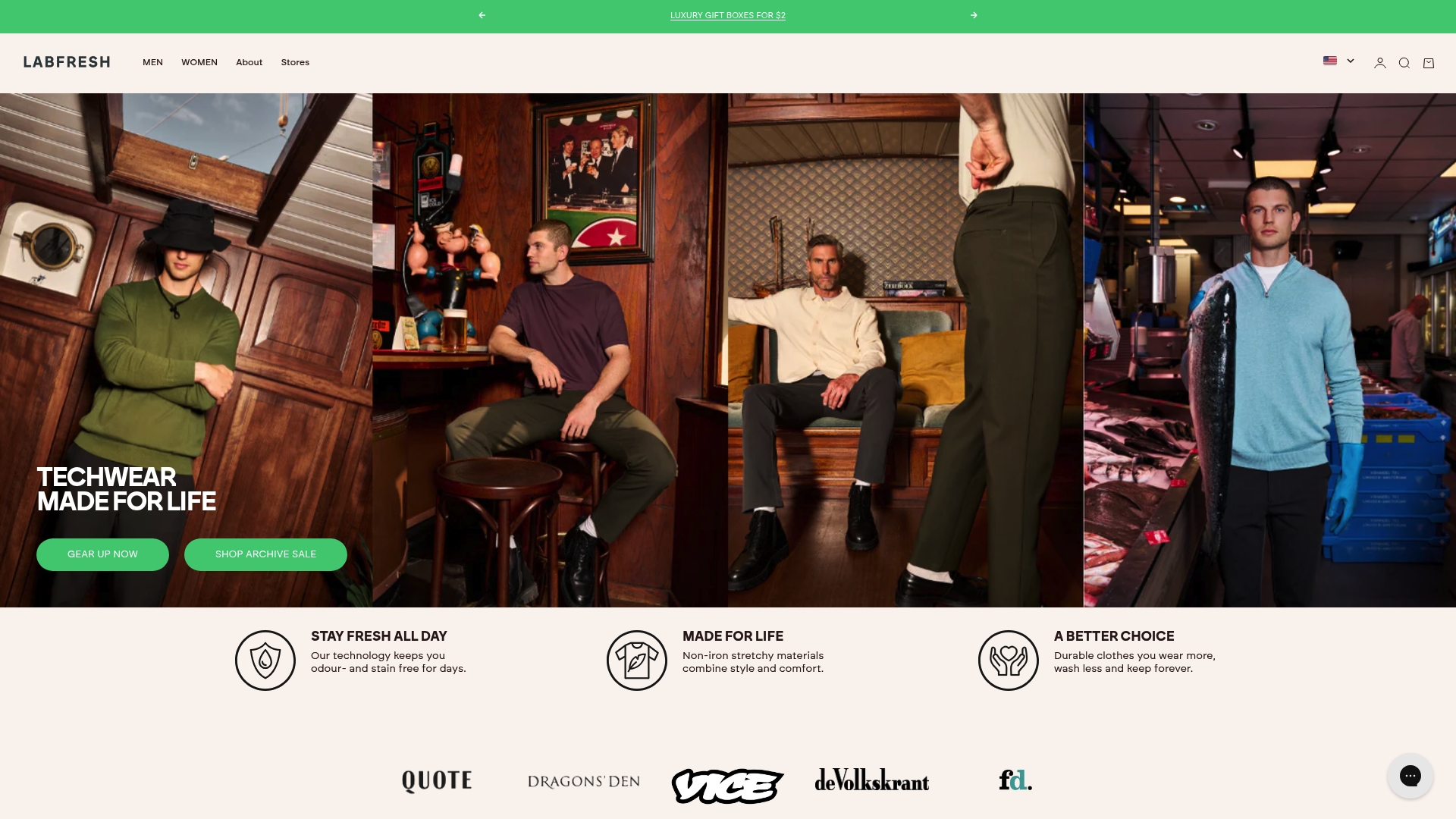
Our modern performance shirts use advanced fabric technologies like FreshCore™ to keep you fresh and sharp through long days. The water-repellent jacket adds weather-ready protection without sacrificing style. And our performance pants are built for the kind of versatility that moves from the office to the outdoors without missing a beat. Shop by the feature that matters most to you, whether that is anti-odor, stretch, or stain resistance, and find your perfect match.
Frequently asked questions
What makes a fabric ‘performance’ compared to regular textiles?
Performance fabrics are engineered with specific properties like moisture-wicking, durability, UV protection, and stretch for active, easy-care wear. Standard textiles lack these engineered traits, including abrasion resistance and UPF ratings up to 50 and above.
How do I know which performance fabric is best for my lifestyle?
Match fabric properties like stretch, breathability, and sustainability to your main activity. Synthetics are ideal for intense activity, while natural blends suit comfort and eco-conscious priorities, though trade-offs exist between stretch and abrasion resistance.
Are sustainable performance fabrics like rPET or Merino as effective as synthetics?
rPET delivers near-identical performance to virgin synthetics, and Merino enhances odor control and comfort naturally. Some eco-options may trade drying speed for softness, but the overall performance gap is minimal.
Which fabric construction is most breathable?
Knitted structures, especially mesh and microfiber builds, provide the highest breathability for activewear. Knits outperform wovens in both elasticity and airflow, making them the top choice for active, all-day wear.
What is the importance of UPF rating in clothing?
UPF ratings measure how effectively a fabric blocks UV rays. A UPF 50 rating blocks 98% of UV radiation, making it the gold standard for sun protection in outdoor and performance apparel.
Recommended
Comments