Odor-Resistant Fabric Explained: Stay Fresh Longer
- Leroy Hughes

- Feb 20
- 15 min read

A hectic week in a global city means rushing from work meetings to evening workouts, all while staying fresh and confident. For tech-savvy professionals, the quest for stylish, odor-resistant clothing goes beyond simple perfume masking. Modern odor-resistant fabrics actually target bacteria by neutralizing odors at the fiber level, making them ideal for anyone who values sustainability and easy care. This article untangles popular myths and brings clarity to what truly keeps clothing fresh all day.
Table of Contents
Key Takeaways
Point | Details |
Odor-Resistant Mechanism | Odor-resistant fabrics proactively prevent bacteria growth, addressing odor at the source rather than masking it with fragrances. |
Washing Frequency | These fabrics extend the time between washes, reducing laundry loads and preserving garment longevity. |
Durability of Treatments | Quality antimicrobial treatments maintain effectiveness through multiple wash cycles, necessitating proper care. |
Fabric Options | Both natural and synthetic fibers offer odor resistance, with each having unique benefits depending on personal and environmental considerations. |
Odor-Resistant Fabric and Common Myths
When you hear “odor-resistant fabric,” your mind probably jumps to one thing: perfume. That’s the first myth we need to bust. Most people assume that odor-resistant clothing simply masks bad smells with artificial fragrances, leaving you to wash it after a few wears. The reality is far more sophisticated. Modern odor-resistant textiles work through entirely different mechanisms. Instead of covering up the problem, they address it at the source by preventing bacteria from thriving on the fabric in the first place.
Here’s what actually causes the smell: bacteria on your skin metabolize sweat, and that metabolic process creates odor compounds. When these bacteria colonize your clothing fibers, the smell builds up over time. Understanding how bacteria colonize textile fibers reveals why traditional washing alone doesn’t provide lasting protection. The odor isn’t just sitting on the surface waiting to be rinsed away. It bonds to the fabric itself, embedding deep within the fiber structure. This is why you can wash a garment and still detect subtle odor after a few hours of wear.
The most common misconceptions about odor-resistant fabrics include:
Perfume masks everything: Advanced fabrics neutralize odor at the fiber level rather than covering it up
One wash removes all odor: Odor molecules bind chemically to fibers, requiring specific antimicrobial treatments to prevent regrowth
All odor-resistant fabrics feel stiff or uncomfortable: Modern technologies like FreshCore™ maintain breathability and softness while fighting bacteria
Odor resistance fades quickly: Quality antimicrobial treatments remain effective through multiple wash cycles
You need frequent washing: Odor-resistant fabrics actually extend the time between washes significantly
Technologies that truly work focus on antimicrobial fiber treatments. These treatments inhibit bacterial growth directly on the fabric surface, preventing the conditions where odor develops. When you wear an odor-resistant garment, the fabric actively resists bacterial colonization rather than waiting for bacteria to multiply and create a smell problem. Some approaches neutralize odor molecules chemically, breaking down the compounds responsible for the smell before they can accumulate.
The key difference: authentic odor-resistant fabrics prevent odor from forming in the first place, rather than trying to mask or wash away smells after they’ve developed.
Here’s another critical distinction many people miss: odor resistance isn’t a permanent, wash-proof property added to regular fabric. It requires specific fiber treatments designed to withstand multiple wash cycles. Research into antimicrobial textile treatments shows that the durability of odor control depends on how the treatment bonds to the fiber and how well it survives laundering. High-quality odor-resistant garments maintain their effectiveness because the antimicrobial agents remain active after washing, not because they’re somehow immune to water.
For busy professionals who want to maximize wearing time and minimize laundry loads, this matters tremendously. You’re not buying into marketing hype about miracle fabrics. You’re investing in fabric science that actually changes how bacteria behave on your clothing. The smell doesn’t come back after a few hours because bacteria never colonized the fabric in the first place.
One more myth worth addressing: the belief that odor-resistant fabrics only work for athletic wear or activewear. The technology applies equally well to office shirts, casual pants, and everyday accessories. Your weekday commute involves the same bacterial challenges as your weekend gym session. Odor-resistant dress shirts and lightweight pants perform just as effectively, giving you fresh-feeling clothing throughout your busy day without requiring constant washing.
Pro tip: Pair odor-resistant fabrics with your natural body chemistry by choosing styles in neutral colors that complement your wardrobe, allowing you to rotate fewer garments while staying fresh and looking polished.
Types of Odor-Resistant Fabrics Available
You have two main pathways when choosing odor-resistant clothing: natural fibers with inherent antimicrobial properties, or synthetic fabrics treated with advanced odor-fighting technologies. Neither approach is universally superior. Your choice depends on your lifestyle, climate, and personal preferences. Both categories deliver genuine odor resistance, but they work through different mechanisms and offer distinct advantages.
Natural fibers come with built-in antimicrobial benefits that nature has perfected over millions of years. Merino wool, for instance, contains lanolin and other natural compounds that actively inhibit bacterial growth. Wool’s natural odor resistance makes it exceptional for moisture management and keeping you fresh throughout extended wear periods. Bamboo fabric offers similar benefits with a softer feel and higher breathability in warm climates. Hemp provides durability and antimicrobial properties, though it tends toward a coarser texture that some people find less comfortable against skin. Organic cotton doesn’t have inherent antimicrobial properties like wool or bamboo, but untreated versions offer simplicity and hypoallergenic benefits for sensitive skin.
Here’s how natural and synthetic options compare:
Merino wool: Naturally antimicrobial, moisture-wicking, temperature-regulating, but higher cost and potential itchiness for some
Bamboo: Soft feel, breathable, naturally antimicrobial, eco-friendly, but may require more frequent washing than wool
Hemp: Durable, strong antimicrobial properties, sustainable, but coarser texture and longer drying time
Treated synthetics: Engineered odor control, affordability, consistent performance, lower maintenance, but less breathability in some cases
Organic cotton with treatments: Hypoallergenic, soft, comfortable, but requires specific antimicrobial finishes for odor resistance
Synthetic fabrics and blends rely on advanced chemical treatments applied during manufacturing. Technologies like FreshCore™ represent the cutting edge of this approach, where antimicrobial agents bond directly to synthetic fibers. Understanding natural versus synthetic fabric options helps clarify that treated synthetics deliver predictable, consistent odor resistance across multiple wash cycles. Polyester blends treated with antimicrobial finishes are remarkably effective for professionals who need reliable freshness throughout demanding workdays. Nylon with odor-resistant treatments provides durability and flexibility, making it ideal for activewear and outerwear.
The real advantage of treated synthetics: you get engineered precision that remains consistent wash after wash, without the variability that comes with natural fiber processing.
For your specific situation as a tech-savvy urban professional, consider what matters most. If you prioritize maximum wear time between washes and don’t mind higher garment costs, merino wool excels. If you want durability and affordability combined with reliable odor control, treated synthetic blends deliver exceptional value. Bamboo splits the difference, offering natural benefits with modern softness, though it may require slightly more frequent washing than premium merino options.
Blend fabrics actually deserve special attention. A merino wool and synthetic blend combines wool’s natural antimicrobial properties with synthetic durability and easier care. Cotton blended with antimicrobial-treated polyester gives you the comfort of natural fiber with engineered odor resistance. These hybrid approaches often outperform pure fabrics in real-world conditions because they leverage strengths from both camps.
The sustainability angle matters too. Natural fibers like merino and hemp are biodegradable, but they require agricultural resources. Treated synthetics last longer, reducing replacement frequency, which offsets their synthetic origin. Neither choice is inherently more sustainable—it depends on your washing frequency and how long you wear each garment.
One practical consideration: some people find merino wool or bamboo more comfortable against skin, while others prefer the feel of treated synthetics. Since comfort directly affects how often you actually wear the garment, this matters for real-world freshness. A premium odor-resistant shirt you avoid wearing defeats the purpose entirely.
Here’s how common odor-resistant fiber types stack up on performance and comfort:
Fabric Type | Odor Control Mechanism | Durability | Comfort Level |
Merino Wool | Natural lanolin inhibits bacteria | High, with proper care | Soft, may itch for some |
Bamboo | Plant-based antibacterials | Medium, gentle wash needed | Very soft and breathable |
Treated Synthetics | Chemical antimicrobial finish | Very high, resists wear | Smooth, less breathable |
Merino/Synthetic Blend | Combined natural/treated agents | High, easy care | Soft yet durable |
Organic Cotton (Treated) | Added antimicrobial finish | Medium, depends on finish | Soft and hypoallergenic |
Pro tip: Start with a single garment in your preferred fiber type to test how it performs with your body chemistry and lifestyle, then expand your collection once you confirm the fit, feel, and odor-control effectiveness meet your needs.
How Odor-Blocking Technologies Work
Odor-resistant fabrics don’t operate through magic or perfume masking. They deploy specific chemical and physical mechanisms that target bacteria and odor molecules at their source. Understanding how these technologies actually function helps you appreciate why they’re worth the investment and how to maximize their effectiveness in your daily routine.
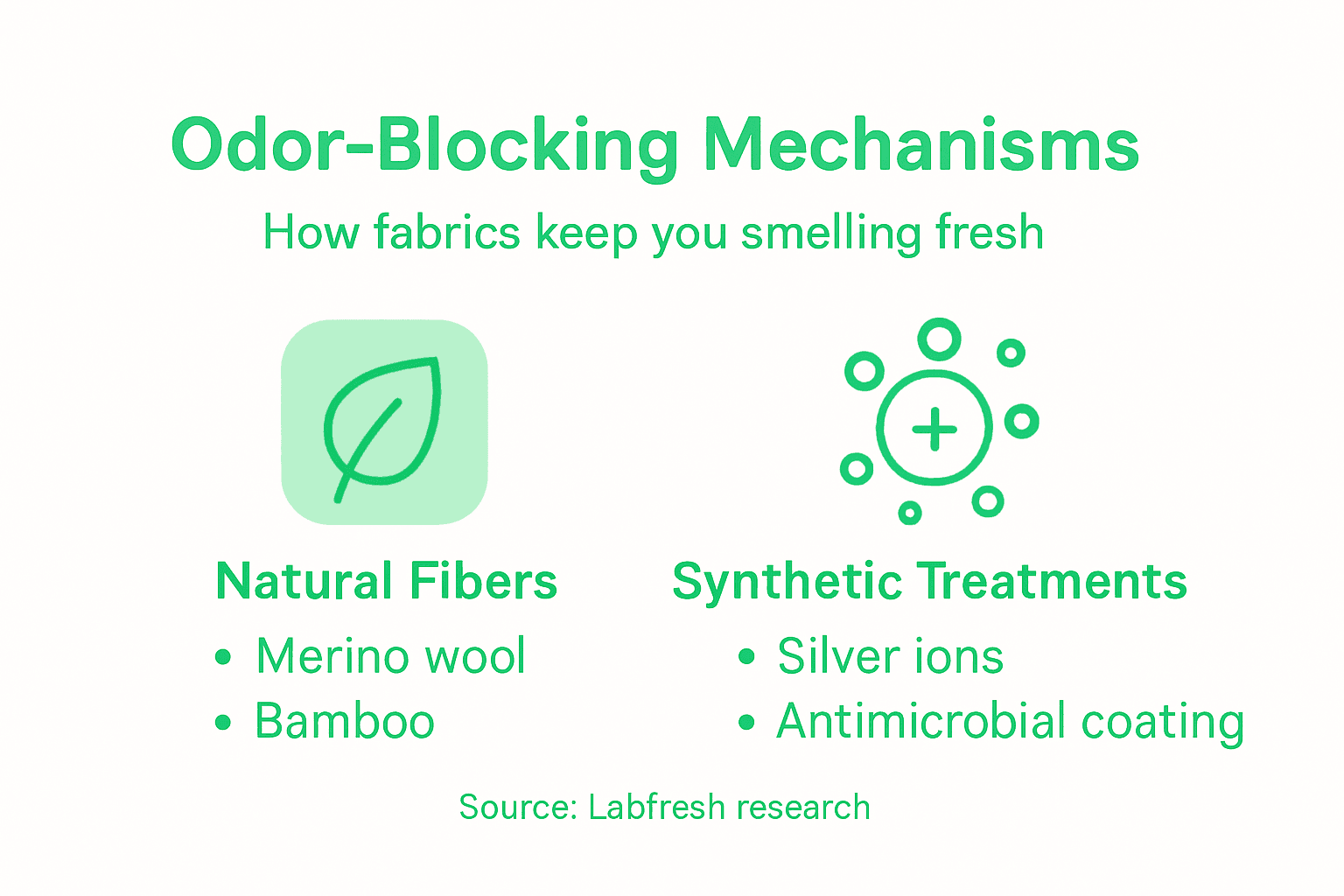
The most common approach uses antimicrobial agents embedded directly into fibers during manufacturing. Silver ions represent one of the most effective options, working by disrupting bacterial cell membranes and preventing the metabolic processes that create odor. When bacteria can’t thrive on the fabric surface, they can’t metabolize your sweat, and therefore can’t produce the compounds that smell bad. Antimicrobial agents like silver ions create an inhospitable environment for microbes, essentially making your garment an active defense system rather than a passive surface waiting to absorb bacteria.
Other antimicrobial treatments work through different mechanisms:
Copper compounds: Disrupt bacterial proteins and cell walls, providing long-lasting antimicrobial effects
Titanium dioxide: Generates reactive oxygen species that destroy bacterial cell structures when exposed to light
Quaternary ammonium compounds (quats): Create a charged barrier that bacteria cannot penetrate, preventing colonization
Natural plant-based compounds: Essential oils and herbal extracts inhibit bacterial growth through phytochemical action
Nanoparticle technology: Engineered materials that capture odor molecules while simultaneously killing bacteria
Beyond antimicrobial approaches, some advanced fabrics use odor adsorption, which physically captures odor molecules before they become noticeable. Nanoparticle-based fabric finishes exemplify this technology, where microscopic particles are applied as a coating that traps odor molecules within a porous structure. Think of it like a microscopic sponge designed specifically to grab odor compounds. This dual-function approach combines antimicrobial benefits with odor absorption, addressing the problem from multiple angles simultaneously.
True odor-blocking technology works on two fronts: preventing bacteria from growing in the first place, while also capturing any odor molecules that do form.
Moisture management plays a supporting role in odor resistance that often gets overlooked. Many odor-resistant fabrics also feature enhanced moisture-wicking, which moves sweat away from your skin and the fabric surface. When sweat doesn’t sit on the fabric, bacteria have less favorable conditions to metabolize it. This combination of moisture management plus antimicrobial treatment creates a more comprehensive defense system. Your shirt stays drier, bacteria struggle to colonize, and odor simply doesn’t develop.
The durability of these technologies through washing cycles depends on how well the treatments bond to fibers. High-quality finishes chemically bond to the fabric structure, surviving multiple wash cycles without degrading. Lower-quality treatments might wash out after a handful of cleanings, which is why premium garments with proven antimicrobial durability cost more upfront but deliver better long-term value.
Here’s what happens when you wear an odor-resistant garment: bacteria encounter a hostile environment the moment they land on the fabric. The antimicrobial agents prevent them from establishing colonies. Meanwhile, any odor molecules that form get captured by the fabric’s structure or by nanoparticles designed to trap them. The result is genuine freshness that lasts for days or even weeks of wear, depending on activity level and climate.
For your lifestyle as a busy professional, this matters tremendously. During a typical workday involving meetings, commutes, and casual activity, your odor-resistant shirt remains fresh without requiring a wash. Even after a moderately active weekend, you can often wear it again before laundering. This extended wear capability means fewer garments needed in your rotation and less frequent washing, which benefits both your budget and the environment.
One important note: odor-resistant technologies work best when you’re maintaining basic hygiene. They reduce odor significantly, not eliminate it entirely if you never bathe or change clothes. They extend the time between washes and keep you fresher throughout your day, but they’re enhancement technologies rather than replacements for personal cleanliness.
Pro tip: Check the care label for washing instructions specific to your odor-resistant garment, as some antimicrobial treatments require specific water temperatures or detergent types to maintain effectiveness across multiple washes.
Durability and Maintenance Considerations
Buying an odor-resistant garment is only half the equation. How you care for it determines whether that antimicrobial technology remains effective for years or degrades after a few months. The good news: maintaining odor resistance requires just a few intentional adjustments to your normal laundry routine. These changes take minimal effort but deliver substantial returns on your investment.
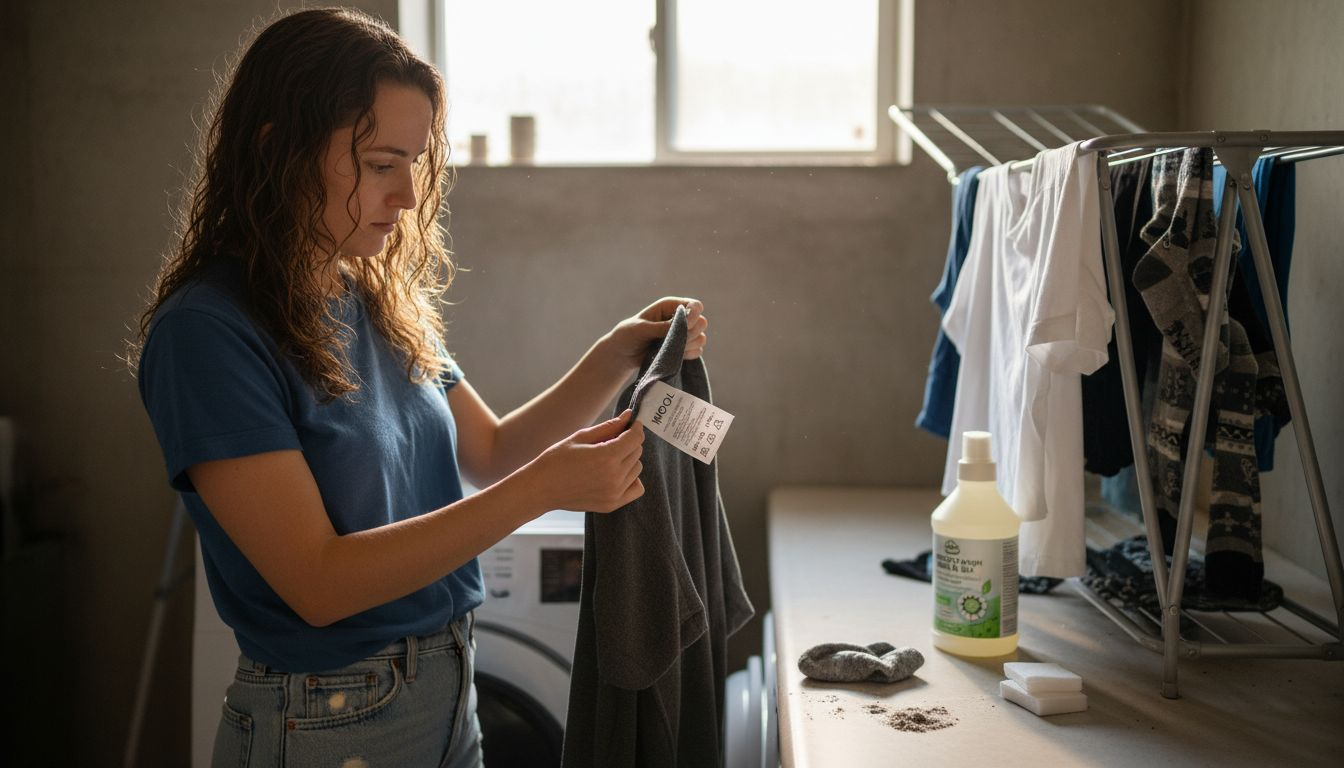
The biggest mistake people make is using fabric softener. Fabric softeners create a coating that actually blocks antimicrobial agents from functioning properly, essentially neutralizing the technology you paid for. Similarly, certain detergents with heavy conditioning agents can interfere with how treatments bond to fibers. Proper detergent selection and care practices directly impact how long your odor-resistant fabrics maintain their effectiveness through repeated washing. This doesn’t mean using expensive special detergents. You simply need to choose products without heavy softening compounds and skip the fabric softener bottle entirely.
Here’s what actually preserves antimicrobial durability:
Wash in cold or warm water: High heat can degrade some antimicrobial treatments, particularly on delicate fabrics
Avoid chlorine bleach: Chemical bleach breaks down certain antimicrobial agents and synthetic finishes
Skip fabric softener entirely: It coats fibers and blocks antimicrobial effectiveness
Use mild detergents: Standard detergents without conditioning agents work perfectly
Wash inside out: Reduces friction and pilling while protecting the treated surface
Air dry when possible: Heat from dryers can compromise some treatments over time
Wash with similar colors: Prevents dye bleeding which can interact with antimicrobial coatings
Natural fibers like merino wool require slightly different care than treated synthetics. Wool’s inherent antimicrobial properties actually improve with minimal washing. Hand washing or using a wool-specific cycle preserves the lanolin and natural oils that create odor resistance. You can often wear merino wool items multiple times before washing, which is why they excel for travel and active lifestyles. Treated synthetic fabrics, meanwhile, benefit from regular but gentle washing rather than extended wear periods between cleanings.
The paradox of odor-resistant fabrics: regular gentle washing preserves antimicrobial effectiveness better than infrequent washing with harsh methods.
Understanding maintenance requirements specific to your fabric type helps you develop a realistic care routine. Some people assume odor-resistant fabrics never need washing, which isn’t accurate. They need regular cleaning to remove oils, sweat residue, and any accumulated particles. However, they don’t need the aggressive washing that non-odor-resistant clothes require. You’re essentially balancing hygiene with technology preservation.
For merino wool items, stretch the wearing time between washes when possible. These garments often need washing only every 3-5 wears depending on activity level and climate. Between washes, simple airing in fresh air regenerates the natural antimicrobial benefits. For treated synthetic items, wash after 2-3 wears during normal activity, or immediately after intense physical exertion or profuse sweating.
Washing frequency itself impacts durability. Every wash cycle subjects treated fabrics to stress, so fewer washes means longer-lasting antimicrobial effectiveness. This creates a beneficial cycle: odor-resistant fabrics require less frequent washing, which preserves their technology, which keeps them fresher longer. Over the lifespan of a garment, you’re washing it perhaps 25-50% less often than conventional clothing, which extends both the technology durability and the overall garment lifespan.
Storage matters too. Keep odor-resistant garments in cool, dry places away from direct sunlight when not wearing them. Excessive heat and UV exposure can degrade some antimicrobial treatments over time. This isn’t about special storage solutions—your normal closet conditions work fine. Just avoid leaving garments in hot cars or damp basement areas.
One practical consideration: if you notice your odor-resistant garment isn’t performing as well after a year or two of regular use, it might be time to evaluate your care routine. Did you accidentally use fabric softener? Wash in very hot water? Dry on high heat? Minor adjustments to your laundry method can restore effectiveness. If you’ve been careful with maintenance, the gradual performance decrease is simply the natural degradation of antimicrobial treatments over many wash cycles—a completely normal part of garment lifespan.
Pro tip: Create a simple checklist for your odor-resistant garment care: cold water, no fabric softener, air dry when possible, and woolite or mild detergent—then photograph it and set it as your phone background to remind yourself during laundry day.
Risks, Costs, and Sustainable Alternatives
Odor-resistant fabrics solve real problems, but they come with tradeoffs worth understanding before you commit your budget. The upfront costs are higher than conventional clothing, certain antimicrobial treatments raise environmental concerns, and not all sustainable alternatives deliver equal performance. Being an informed buyer means weighing these factors honestly against your priorities.
Cost represents the most obvious barrier. Premium odor-resistant garments typically cost 30-60% more than their conventional counterparts. A basic cotton t-shirt might run $15-20, while an equivalent odor-resistant shirt from a quality brand costs $40-60. Over time, this investment pays dividends through reduced laundry frequency and extended garment lifespan, but the initial outlay is substantial. For someone building a professional wardrobe, investing in multiple odor-resistant pieces requires serious budget allocation. The economics improve dramatically when you calculate cost-per-wear over years of ownership, but that doesn’t help if you need a functional wardrobe today.
Environmental and health concerns center on certain antimicrobial treatments. Some synthetic antimicrobial agents used historically raised questions about persistence in the environment and potential bioaccumulation. Balancing performance with ecological responsibility requires understanding which treatments pose minimal risk. Modern reputable brands have shifted toward safer compounds, but you should verify what treatments your specific garments use. Look for certifications like OEKO-TEX Standard 100, which ensures textiles meet strict safety standards for harmful substances. Silver ion treatments are generally recognized as safe at clothing concentrations, while some quaternary ammonium compounds have faced scrutiny in certain applications.
Here are the main considerations when evaluating costs and risks:
Initial investment: Premium pricing (30-60% above conventional clothing) requires budget planning
Extended garment lifespan: Reduced washing means less wear and tear, extending usable life by 2-3 years
Reduced water usage: Fewer washes save significant water consumption annually
Chemical exposure: Some antimicrobial treatments warrant investigation for safety certifications
Environmental persistence: Certain compounds may not break down readily; research treatment types
Microfiber shedding: Synthetic fabrics shed microfibers that reach waterways; natural alternatives avoid this
Production impact: Manufacturing antimicrobial treatments requires chemicals; natural fibers use fewer processing chemicals
Natural fibers present compelling sustainable alternatives without sacrificing performance. Wool’s sustainability through reduced washing frequency creates environmental benefits that justify higher upfront costs. Merino wool costs more per garment, but you wear each piece 2-3 times before washing versus daily washing of conventional clothes. Over a year, the environmental footprint of a merino wool shirt often proves smaller than conventional cotton despite higher production costs. Hemp and bamboo offer additional sustainable options, though performance varies. Hemp requires no pesticides and improves soil health, but tends toward coarser texture. Bamboo grows rapidly without requiring pesticides, though its processing uses water-intensive methods.
The sustainability paradox: premium-priced natural fiber garments often reduce environmental impact more effectively than cheaper conventional clothing through dramatically lower washing frequency.
For your situation as an environmentally conscious professional, consider this calculus: a $60 merino wool shirt you wear 100+ times before retirement creates lower total environmental impact than a $15 cotton shirt you wash after every wear. The math shifts even more favorably when you factor in microfiber shedding from synthetics. Each synthetic garment releases microplastics into waterways with every wash cycle. Natural fibers eliminate this concern entirely.
To clarify the economics and sustainability, compare true cost and impact over garment lifespan:
Garment Type | Upfront Cost | Approximate Wears Before Retirement | Cost-Per-Wear | Microfiber Pollution |
Basic Cotton Shirt | $20 | 50 | $0.40 | High, due to frequent washing |
Merino Wool Shirt | $60 | 200 | $0.30 | None, natural fiber |
Treated Synthetic Shirt | $40 | 150 | $0.27 | Moderate, sheds microplastics |
Bamboo Shirt | $45 | 120 | $0.38 | Low, depends on blend |
The risk of greenwashing deserves attention. Some brands market products as “sustainable” while using questionable antimicrobial treatments or misleading environmental claims. Look beyond marketing language. Check for third-party certifications, transparent supply chain information, and specific treatment disclosures. Brands that openly discuss their antimicrobial technology and provide safety data typically stand behind their products more credibly than those offering vague promises about “natural” odor resistance.
A hybrid approach often makes sense: invest in 2-3 premium natural fiber pieces for your core professional wardrobe where cost-per-wear justifies the investment, while using treated synthetic options for specialized activities like intense exercise. This balances budget constraints, performance needs, and environmental concerns without requiring complete wardrobe replacement.
Pro tip: When evaluating cost, calculate the true value by dividing garment price by estimated wears before retirement (typically 200-300 wears for quality pieces), then compare cost-per-wear across options rather than sticker price alone.
Discover True Odor-Resistant Apparel That Elevates Your Everyday Wardrobe
The article explains how odor-resistant fabrics work by targeting bacteria and preventing unwanted smells rather than masking them. If you are tired of clothes that lose freshness quickly, constantly forcing you to wash and replace them, this challenge is exactly why innovation in fabric technology matters. You want clothing that stays fresh longer, reduces laundry frequency, and supports an active, busy lifestyle without sacrificing style or comfort.
At Labfresh, we have engineered fabrics like FreshCore™ and Seawool that provide exactly this advanced odor resistance. Our garments go beyond simple freshness. They combine antimicrobial, stain-resistant, and low-maintenance properties designed for real-world durability and comfort. Whether you prefer natural fiber blends or high-performance synthetics, you can trust our collections, including shirts, polos, pants, and outerwear, to keep you feeling confident throughout your day.

Experience the power of true odor-resistant technology tailored to professionals who demand both style and function. Explore our innovative solutions now and transform your wardrobe with clothing that works as hard as you do. Visit Labfresh today and take the first step toward effortless freshness and lasting quality.
Frequently Asked Questions
What are odor-resistant fabrics?
Odor-resistant fabrics are made using specific treatments or natural fibers that inhibit the growth of bacteria, effectively preventing odor at the source rather than masking it with fragrances.
How do I maintain odor-resistant fabrics for long-lasting effectiveness?
To keep odor-resistant fabrics effective, avoid using fabric softeners, wash in cold or warm water, use mild detergents, and air dry when possible. Regular gentle washing preserves the antimicrobial technology better than infrequent, harsh methods.
Do all odor-resistant fabrics feel stiff or uncomfortable?
No, modern odor-resistant fabrics, such as those treated with FreshCore™ technology, maintain breathability and softness while providing odor control, ensuring comfort along with functionality.
How often should I wash odor-resistant clothing?
Depending on the fabric and activity level, you can often wear odor-resistant clothing multiple times (2-5 wears) before laundering, significantly extending the time between washes compared to traditional garments.
Recommended
Comments