How innovation drives sustainable fashion for active lifestyles

The fashion industry generates 10% of global carbon emissions and produces 92 million tons of textile waste each year, yet many assume sustainable apparel means compromising on performance or style. That misconception is rapidly dissolving as strategic innovations transform how brands create durable, tech-integrated clothing for active professionals and outdoor enthusiasts. This guide reveals how circular economy models, ecodesign methodologies, and next-generation materials are reshaping sustainable fashion to meet the demands of your dynamic lifestyle without sacrificing functionality or aesthetics.
Table of Contents
Key Takeaways
Point | Details |
Strategic innovations | Sustainability oriented innovations drive revenue growth while reducing environmental impact through process improvements, supply chain transparency, and product innovations. |
Circular economy | Circular economy models design products for multiple lifecycles and enable material recovery at end of use to cut landfill waste. |
Ecodesign focus | Ecodesign uses life cycle thinking to boost material durability and emotional durability. |
Next generation materials | Next generation materials scale to dramatically lower emissions while maintaining performance. |
Understanding innovation’s impact on sustainable fashion
Sustainability-oriented innovations (SOIs) represent strategic changes across three dimensions: process improvements that reduce energy and water consumption, supply chain transformations that prioritize transparency and ethical sourcing, and product innovations that incorporate recycled materials or biodegradable components. These aren’t incremental tweaks but fundamental shifts in how fashion brands operate. Research tracking a luxury fashion engineering company over a decade revealed that implementing SOIs drove 730% revenue growth while simultaneously reducing environmental impact. That’s not a trade-off; it’s a competitive advantage.
For style-conscious professionals and outdoor enthusiasts, this transformation means access to apparel that genuinely performs. You’re no longer choosing between a shirt that looks sharp in meetings or one that handles a weekend hike without showing sweat stains. Sustainable fashion innovations now deliver both through advanced fabric technologies and thoughtful design. Brands investing in SOIs build cumulative knowledge, creating learning loops that continuously improve their offerings. Each product iteration becomes smarter, more durable, and better aligned with active lifestyles.
The tangible impacts of SOIs reshape what you can expect from your wardrobe:
Improved materials that resist odors, stains, and wrinkles without harsh chemical treatments
Circular supply chains enabling garment take-back and recycling programs
Advanced manufacturing techniques reducing water usage by up to 90% compared to conventional methods
Transparency systems allowing you to trace a garment’s environmental footprint from fiber to finished product
“Strategic sustainability innovations create a virtuous cycle where environmental responsibility and business performance reinforce each other, delivering superior products that meet the rigorous demands of active consumers.”
This shift matters because your clothing choices directly influence industry practices. When you purchase apparel from brands committed to SOIs, you’re voting for a system that prioritizes longevity over disposability. The strategic innovation case study demonstrates that companies embracing this approach don’t just survive; they thrive by attracting discerning customers who refuse to compromise on quality or values. The innovations driving this transformation are now mature enough to deliver real performance, not just marketing promises.
Circular economy and ecodesign: Closing the loop in apparel
The linear fashion model operates on a take-make-dispose principle that’s fundamentally incompatible with sustainability. Raw materials become garments, garments get worn briefly, then they’re discarded. Circular economy models flip this script entirely by designing products for multiple lifecycles and establishing systems to recover materials at end of use. The contrast is stark when you examine the data:
Model Type | Annual Landfill Waste | Recycled Content | Product Lifespan | Resource Efficiency |
Linear Fashion | 92 million tons globally | 0-5% | 1-2 years average | Extract, use once, discard |
Circular Fashion | 1.5 million garments diverted per program | Up to 70% | 5-10 years with care | Continuous material loops |
Circular programs aren’t theoretical. Major brands have implemented take-back initiatives where you return worn garments for recycling into new fibers. These programs have already diverted over 1.5 million garments from landfills while incorporating up to 70% recycled content into new products. For active consumers, this means your favorite performance shirt can eventually become raw material for another high-quality garment rather than contributing to textile waste mountains.
Ecodesign methodologies provide the framework making circularity practical. Unlike conventional design that focuses solely on aesthetics and immediate function, ecodesign integrates life-cycle thinking from concept through disposal. The process follows a structured approach:
Material assessment evaluating environmental impact, durability, and recyclability of fiber options
Life cycle analysis quantifying energy, water, and emissions across production, use, and end-of-life phases
Multi-criteria scoring balancing performance attributes like breathability and moisture management with sustainability metrics
Emotional and physical durability evaluation ensuring garments remain desirable and functional for years
This fourth step deserves special attention. Physical durability means fabrics resist pilling, tearing, and color fading through repeated wear and washing. Emotional durability means you still want to wear the garment years later because the style remains relevant and the fit stays consistent. Both matter equally for extending wardrobe lifespan.
Pro Tip: When shopping for sustainable apparel, prioritize brands that explicitly design for both emotional and physical durability. Check for timeless styles, reinforced construction at stress points, and fabric technologies that maintain appearance over time. This dual focus dramatically extends how long you’ll actually wear each piece.
Real-world circular programs combine these ecodesign principles with practical systems. You might purchase a shirt made from 60% recycled polyester, wear it for several years thanks to odor-resistant and stain-resistant treatments, then return it through a take-back program when you’re ready for something new. The brand breaks down the garment, recovers usable fibers, and incorporates them into fresh products. LABFRESH sustainability initiatives exemplify this approach by engineering apparel for extended lifecycles while building infrastructure to reclaim materials. The fashion circular economy research confirms these models work at scale when brands commit to the necessary investment in collection, sorting, and processing systems.
Next-generation materials and outdoor gear innovation
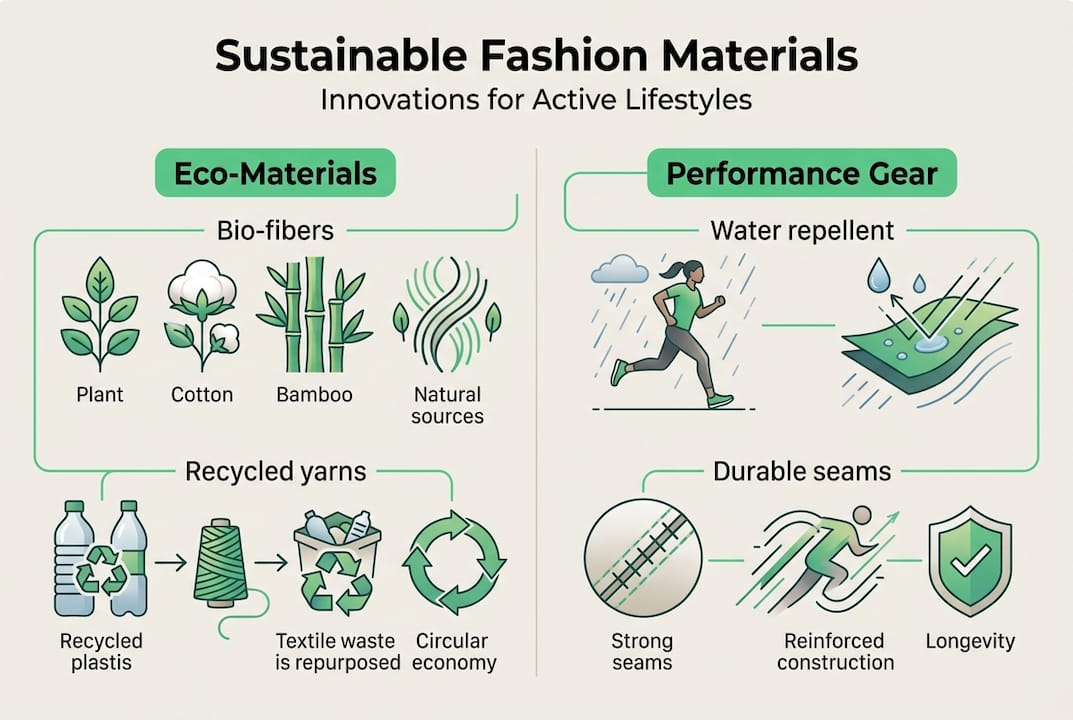
Material innovation represents the most tangible frontier in sustainable fashion. Bio-based fibers derived from agricultural waste, recycled polyester reclaimed from ocean plastics, and lab-grown alternatives to leather are moving from pilot projects to commercial scale. The projected growth is substantial:
Material Type | Current Production | 2030 Projection | Emissions Reduction Potential |
Bio-based fibers | 2.1 million tons | 5.8 million tons | 40% lower than conventional |
Recycled polyester | 3.4 million tons | 4.9 million tons | 75% lower than virgin polyester |
Lab-grown alternatives | 0.3 million tons | 2.3 million tons | 90% lower than animal-derived |
Total next-gen materials | 5.8 million tons | Addresses 92% of fashion emissions |
Reaching 13 million tons by 2030 would address 92% of the fashion industry’s emissions footprint. That scale requires massive investment in production infrastructure, but early adopters are already incorporating these materials into performance apparel. For you as a consumer, this means access to shirts, pants, and outerwear that match or exceed the technical properties of conventional fabrics while dramatically reducing environmental impact.
Outdoor gear presents unique challenges because performance requirements are non-negotiable. You need water repellency that works in torrential rain, breathability that prevents overheating during strenuous activity, and durability that withstands abrasion from rocks and branches. Historically, achieving these properties required per- and polyfluoroalkyl substances (PFAS), synthetic chemicals that persist in the environment and accumulate in human tissue. The outdoor industry is now racing to eliminate PFAS while maintaining performance.
PFAS-free durable outdoor gear introduces specific trade-offs:
More frequent maintenance required to restore water repellency through washing and reapplying treatments
Matched breathability and comfort in most conditions, with performance parity improving rapidly
Oil repellency compromises meaning grease stains require immediate attention
Initial water repellency often matches PFAS treatments but degrades faster without proper care
These aren’t dealbreakers; they’re maintenance considerations. Think of it like choosing between a high-performance sports car requiring regular tuning versus a less powerful but lower-maintenance sedan. Active consumers who prioritize sustainability can absolutely find outdoor gear that performs, but you’ll invest slightly more time in upkeep.
Pro Tip: For durable outdoor wear without harmful chemicals, plan to reapply water-repellent treatments every 10 to 15 washes and store garments properly to maintain performance. Many brands now offer plant-based or wax-based treatments that restore water repellency effectively. This small maintenance routine extends garment life while avoiding persistent pollutants.
Innovative fabric solutions demonstrate how tech-integrated apparel can incorporate recycled materials and sustainable production methods without sacrificing the performance attributes active lifestyles demand. The next-generation sustainable materials report projects continued improvement in both cost and performance as production scales. By 2026, you’re seeing the early benefits of this scaling in retail offerings that combine sustainability credentials with genuine functionality. The sustainable outdoor gear challenges remain real but solvable through informed purchasing and proper care.
Explore sustainable apparel designed for your active lifestyle
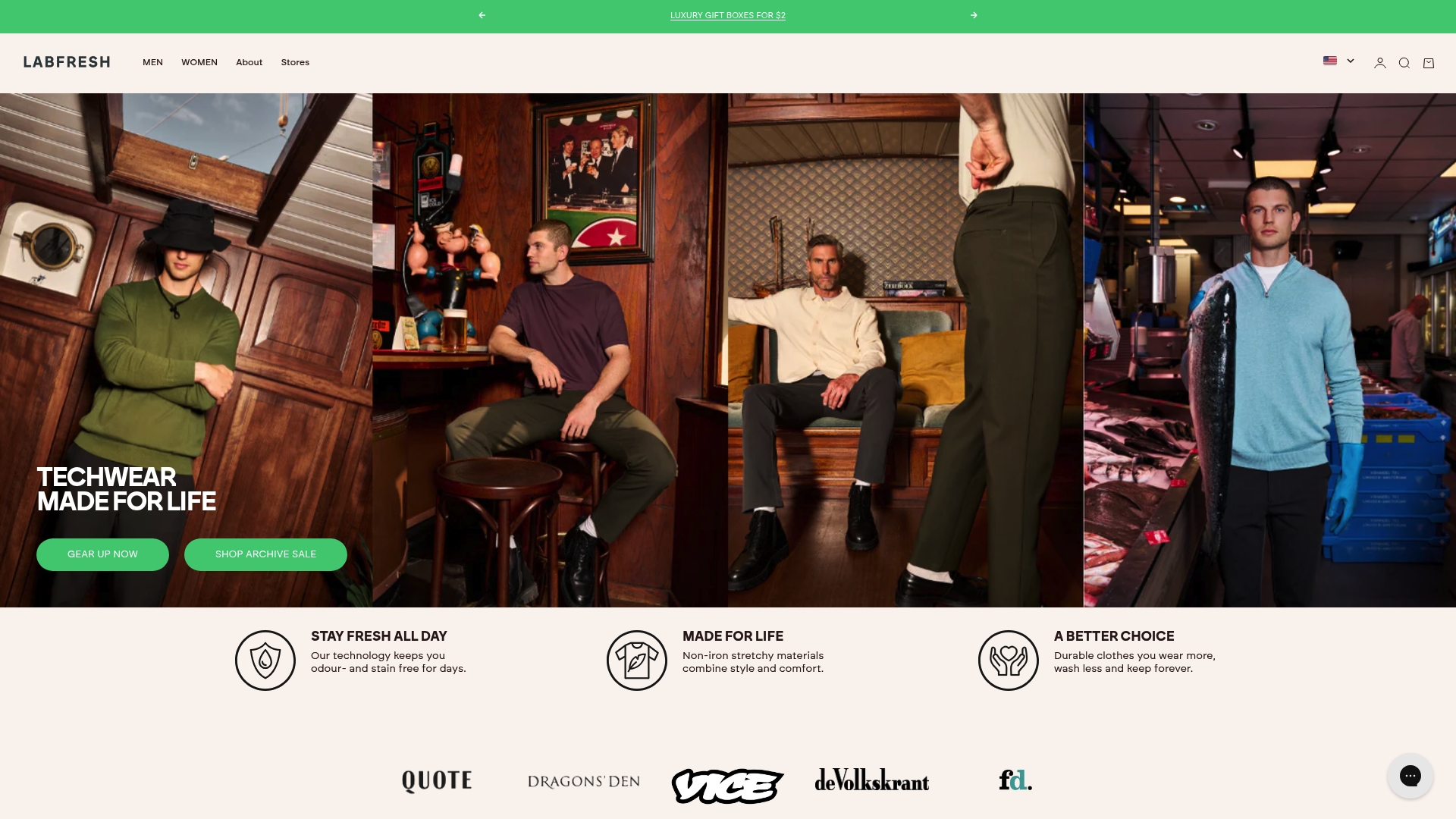
Understanding innovation’s role in sustainable fashion is valuable, but applying that knowledge to your wardrobe choices delivers real impact. LABFRESH builds apparel specifically for professionals and outdoor enthusiasts who refuse to compromise on performance, style, or sustainability. Our non-iron shirts eliminate the need for energy-intensive pressing, our odor-resistant fabrics extend time between washes to conserve water, and our water-repellent treatments protect against spills and weather without harmful chemicals.
Key features that align innovation with your active lifestyle:
Tech-integrated fabrics combining FreshCore™ and Seawool technologies for odor control and temperature regulation
Sustainable materials including recycled polyester and responsibly sourced fibers
Versatile styling that transitions seamlessly from office meetings to weekend adventures
Durability engineering ensuring garments maintain appearance and function through years of regular wear
Explore the LABFRESH sustainable shirts collection for professional attire that stays fresh through long days and travel. Check out performance pants collection designed to move with you whether you’re commuting, hiking, or working from a coffee shop. For unpredictable weather, the water-repellent performance jacket delivers protection without bulk.
“We engineer every garment to perform in real-world conditions while minimizing environmental impact. Sustainability isn’t a marketing angle; it’s embedded in our material choices, production processes, and product longevity.”
Your wardrobe should work as hard as you do. LABFRESH makes that possible through innovation that serves both your practical needs and your values.
Frequently asked questions about innovation and sustainable fashion
What are the main types of innovation driving sustainable fashion today?
Process innovations reduce water and energy consumption during manufacturing, supply chain innovations improve transparency and ethical sourcing, and product innovations incorporate recycled materials and advanced fabric technologies. Strategic sustainability-oriented innovations across these three dimensions enable brands to grow while reducing environmental impact, as demonstrated by companies achieving 730% revenue growth alongside sustainability gains.
How do circular economy initiatives help reduce textile waste effectively?
Circular programs establish take-back systems where consumers return worn garments for recycling into new fibers, creating continuous material loops instead of linear disposal. These initiatives have diverted over 1.5 million garments from landfills while incorporating up to 70% recycled content into new products. By designing for multiple lifecycles and building recovery infrastructure, brands transform waste streams into valuable resources.
Are next-gen sustainable materials as durable and high-performing as traditional fabrics?
Yes, next-generation materials increasingly match or exceed conventional fabric performance. Bio-based fibers, recycled polyester, and lab-grown alternatives are scaling to 13 million tons by 2030, addressing 92% of fashion emissions while delivering comparable durability, breathability, and moisture management. Early adopters report performance parity in most applications, with continuous improvements as production scales.
How can I maintain PFAS-free water-repellent outdoor gear for longevity?
Reapply water-repellent treatments every 10 to 15 washes using plant-based or wax-based products designed for technical fabrics. Wash garments according to care labels, avoid fabric softeners that interfere with treatments, and store in cool, dry places away from direct sunlight. PFAS-free gear requires more frequent maintenance than traditional treatments but performs excellently with proper care, allowing you to avoid persistent pollutants while maintaining protection.
Where can I find durable, sustainable apparel that fits professional and active lifestyles?
Look for brands that explicitly integrate sustainability into product design, material selection, and manufacturing processes rather than treating it as an add-on feature. LABFRESH sustainability practices exemplify this approach by engineering apparel with tech-integrated fabrics, recycled materials, and durability features that serve both professional and outdoor contexts. Prioritize companies transparent about their supply chains and committed to circular economy principles.
Does sustainable fashion actually cost more in the long run?
Sustainable apparel often carries higher upfront costs but delivers superior value through extended lifespan and reduced maintenance. Garments engineered for durability with odor-resistant, stain-resistant, and wrinkle-resistant properties require less frequent washing, pressing, and replacement. When you calculate cost per wear over several years rather than initial purchase price, sustainable fashion typically proves more economical while reducing environmental impact and wardrobe churn.
Recommended
Comments