How innovation drives sustainable fashion in 2026


Most people think fashion innovation means trendy designs or flashy tech accessories, but here’s a reality check: innovation accounts for 92% of fashion’s emissions reductions and textile recycling potential by 2030. That’s not about aesthetics. That’s about fundamentally reshaping how clothes are made, worn, and recycled. Innovation in fashion today means sustainable materials that replace petrochemicals, digital tools that slash waste, and ecodesign principles that extend garment life by years. This article breaks down exactly how innovation transforms fashion into a force for sustainability and durability, helping you make informed choices that align style with environmental responsibility.
Table of Contents
Key takeaways
Point | Details |
Material breakthroughs | Bio-based fibers and recycled synthetics dramatically reduce fashion’s carbon footprint and waste. |
Digital design tools | AI and 3D simulation minimize overproduction while improving garment quality and fit. |
Ecodesign durability | Strategic material testing extends garment lifespan by months, cutting emissions and water use by 20%. |
Strategic revenue growth | Luxury brands using concurrent engineering innovation achieved 730% revenue growth over ten years. |
Consumer pressure | Growing demand for sustainable fashion pushes brands toward green innovation adoption despite industry challenges. |
Sustainable material innovations shaping fashion’s future
The fashion industry’s environmental burden starts with materials. Traditional textiles rely heavily on petroleum-based synthetics and water-intensive natural fibers. Innovative materials flip this script entirely. Bio-based fibers derived from agricultural waste, algae, and even food byproducts now replace conventional fabrics. These alternatives cut reliance on fossil fuels while offering comparable performance. Mycelium leather, grown from mushroom roots, provides a biodegradable option that decomposes naturally instead of lingering in landfills for decades.
Recycled synthetics represent another game changer. Converting plastic bottles and discarded fishing nets into polyester reduces carbon emissions substantially compared to virgin production. Textile-to-textile recycling takes this further by transforming old garments directly into new fabric, creating a circular loop that keeps materials in use. Chemical recycling technologies now break down blended fabrics that were previously impossible to recycle, opening pathways for complex garments to re-enter production cycles.
The numbers tell a compelling story. Next-gen materials account for 92% of fashion’s emissions reductions potential and drive expected textile recycling growth by 2030. That’s not incremental progress. That’s transformation. Material innovation directly addresses the industry’s biggest environmental challenges: greenhouse gas emissions, water consumption, and waste accumulation.
Key sustainable material categories reshaping fashion:
Bio-based fibers from agricultural waste and algae
Mycelium leather offering biodegradable alternatives to animal hides
Recycled polyester from plastic bottles and ocean waste
Chemical recycling enabling blended fabric recovery
Lab-grown silk and wool eliminating animal agriculture impacts
Material Type | Environmental Benefit | Performance Advantage |
Bio-based fibers | Reduces petrochemical dependence | Comparable durability to conventional fabrics |
Mycelium leather | Fully biodegradable | Customizable texture and thickness |
Recycled synthetics | Lowers carbon footprint 30-50% | Maintains strength and moisture wicking |
Textile-to-textile recycling | Eliminates virgin material need | Preserves fiber quality for multiple cycles |
Brands integrating these materials into collections demonstrate that sustainability practices don’t require compromising style or function. The challenge lies in scaling production to meet demand while maintaining quality standards. As manufacturing processes mature, costs decrease and availability expands, making sustainable materials accessible to more consumers.
Pro Tip: Look for garments specifying recycled content percentages and material certifications like Global Recycled Standard or OEKO-TEX to verify genuine sustainability claims rather than greenwashing.
Digital technologies accelerating sustainable and efficient design
Digital innovation transforms how fashion moves from concept to closet. Generative AI now accelerates creative processes by generating design variations in minutes rather than weeks. Designers input parameters like style preferences, sustainability goals, and functional requirements, then AI produces multiple options optimizing for both aesthetics and environmental impact. This speed enables rapid iteration without physical sampling waste.
3D garment simulation revolutionizes production planning. Virtual prototypes allow brands to test fit, drape, and construction digitally before cutting a single yard of fabric. AI and 3D garment simulation reduce lead times and waste while improving garment quality and sustainability outcomes. On-demand production becomes viable when digital tools eliminate traditional inventory risks. Brands manufacture only what consumers actually order, slashing the overproduction that plagues conventional fashion.
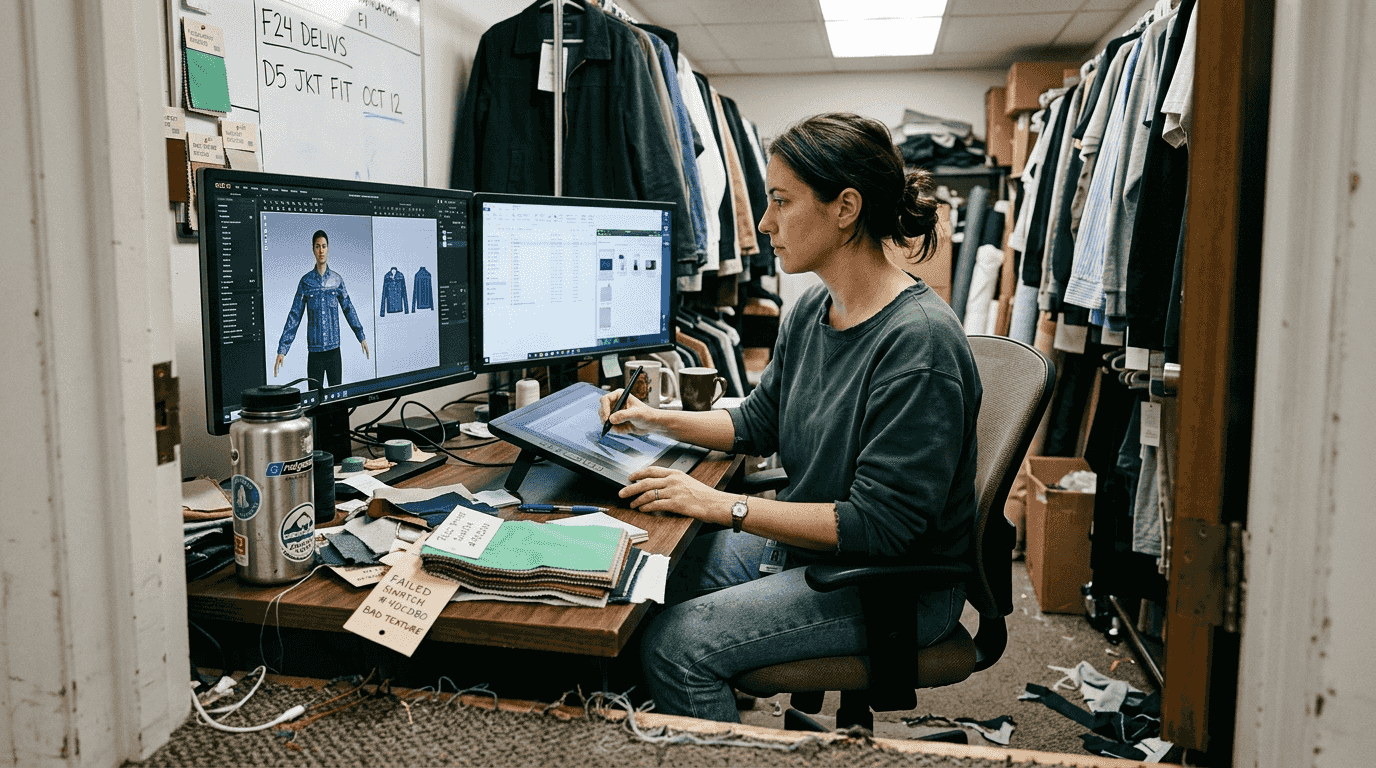
Virtual reality fitting rooms enhance consumer experience while supporting durability. Shoppers visualize how garments look and move on their body type before purchasing, reducing returns and ensuring better fit satisfaction. Better fit means clothes get worn more often and last longer, directly extending garment lifespan. Digital-physical integration loops feedback from actual wear patterns back into design refinement, continuously improving product development.
Digital technologies reshaping fashion sustainability:
Generative AI creating design variations optimized for environmental impact
3D simulation enabling zero-waste virtual prototyping
VR fitting rooms reducing returns and improving satisfaction
Digital twins tracking garment lifecycle for circular economy integration
Blockchain ensuring supply chain transparency and material traceability
The integration of these technologies with sustainable digital design principles creates synergies impossible with analog methods alone. Real-time data about material availability, production capacity, and consumer preferences feeds into design decisions instantly. This responsiveness minimizes waste while maximizing resource efficiency across the entire value chain.
Pro Tip: When shopping online, seek brands offering detailed size guides with body measurement tools and virtual try-on features to ensure proper fit and reduce the environmental cost of returns.
Enhancing durability through ecodesign and local context awareness
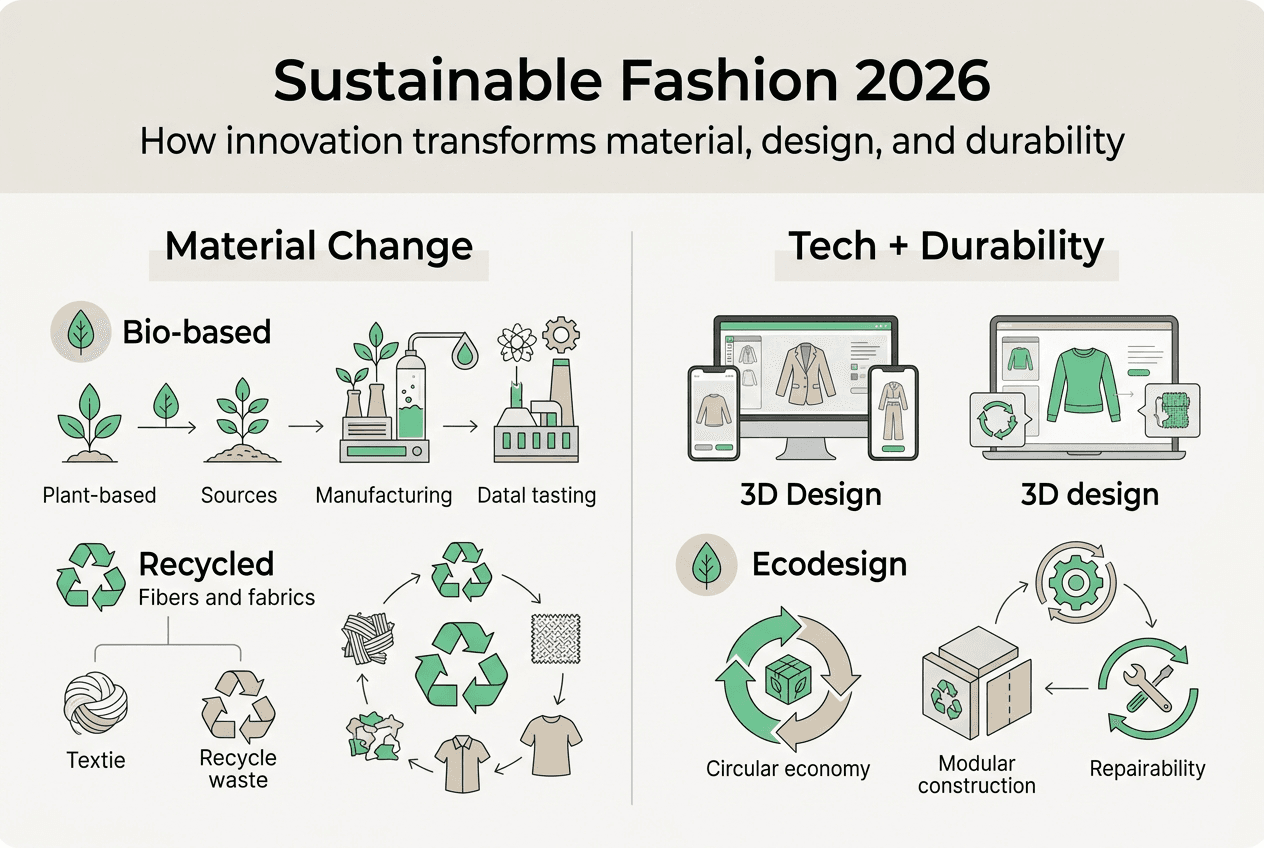
Durability represents the ultimate sustainability metric. A garment worn for years instead of months delivers exponentially better environmental value. Ecodesign prioritizes longevity through superior material selection and rigorous testing protocols. Tear resistance, colorfastness, and seam strength become primary design criteria rather than afterthoughts. Emotional durability matters too. Timeless styles that remain relevant across seasons encourage long-term wear rather than disposal when trends shift.
Performance benchmarks like WRAP (Worldwide Responsible Accredited Production) set higher expectations for wash durability. Garments must withstand 50 or more wash cycles while maintaining appearance and structural integrity. Extending garment lifespan by 9 months cuts emissions, water use, and waste by 20%, demonstrating how durability improvements translate directly into environmental gains. Recycled denim provides a concrete example, showing measurable strength improvements and reduced air permeability compared to conventional alternatives.
Global context shapes durability perceptions significantly. Durability perceptions vary globally, impacting material favorability and consumer acceptance. What one market considers durable, another might reject based on different wear patterns, climate conditions, or cultural preferences. Brands succeeding internationally account for these variations in material selection and construction methods. A jacket designed for European winters requires different durability specifications than one intended for tropical climates.
Durability Factor | Ecodesign Approach | Consumer Benefit |
Tear resistance | Reinforced stress points and high-tenacity yarns | Garments withstand daily wear without damage |
Colorfastness | Advanced dyeing techniques and UV-resistant treatments | Colors stay vibrant through repeated washing |
Seam strength | Flatlock stitching and bonded seams | Construction holds up under movement and stretching |
Emotional longevity | Timeless design avoiding fast fashion trends | Clothes remain stylish across multiple seasons |
Key ecodesign principles extending garment life:
Material testing for minimum 50 wash cycle durability
Reinforced construction at high-stress areas like elbows and knees
Timeless aesthetics reducing psychological obsolescence
Repair-friendly designs enabling easy maintenance
Performance specifications adapted to regional climate and use patterns
Brands committed to ecodesign sustainability transparently share testing results and durability metrics. This transparency helps you evaluate whether premium prices reflect genuine quality or just marketing. Durability extends beyond physical properties to encompass the entire ownership experience, including ease of care and repair accessibility.
Strategic innovation’s impact on luxury fashion and industry dynamics
Strategic innovation integrates product development, manufacturing processes, and supply chain design into cohesive systems. This holistic approach generates competitive advantages impossible through isolated improvements. Concurrent engineering, where design, production, and sustainability teams collaborate from project inception, exemplifies this integration. Rather than sustainability retrofitted onto existing designs, it becomes foundational.
The financial case for strategic innovation proves compelling. Luxury fashion employing 3D concurrent engineering achieved 730% revenue growth over a decade, demonstrating that sustainability and profitability align when innovation becomes strategic rather than tactical. Learning-by-doing cultures foster sustained success by treating each project as an opportunity to refine processes and capabilities. Organizations embedding innovation into their DNA adapt faster to changing consumer expectations and regulatory requirements.
Yet the broader industry struggles. The industry faces backlash and profitability pressures despite innovation’s promise, with many brands cutting sustainability teams amid economic uncertainty. This creates a widening gap between innovation pioneers and conventional operators. Brands investing in strategic innovation pull ahead while others fall further behind, unable to meet evolving consumer demands or regulatory standards.
Strategic innovation framework components:
Concurrent engineering integrating design, production, and sustainability from project start
Learning-by-doing culture treating each initiative as capability building
Supply chain collaboration ensuring material and process alignment
Consumer feedback loops informing continuous improvement
Long-term investment horizons prioritizing durability over quarterly results
“Strategic innovation requires courage to invest when competitors cut costs, but the payoff comes through market differentiation and customer loyalty that transcends price competition. Brands that embed sustainability into their innovation DNA create defensible competitive positions.”
Balancing innovation investment with profitability pressures challenges even well-resourced brands. The path forward requires demonstrating clear ROI from sustainability initiatives while building consumer understanding of value beyond lowest price. Innovation investment strategies that align stakeholder incentives with long-term goals prove more resilient than short-term cost cutting.
Explore innovative, sustainable apparel with LABFRESH
Understanding innovation’s role in sustainable fashion means little without practical application. LABFRESH translates these principles into wearable reality through apparel combining cutting-edge materials, durability-focused design, and functional technology. Every garment reflects the innovations discussed: sustainable fabrics, strategic ecodesign, and performance engineering that extends wear life while reducing environmental impact.
Explore the performance pants engineered for durability and low-maintenance care, or discover performance shirts collection integrating stain-resistant and odor-resistant technologies. Innovative undershirts demonstrate how functional design enhances both sustainability and daily comfort. Each piece embodies the balance between style, durability, and environmental responsibility that defines fashion’s innovative future. Visit LABFRESH online to experience apparel where innovation serves your values and lifestyle.
FAQ
What is the role of innovation in fashion sustainability?
Innovation introduces sustainable materials like bio-based fibers and recycled synthetics that dramatically lower waste and emissions compared to conventional textiles. Digital tools such as 3D simulation reduce overproduction by enabling on-demand manufacturing, while ecodesign principles extend garment lifespan to multiply environmental benefits. Together, these innovations address fashion’s biggest environmental challenges at their source.
How does technology improve fashion durability?
3D modeling and virtual prototyping help designers create better-fitting garments that consumers wear longer, reducing premature disposal. Ecodesign testing establishes higher durability benchmarks, ensuring garments withstand minimum 50 wash cycles while maintaining appearance and structural integrity. Performance metrics and rigorous material testing translate directly into clothes that last years instead of months.
What challenges does fashion face in adopting innovation?
Profitability pressures and economic uncertainty lead many brands to cut sustainability teams and innovation budgets despite long-term benefits. Durability perceptions vary globally, complicating material acceptance and requiring regional customization that increases complexity. Scaling next-gen materials to meet demand while maintaining quality and affordability remains an ongoing investment challenge requiring sustained commitment.
Can consumers benefit from innovation in fashion?
Absolutely. Innovation delivers more durable, sustainable, and functional clothing that performs better across daily wear while reducing environmental guilt. Enhanced design through digital tools means better fit and comfort, while advanced materials offer stain resistance, odor control, and easy care that simplify your life. You get garments that look good, last longer, and align with environmental values without sacrificing style or convenience.
Recommended
Comments