Eco-friendly apparel for active professionals: style meets sustainability


Most busy professionals assume eco-friendly apparel means sacrificing style, durability, or convenience. That’s a costly misconception. Modern sustainable clothing combines natural fibers with innovative production methods to deliver performance, longevity, and minimal maintenance. Whether you’re commuting, traveling, or tackling outdoor adventures, eco-conscious garments can meet your needs without compromising aesthetics or function. This guide reveals how sustainable materials and cutting-edge techniques create apparel that aligns with your active lifestyle while reducing environmental impact. You’ll discover practical insights into choosing garments that truly work for you.
Table of Contents
Understanding eco-friendly materials and their unique properties
Sustainable production methods enhancing performance and reducing environmental impact
Balancing durability, maintenance, and sustainability trade-offs in eco-friendly apparel
Practical application: choosing eco-friendly apparel for style, durability, and low maintenance
Key Takeaways
Point | Details |
Natural fiber benefits | Natural fibers provide antimicrobial protection, UV resistance, and moisture management for active wear. |
Herbal finishes preserve performance | Herbal extracts such as neem and turmeric deliver lasting antimicrobial and UV protection without harsh chemicals. |
Eco design reduces impact | Eco design and related processes like waterless dyeing and closed loop production cut water use and emissions across the garment lifecycle. |
Durability trade offs | Durability trade offs exist between natural and synthetic fibers, influencing material choice for different activities. |
Blends affect recyclability | Blended fabrics can complicate recycling and require careful care to maintain performance. |
Understanding eco-friendly materials and their unique properties
Natural fibers form the foundation of truly sustainable apparel, delivering functional benefits that synthetic alternatives struggle to match. Eco-friendly apparel uses natural fibers and herbal finishes to provide antimicrobial protection, UV resistance, moisture management, and thermal regulation without relying on synthetic chemicals. These materials aren’t just environmentally responsible. They actively enhance your wearing experience.
Organic cotton offers softness and breathability for everyday comfort. Hemp brings exceptional strength and durability, making it ideal for outdoor activities and garments that face frequent wear. Linen excels in hot climates, wicking moisture away from your skin while maintaining a crisp, professional appearance. Bamboo provides natural insulating properties, keeping you comfortable across varying temperatures. Each fiber brings distinct advantages tailored to different lifestyle demands.
Herbal extracts elevate these natural fibers further. Neem and turmeric treatments add antimicrobial functions that reduce odor buildup, extending the time between washes. These same botanical finishes provide UV protection, shielding your skin during outdoor activities. Unlike chemical treatments that wash out or degrade quickly, herbal enhancements work with the fiber structure to deliver lasting benefits. This means your functional natural fiber garments maintain their performance characteristics through repeated wear and cleaning cycles.
For busy professionals juggling meetings, workouts, and travel, these properties translate into real convenience. You spend less time laundering clothes. You avoid the skin irritation that synthetic treatments can cause. You get garments that regulate temperature naturally, keeping you comfortable whether you’re in an air-conditioned office or walking between appointments on a warm day.
Pro Tip: Choosing garments with natural functional finishes reduces the need for chemical treatments and repeated washing, enhancing garment longevity while saving you time and effort.
The functional advantages of natural fibers include:
Antimicrobial protection from herbal extracts like neem and turmeric
UV resistance for outdoor activities and sun exposure
Superior moisture management for comfort during active wear
Thermal regulation adapting to temperature changes
Reduced chemical exposure for sensitive skin
Sustainable production methods enhancing performance and reducing environmental impact
How garments are made matters as much as what they’re made from. Innovative manufacturing techniques now enhance both durability and sustainability simultaneously. Methodologies include eco-design, closed-loop production, waterless dyeing, enzyme treatments, bio-mordants, and nanotechnology to boost functionality while minimizing environmental harm.
Eco-design integrates lifecycle assessment from the start. Designers evaluate material choices, production processes, and end-of-life options before creating a single prototype. This systematic approach identifies opportunities to reduce water consumption, energy use, and waste generation. The result is garments engineered for longevity rather than planned obsolescence. For you, this means clothing that maintains its appearance and performance far longer than conventional alternatives.
Closed-loop production systems recycle water and materials throughout manufacturing. Instead of discharging wastewater after dyeing or finishing, these facilities capture, filter, and reuse it. Material scraps get collected and repurposed rather than sent to landfills. This circular approach dramatically cuts resource consumption while reducing pollution. Brands committed to closed-loop methods demonstrate genuine sustainable material innovations rather than superficial green marketing.
Waterless dyeing represents a breakthrough for textile manufacturing. Traditional dyeing consumes massive quantities of water and releases chemical-laden effluent. New technologies use supercritical carbon dioxide or digital printing to apply color without water. This slashes environmental impact while producing more vibrant, longer-lasting hues. Your garments retain their color through countless washes, maintaining a fresh appearance that supports your professional image.
Enzyme treatments and bio-mordants offer natural alternatives to harsh chemical processing. Enzymes can soften fabrics, remove impurities, and enhance dye absorption without toxic substances. Bio-mordants derived from plant materials fix dyes to fibers more gently than metal salts. These biological approaches improve fabric hand feel and durability while eliminating pollutants from production wastewater.
Nanotechnology adds another dimension to sustainable performance. Microscopic treatments can impart wrinkle resistance, stain protection, and water repellency without heavy chemical coatings. These nano-finishes bond at the molecular level, providing durable protection that survives repeated laundering. For active professionals, this means garments that look sharp and resist spills throughout demanding days.
Pro Tip: Look for brands using these advanced methods as indicators of genuine sustainability commitment and garment longevity, not just marketing claims.
Key sustainable production techniques include:
Lifecycle assessment in eco-design to optimize material and process choices
Closed-loop systems recycling water and materials throughout manufacturing
Waterless dyeing technologies eliminating chemical effluent and water waste
Enzyme treatments improving fabric properties without harsh chemicals
Bio-mordants fixing dyes naturally for enhanced color fastness
Nanotechnology adding functional finishes at the molecular level
Balancing durability, maintenance, and sustainability trade-offs in eco-friendly apparel
Understanding performance trade-offs helps you make informed choices aligned with your priorities. Synthetics outperform naturals in abrasion resistance and shrinkage but naturals excel in breathability and biodegradability. Neither option is universally superior. The right choice depends on your specific use case and values.
Synthetic fibers endure extreme wear. Polyester and nylon withstand over 100,000 abrasion cycles, making them ideal for high-friction areas like backpack straps or frequent-wear items. They shrink less than 1% after washing, maintaining consistent fit and appearance. These materials dry quickly, resisting wrinkles and requiring minimal care. For travelers and busy professionals, these practical advantages are compelling.
Natural fibers offer different strengths. Cotton, linen, and hemp breathe exceptionally well, preventing the clammy feeling synthetics can create during physical activity. They biodegrade completely at end of life, unlike synthetics that persist as microplastic pollution for centuries. However, natural fibers typically withstand only 20,000 abrasion cycles. They may shrink more than 5% without proper care. They absorb moisture rather than wicking it away, taking longer to dry.

Blended fabrics attempt to capture the best of both worlds. Combining cotton with recycled polyester creates garments that breathe better than pure synthetics while drying faster than pure cotton. Adding elastane provides stretch and recovery for comfort during movement. These hybrid materials deliver practical performance for active lifestyles. The compromise comes in recyclability. Separating blended fibers for recycling remains technically challenging and economically unfeasible at scale. Most blended garments end up in landfills despite containing recyclable components.
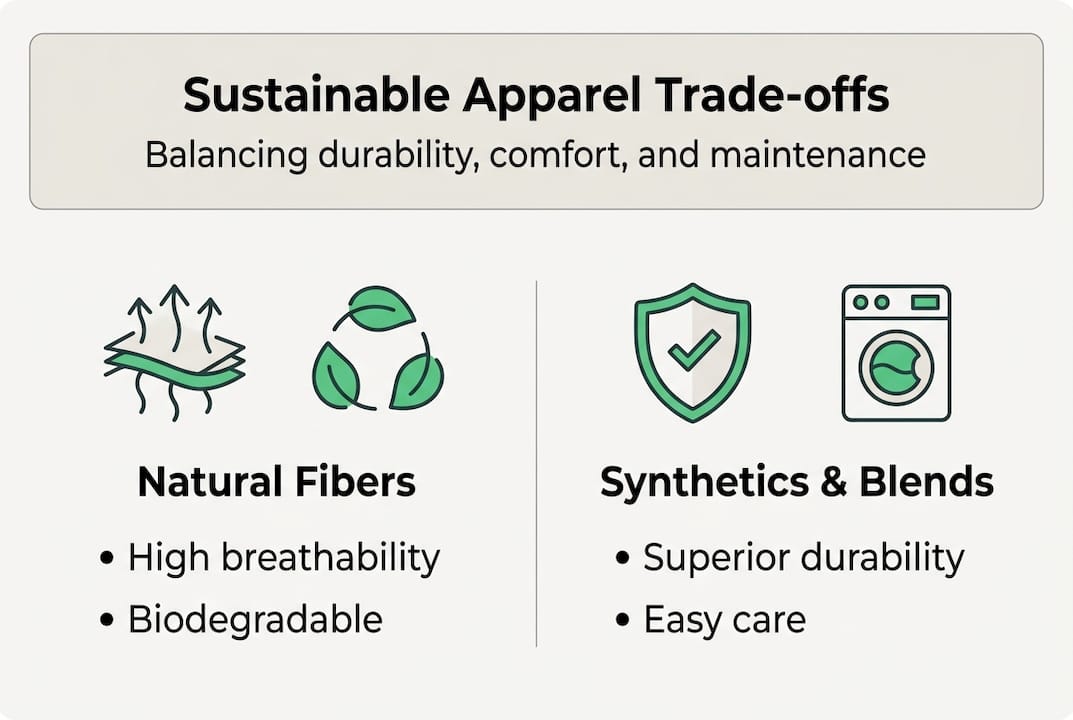
Maintenance requirements vary significantly across fiber types. Synthetics tolerate frequent washing and high-heat drying without degradation. Natural fibers benefit from gentler care: cold water washing, air drying, and reduced wash frequency. Blends fall somewhere between, requiring attention to care labels to preserve both fiber types. For time-pressed professionals, understanding these differences prevents garment damage and extends usable life.
The following table compares key characteristics across fiber categories:
Characteristic | Natural Fibers | Synthetic Fibers | Blended Fabrics |
Abrasion resistance | ~20,000 cycles | 100,000+ cycles | 50,000-80,000 cycles |
Shrinkage | >5% potential | <1% typical | 2-3% average |
Breathability | Excellent | Poor to moderate | Good |
Drying time | Slow | Very fast | Fast |
Biodegradability | Complete | None | Partial |
Recyclability | High | Moderate | Low |
Maintenance | Gentle care needed | Easy care | Moderate care |
Consider these practical implications:
Natural fibers suit low-impact activities and breathability priorities
Synthetics excel for high-wear items and minimal maintenance needs
Blends balance performance and comfort but sacrifice end-of-life options
Durability and sustainability don’t always align perfectly
Your usage patterns should guide material selection
For active users balancing sustainability with demanding schedules, hybrid approaches often work best. Choose natural versus synthetic fibers strategically based on garment purpose rather than applying one-size-fits-all rules.
Practical application: choosing eco-friendly apparel for style, durability, and low maintenance
Translating knowledge into action requires a framework for evaluating garments against your specific needs. Eco-friendly apparel enables busy professionals stylish, durable options balancing sustainability with low-maintenance requirements like quick-dry blends.
Start with fabric selection based on intended use. Hemp and linen excel for warm-weather wear and situations demanding durability. Their natural strength withstands repeated wear while providing superior breathability. Wool works beautifully for temperature regulation across seasons, naturally resisting odors and wrinkles. For activewear that transitions from gym to office, consider blends incorporating recycled polyester for quick drying and odor resistance. Accept the recyclability trade-off if the performance benefits align with your lifestyle demands.
Prioritize biodegradable natural fibers for garments you replace frequently. T-shirts, underwear, and seasonal items benefit from materials that won’t persist as microplastic pollution. These everyday essentials can deliver sustainability benefits without requiring extreme durability. When they reach end of life, they return to the environment harmlessly rather than accumulating in landfills or oceans.
Investigate brand transparency around production methods. Companies genuinely committed to sustainability publish detailed information about their supply chains, manufacturing processes, and environmental impact metrics. Look for evidence of eco-design principles, closed-loop production, and innovative finishing techniques. Vague claims about being “green” or “eco-friendly” without supporting data suggest greenwashing rather than substantive commitment.
Examine care labels before purchasing. Garments requiring dry cleaning or special handling create ongoing time and cost burdens. Choose pieces you can confidently wash at home using methods you’ll actually follow. Easy-care options that maintain appearance without extensive effort support sustainable use by encouraging you to wear items longer before replacement. Sustainable performance shirts designed for minimal maintenance align perfectly with busy professional lifestyles.
Consider versatility and style longevity. Classic cuts and neutral colors extend garment life by remaining appropriate across seasons and trends. Pieces that work for multiple occasions, from casual to business settings, reduce the total number of items you need. This minimalist approach to wardrobe building amplifies sustainability benefits while simplifying daily decisions.
Evaluate certifications as quality signals. GOTS (Global Organic Textile Standard), OEKO-TEX, and Bluesign certifications indicate third-party verification of environmental and social standards. These aren’t perfect guarantees, but they demonstrate measurable commitment beyond self-reported claims. Certified products typically undergo rigorous testing for harmful substances and sustainable production practices.
Pro Tip: Evaluate garment care labels for wash durability and choose easy-care pieces to save time while extending garment life through proper maintenance.
Key factors for selecting eco-friendly apparel:
Material composition matching your activity level and climate
Durability appropriate for intended use frequency
Maintenance requirements fitting your available time and resources
Sustainability certifications from recognized third-party organizations
Style versatility enabling multiple wearing occasions
Brand transparency about production methods and environmental impact
Explore LABFRESH’s eco-friendly collections
Finding apparel that genuinely delivers on sustainability, style, and performance requires brands that prioritize innovation over marketing hype. LABFRESH has built its reputation on precisely this combination, creating garments engineered for the realities of active professional life.
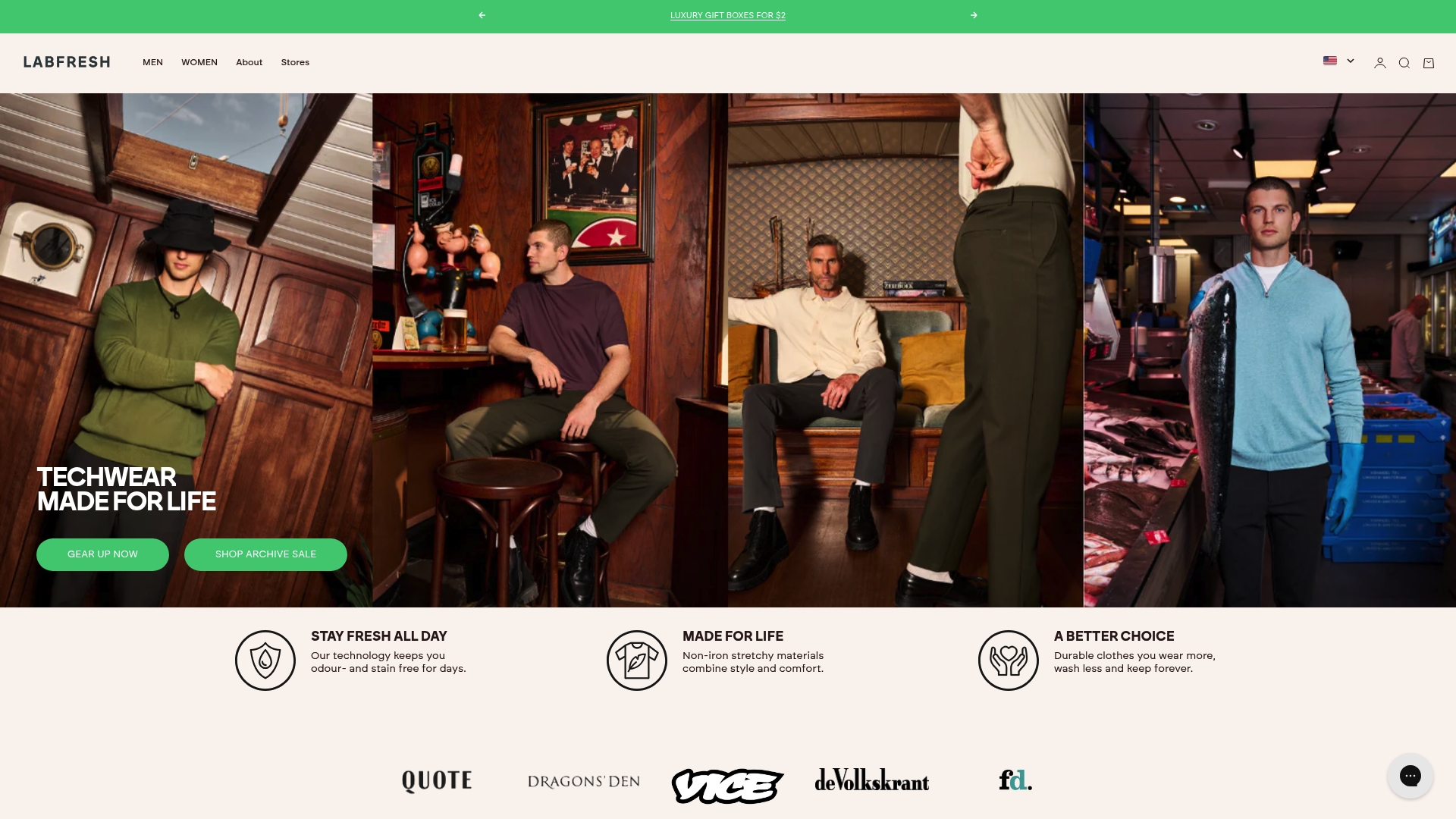
The LABFRESH sustainable shirts collection showcases how advanced fabric technologies can eliminate the style-versus-sustainability dilemma. These pieces resist stains, wrinkles, and odors through intelligent material science rather than harsh chemical treatments. You get the polished appearance professional settings demand with the easy care active lifestyles require. The LABFRESH performance pants extend this philosophy to bottoms, combining durability with comfort for all-day wear. When weather demands outerwear, the LABFRESH performance jacket delivers protection without bulk, using innovative materials that pack small and perform reliably. Each piece reflects the balance this guide has explored: genuine sustainability meeting real-world performance needs.
Frequently asked questions
What is eco-friendly apparel made of?
Natural fibers such as organic cotton, hemp, linen, and bamboo form the foundation of eco-friendly clothing. These materials are often enhanced with herbal antimicrobial and UV finishes derived from neem and turmeric. The combination provides breathability, durability, and functional benefits without synthetic chemicals.
How does eco-friendly apparel perform compared to conventional clothing?
Eco-friendly garments offer superior natural breathability and complete biodegradability at end of life. They may have lower abrasion resistance than synthetic alternatives, typically enduring 20,000 cycles versus 100,000+ for polyester. However, innovative production methods like enzyme treatments and nanotechnology enhance durability while maintaining environmental benefits.
Are blended fabrics sustainable?
Blends combine natural and synthetic fibers to improve durability, quick-drying performance, and wrinkle resistance for practical wear. This compromise hinders recyclability and circularity since separating mixed fibers remains technically challenging. Choosing brands with transparent eco-design and lifecycle assessment helps mitigate these issues by ensuring thoughtful material selection.
How can I care for eco-friendly apparel to extend its life?
Follow care labels closely, washing in cold water to preserve fiber integrity and color. Avoid harsh chemicals and high-heat drying that degrade natural materials prematurely. Air dry when possible and minimize washing frequency to preserve natural fiber qualities while reducing water consumption and energy use.
Do natural fibers require more maintenance than synthetics?
Natural fibers benefit from gentler care but don’t necessarily require more effort. Cold water washing and air drying take similar time to conventional methods while extending garment life. The key difference is avoiding high heat and harsh detergents that damage natural materials. With proper care, natural fiber garments often outlast synthetics in appearance and comfort.
Recommended
Comments